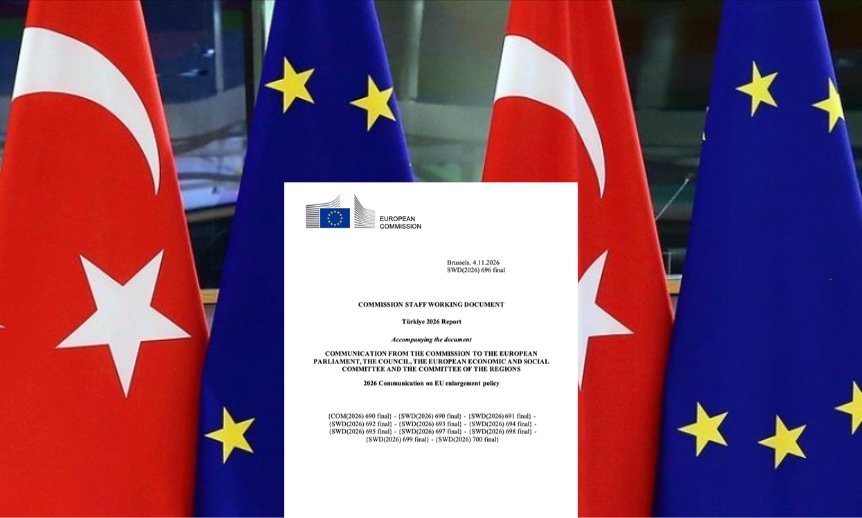
Legal pressure on opposition politicians and independent media intensified in Turkey between September 2025 and September 2026 as judicial independence and fundamental rights continued to deteriorate, the European Commission said in its annual report released Wednesday.
The commission cited the prosecution and removal of elected opposition mayors, criminal proceedings disproportionately targeting opposition-run municipalities and discriminatory penalties against independent broadcasters. It also criticized Turkey’s continued failure to implement judgments of the European Court of Human Rights (ECtHR) and rulings of its Constitutional Court.
The report said the judiciary remained far from meeting EU standards and that backsliding had continued. It identified the lack of independence of the Council of Judges and Prosecutors (HSK), which oversees judicial appointments, promotions and disciplinary matters, as a structural problem. Composed mainly of political appointees, the HSK makes decisions that are not subject to judicial review.
The report also found that judicial and administrative measures overwhelmingly targeted opposition-run municipalities, particularly those controlled by the Republican People’s Party (CHP), with only two cases involving mayors from the ruling Justice and Development Party (AKP). Since September 2025, 22 CHP mayors have been suspended or arrested, bringing the total number since the 2024 local elections to 49.
Turkey’s Foreign Ministry rejected the report’s assessments of democratic standards, the judiciary and fundamental rights as unfounded, accusing the EU of bias and double standards. However, it welcomed the commission’s positive findings on Turkey’s economic performance and its role in European security.
On press freedom the commission cited the October 2025 takeover of TELE1 and the October 2026 seizure of Halk TV and the suspension of its broadcasts as developments that had dramatically reduced the space for independent media.
Citing figures from press groups, the commission said 74 journalists and media workers were arrested, imprisoned or were in pretrial detention between September 2025 and September 2026, up from 51 during the previous 12-month period.
The commission said Turkey’s broadcasting regulator, the Radio and Television Supreme Council (RTÜK), lacked independence and imposed discriminatory fines, broadcasting bans and content removal orders. It also warned that expanded cybersecurity powers and inadequate judicial oversight of online restrictions threatened freedom of expression.
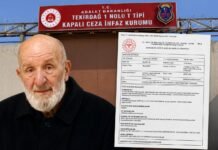
The report cited the August 25, 2026, ECtHR Grand Chamber judgment concerning imprisoned civil society leader Osman Kavala, which identified structural shortcomings in Turkey’s judiciary that could facilitate executive influence over decisions in politically sensitive cases. The court said the proceedings leading to his conviction amounted to a “flagrant denial of justice” and ordered his release. Despite the ruling, a Turkish court rejected his application for release in October.
The report also noted that Turkey had yet to implement three ECtHR judgments concerning former pro-Kurdish opposition leader Selahattin Demirtaş and that a 13th criminal case had been filed against him in September 2025.
The number of cases concerning Turkey subject to enhanced supervision by the Council of Europe’s Committee of Ministers, which monitors compliance with ECtHR judgments, rose from 205 to 213. The commission reported 37 judgments against Turkey by the ECtHR during the reporting period, involving violations of fair-trial rights, liberty and security, privacy and family life, freedom of expression and the prohibition of torture.
The report raised concerns about fair-trial rights, particularly in politically sensitive and terrorism-related proceedings. It cited the use of anonymous witnesses whom defense lawyers could not effectively question, unreliable evidence, insufficient evidence to support accusations, prolonged pretrial detention and restrictions on access to case files.
The commission also criticized the broad interpretation of counterterrorism laws in cases against journalists, lawyers, academics, human rights defenders and opposition politicians. It called for stronger safeguards to protect the presumption of innocence, the principle of individual criminal responsibility and the right to a defense.
The commission identified persistent shortcomings in efforts to prevent torture and ill-treatment, citing unaddressed allegations of abuse by prison staff and reports of ill-treatment during protests and at migrant removal centers. It said impunity remained a major obstacle to accountability.
Prison overcrowding, excessive use of pretrial detention and inadequate access to healthcare also remained serious problems. The report raised concerns about arbitrary decisions by prison administrative boards on prisoners’ eligibility for conditional release, particularly in politically sensitive cases.
Civil society organizations continued to face investigations, regulatory scrutiny, financial controls and public stigmatization, particularly over foreign funding, the commission said. It also documented increasing restrictions on LGBTQ+ rights, citing police and judicial operations across Turkey in September 2026 and warning that financial scrutiny could discourage LGBTQ+ organizations from carrying out legitimate activities.
Freedom of peaceful assembly remained severely restricted, with the report citing selective protest bans, police interventions and criminal proceedings against government critics. At least 575 people were detained during May Day demonstrations in İstanbul in 2026.
The commission also warned that violence against women, including femicide, remained a serious concern, citing inadequate protection measures, limited access to justice and insufficient support services. It said the government’s increasing emphasis on traditional family roles could undermine gender equality.
The report noted that the initiative to end the Kurdish conflict had improved the climate for some cultural rights and public gatherings in southeastern Turkey. However, most Kurdish-language media outlets and cultural institutions shut down in 2016 remained closed, while elected mayors continued to be replaced by government-appointed trustees.
Despite its criticism of Turkey’s democratic record, the commission noted some progress toward a functioning market economy and acknowledged the country’s support for a large refugee population and its strategic importance to the EU in trade, migration and regional security.
Turkey applied to join the European Economic Community, the EU’s predecessor, in 1987 and gained candidate status in 1999. Accession negotiations began in 2005, but only 16 of 35 negotiating chapters have been opened, with just one provisionally closed. No new chapters have opened since 2016, and negotiations have been at a standstill since 2018.