
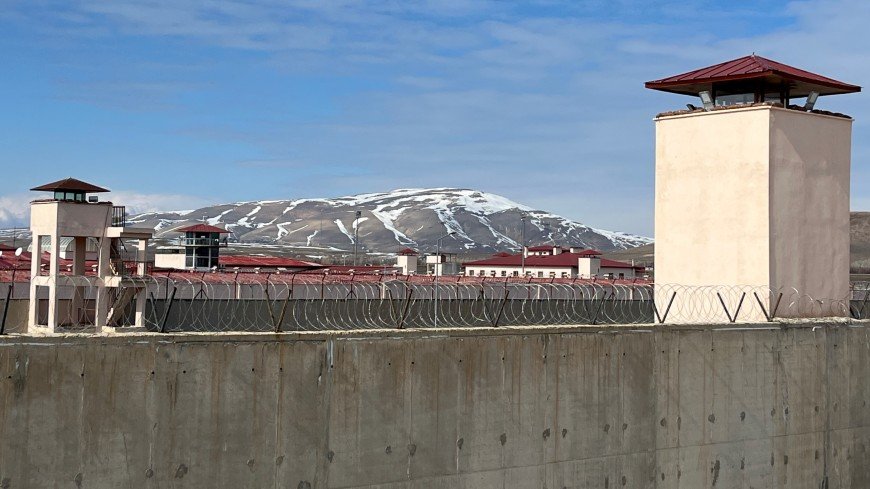
Turkey’s prison population has reached 433,520, exceeding the official capacity by 128,564 and pushing occupancy to about 142 percent, according to Justice Ministry data.
The prison population fell to 402,012 in January after a judicial reform package, approved by parliament in December, led to the early release of roughly 50,000 inmates. It has since increased by more than 31,500, returning to same levels as December 2025.
Of the total, 368,293 are convicted inmates and 65,227 are being held in pretrial detention, up from 363,620 and 63,905, respectively, in July. In terms of prison type, 122,619 people are held in lower-security open prisons and 310,901 in closed prisons with stricter security measures.
Available space per inmate has also declined in recent years. According to Justice Ministry data, the average area per inmate, excluding sports halls and exercise yards, fell from 29.2 square meters in 2023 to 24.6 square meters in 2024 and 24 square meters in 2025.
Turkey has long struggled with prison overcrowding, with the number of inmates exceeding official capacity despite the expansion of the prison system. The prison population has grown amid the prosecution and imprisonment of government critics, including elected officials from the main opposition Republican People’s Party (CHP), as well as an ongoing crackdown on alleged members of the faith-based Gülen movement and legal proceedings targeting Kurdish politicians and activists.
According to the Council of Europe’s 2025 Annual Penal Statistics on Prison Populations (SPACE I) report, Turkey had the highest prison population among the 51 prison administrations covered by the report. Its non-adjusted prison population rate stood at 458.1 inmates per 100,000 inhabitants, more than four times the European median of 110.1.