
Turkish comedian Atalay Demirci, who was sentenced to five years in prison over alleged links to the faith-based Gülen movement, has been apprehended in İstanbul after Turkey’s top appeals court upheld his conviction and sent to prison, Turkish Minute reported, citing the state-run Anadolu news agency.
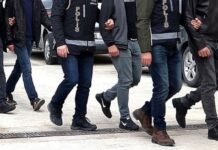
Demirci, 49, who had been at large after his conviction became final, was detained on Wednesday in İstanbul’s Kartal district in an operation carried out under the coordination of the İstanbul Chief Public Prosecutor’s Office. He was later referred to court, where a judge ordered his arrest.
Demirci was convicted by the Ankara 19th High Criminal Court in March 2020 of membership in an armed terrorist organization due to his alleged links to the Gülen movement. The court acquitted him of attempting to overthrow the constitutional order.
The Turkish government accuses the Gülen movement, inspired by Turkish cleric Fethullah Gülen, who died in US in 2024, of masterminding a coup attempt on July 15, 2016. The movement strongly denies involvement in the abortive putsch or any terrorist activity.
His case was later reviewed by the Supreme Court of Appeals’ 16th Criminal Chamber, which upheld the conviction, making the five-year sentence final.

Demirci was first detained on August 5, 2016, as part of an investigation into alleged Gülen links after his social media account was reportedly hacked and alleged private messages with former Turkish football player Hakan Şükür and former NBA player Enes Kanter were leaked to the media on July 29, 2016.
He was arrested by an Ankara court the following day on charges of membership in a terrorist organization and released in August 2017 pending trial after spending about a year in pretrial detention.
Demirci denied the charges during his trial, saying no substantive evidence had been presented against him.
The case was largely based on his alleged contacts with Şükür and Kanter, both of whom are affiliated with the Gülen movement, live abroad and are sought by the Turkish government.
According to the court’s reasoned judgment, Demirci resigned from his job as a civil servant in 1996, a year after he was appointed, and began working as a performer.
He became widely known after winning the 2013 season of “Yetenek Sizsiniz Türkiye,” the Turkish version of the “Got Talent” franchise, broadcast on Star TV.
The judgment said Demirci later hosted a program on Dünya Radyo, a station affiliated with the Gülen movement, and appeared at events organized by the movement.
The court also cited a 2005 visit to Pennsylvania, where Demirci allegedly visited Gülen.
Other evidence cited in the judgment included Demirci’s account at Bank Asya, a now-closed lender affiliated with the movement, alleged funds transfers with people investigated over Gülen links and a 2011 phone call with Cemil Koca, whom Turkish prosecutors accuse of being among the movement’s senior figures.
Although Demirci had posted messages opposing the coup attempt, the court claimed he continued to follow instructions from members of the movement afterward.
An indictment filed in 2017 had sought an aggravated life sentence and an additional prison term of up to 10 years for Demirci on charges of attempting to overthrow the constitutional order and membership in an armed terrorist organization.
The court concluded that Demirci had established an “organic bond” with the Gülen movement and was part of its hierarchical structure.
It initially sentenced him to six years in prison, increased the sentence to nine years under the Counterterrorism Law and then reduced it to five years, citing his request to cooperate.
Demirci’s imprisonment comes as Turkey’s post-coup terrorism prosecutions over alleged Gülen links face growing scrutiny following landmark rulings by the European Court of Human Rights (ECtHR).
In Yasak v. Türkiye announced last week, the ECtHR’s Grand Chamber found that Turkey had violated Article 7 of the European Convention on Human Rights, which prohibits punishment without law, in the case of Şaban Yasak, who was convicted over alleged Gülen links in 2018.
The court said Turkish courts had failed to make an individualized assessment of Yasak’s criminal liability and had not shown that he knew of the movement’s alleged terrorist aims or acted with the required intent.
The court said mere involvement in a structure that was perceived at the time as a religious group could not, on its own, justify the conclusion that Yasak had the intent required for conviction of membership in a terrorist organization.
The Yasak judgment is seen as particularly important because the conviction was not based primarily on use of the ByLock messaging app, widely seen by the Turkish government as evidence of Gülen movement membership, but on a broader set of evidence, including witness statements, banking activity, employment records and phone records.
Rights lawyers said the ruling could affect many post-coup cases in which lawful social, professional or religious activities were treated as evidence of terrorist organization membership without proof of criminal intent.
In a 2023 ruling in Yalçınkaya v. Türkiye, the Grand Chamber also found violations of the right to a fair trial, the principle of no punishment without law and freedom of association in the conviction of teacher Yüksel Yalçınkaya over alleged Gülen links.
The court criticized Turkish courts’ broad and automatic treatment of evidence such as alleged use of ByLock and said thousands of similar cases were pending before it.
Following the failed coup, the Turkish government launched a sweeping crackdown on alleged members of the Gülen movement, leading to mass dismissals, detentions and prosecutions.
According to the latest figures from the Justice Ministry, more than 126,000 people have been convicted over alleged links to the movement since 2016, with 11,085 still in prison. Legal proceedings are ongoing for more than 24,000 people, while another 58,000 remain under active investigation nearly a decade later.
Post-coup prosecutions targeting people over alleged Gülen links have swept up people from a wide range of backgrounds, from elderly and ailing people and pregnant women to baklava tycoons and football players.
In addition to those jailed, many Gülen movement followers have fled Turkey to avoid the post-coup crackdown.