Relatives of people imprisoned or dismissed from public service after a coup attempt in Turkey in 2016 have called on authorities to end what they described as continuing injustice, saying purge victims and their families have endured years of social exclusion, economic hardship and psychological trauma.
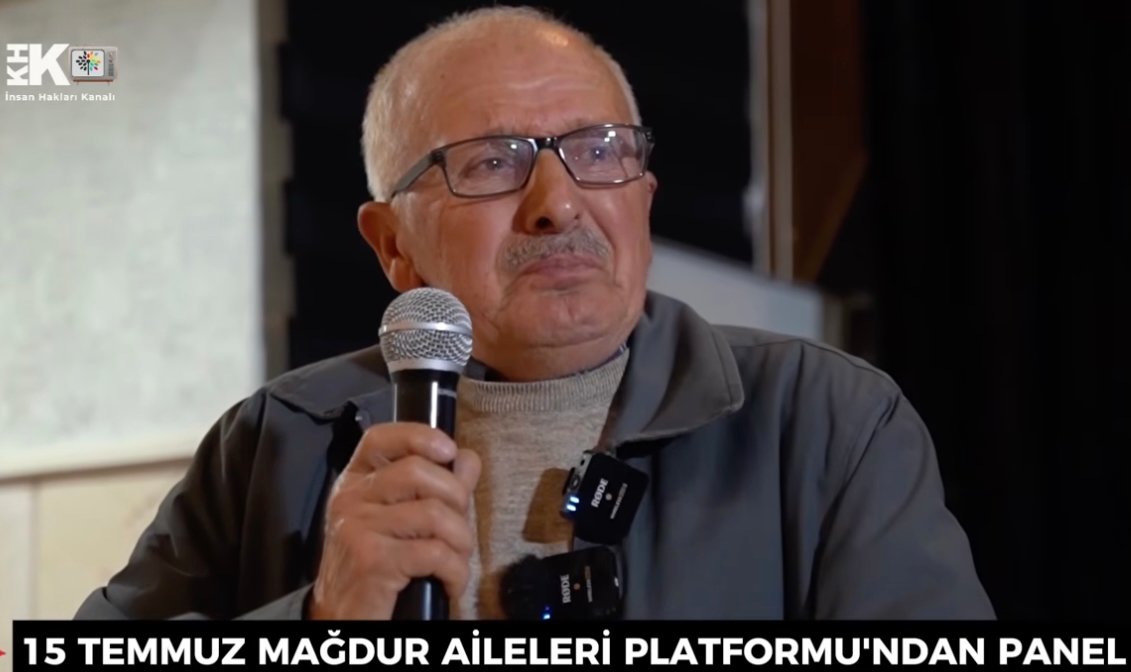
Speaking during a panel discussion organized by the 15 July Victimized Soldiers’ Families Platform, relatives of purge victims described how dismissals, prosecutions and prison sentences imposed after the coup attempt had inflicted long-term damage on families across Turkey.
The panel discussion was broadcast on the KHK TV YouTube channel, a platform dedicated to sharing the stories of people dismissed from public service by government decrees following the coup attempt.
Participants said people accused of links to the faith-based Gülen movement were punished during a post-coup state of emergency based on vague allegations such as “affiliation” and “connection.” They called for an end to what they described as legally baseless prosecutions and urged authorities to implement rulings by the European Court of Human Rights (ECtHR) and Turkey’s Constitutional Court.
Turkish President Recep Tayyip Erdoğan has targeted followers of the Gülen movement, inspired by the US-based cleric Fethullah Gülen, who died in 2024, since corruption investigations in December 2013 implicated him as well as some members of his family and inner circle. He dismissed the probes as a Gülenist conspiracy and later designated the movement as a terrorist organization in May 2016, intensifying a sweeping crackdown after the coup attempt in July of the same year that he accused Gülen of orchestrating. The movement denies involvement in the coup attempt or any terrorist activity.
A retired civil servant on the panel said his sons had worked as a doctor, a police chief, a prosecutor and a Council of State judge before they were all dismissed overnight after the coup attempt. His daughters-in-law, who had worked as a judge and a teacher, were also purged. He said he had spent the last 10 years traveling with his grandchildren to visit relatives in seven or eight prisons.
The mother of young military officer Nazım Aytar said her son had been wounded while serving in the military and was later arrested during staff officer training on charges linked to the coup attempt. She said he was sentenced to aggravated life in prison and that her husband suffered a heart attack on the way to a prison visit.
Another mother, whose son Ahmet Berat Yüksel was a cadet at the Turkish Air Force Academy, said she had raised her son alone after losing her husband and that he had spent the last decade in prison. She said the family had been labeled traitors and even “driven out of mosques.”
According to figures shared at the panel discussion, some 152,000 public servants were dismissed under emergency decrees. Participants said the total number of people who lost their jobs rose to approximately 400,000 when security clearance-related dismissals and terminated contracts were included.
They also said more than 3.1 million were investigated after the coup attempt and around 600,000 were detained, including approximately 100,000 women and 3,000 minors and infants who had entered prison along with their mothers.
Panelists said people dismissed under emergency decrees faced 153 different rights violations, including frozen bank accounts, canceled passports and barriers to private-sector employment due to security codes put on the social security database.
The participants also said nearly 130 people had died by suicide following the purge, while more than 1,200 others had died from chronic illnesses such as cancer or from workplace accidents linked to poor working conditions.
Turkey experienced a controversial military coup attempt on the night of July 15, 2016, which, according to many, was a false flag operation aimed at entrenching the authoritarian rule of President Recep Tayyip Erdoğan by rooting out dissidents and eliminating powerful actors such as the military in his desire for absolute power. The abortive putsch killed 251 people and wounded more than a thousand others.
Following the coup attempt, the Turkish government declared a state of emergency that remained in effect until July 19, 2018. During this period, the government carried out a purge of state institutions under the pretext of an anti-coup fight by issuing a number of government decrees. Over 130,000 public servants, including 4,156 judges and prosecutors, as well as more than 24,000 members of the armed forces were summarily removed from their jobs for alleged membership in or relationships with “terrorist organizations” by emergency decree-laws subject to neither judicial nor parliamentary scrutiny.