A confidential Turkish police document cited in a new legal report shows that Turkish authorities monitored activities linked to the faith-based Gülen movement in the Netherlands and circulated information on participants, raising concerns that lawful civic activities in Europe could be used against people if they return to Turkey, Turkish Minute reported.
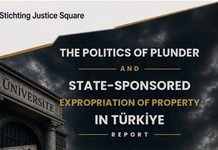
The document, dated February 19, 2026, appears in the annexes of a report published by the Stichting IPN Legal Commission and Amsterdam Law Center on May 26, 2026. It is marked “confidential” and bears an electronic signature notice, a QR code and an official verification code.
The report says the document is part of correspondence between the Ankara Police Department and the Counterterrorism Department.
The document appears to say that information about individuals should be assessed in coordination with intelligence units and then sent to judicial authorities as individually prepared documents and records.
The report says the material shows Turkish police units collected and circulated open-source information about activities linked to the Gülen movement abroad, including event photos, names, social media profiles and organizational affiliations.
The 36-page report examines the situation of Turkish citizens in the Netherlands who have applied for international protection or obtained residence rights and who take part in activities associated, directly or indirectly, with the Gülen movement.
Stichting IPN describes itself as a Netherlands-based foundation that supports refugees and asylum seekers through legal guidance, social and psychological support, language education, employment assistance, cultural activities and integration programs. The foundation says its mission is to strengthen solidarity among refugees and help them become active and empowered members of society.
The report says activities that are legal under Dutch law, including iftar dinners, volunteering, interfaith dialogue meetings, educational programs, cultural events and humanitarian aid work, may be reclassified by Turkish prosecutors and security agencies as criminal activities.
According to the report, Turkish authorities use open-source intelligence, social media monitoring, event photos, videos, online news reports, digital publications and association websites to identify people who attend or support Gülen-linked events abroad.
The police report includes public event photos in the Netherlands in which individuals are named or visually marked. The authors say the material supports their conclusion that visible activities abroad can be recorded and used in security or criminal proceedings in Turkey.
The report says official Turkish documents reviewed by the authors show that faces in event photographs were marked, individuals were named and their alleged connections to foundations or associations were mapped.
The monitoring is not limited to people already facing criminal proceedings in Turkey but may also cover people who take part in visible social, educational, cultural, religious, volunteer or humanitarian activities abroad, according to the report.
It also refers to organizations such as Time to Help, the Stichting Educatie Centrum Utrecht (SECU), Stichting Seva, Stichting Regenboog and Platform INS, saying their activities are carried out openly and lawfully in the Netherlands but are monitored over terrorism investigations by Turkey.
The report also discusses three rulings issued by the Dutch Council of State on March 25, 2026, concerning asylum applications by people associated with the Gülen movement. It says the court confirmed that “post-flight activities,” actions carried out after leaving Turkey, must be considered in individual risk assessments when deciding whether a person could face persecution or ill-treatment upon return.
According to the report, this means Dutch authorities may not assess risk solely on the basis of what happened before a person left Turkey. They must also consider whether visible activities in the Netherlands could attract the attention of Turkish authorities and be used against the person after return.
The report says even limited public participation in Gülen-linked events may be relevant under the Council of State’s approach if it could contribute to an individual risk profile.
Possible risks upon return to Turkey, according to the report, include security questioning, new criminal investigations, prosecution on terrorism-related charges, arrest warrants, extradition requests, passport cancellations, travel restrictions, psychological pressure, degrading treatment and ill-treatment.
The authors say the findings are relevant to international protection procedures because they show that lawful activities in the Netherlands may be perceived differently by Turkish authorities. They argue that the Dutch Immigration and Naturalization Service should assess visible activities in the Netherlands as a possible independent risk factor in asylum cases involving people linked to the Gülen movement.
Turkey designates the Gülen movement, inspired by the late Turkish-Islamic scholar Fethullah Gülen, as a terrorist organization and accuses it of orchestrating a failed coup in July 2016. The movement denies involvement in the coup attempt or any terrorist activity.
The report comes against a broader European backdrop of allegations that Turkey has monitored, pressured or sought the return of people linked to the Gülen movement abroad since the failed coup.
In 2017, German prosecutors opened investigations into suspected Turkish intelligence activity targeting alleged Gülen supporters in Germany. German media and international outlets reported that police searched the homes of Turkish Muslim preachers suspected of spying on people linked to the movement, while Germany also rejected a Turkish request to collect intelligence on Gülen supporters.
The same year, Swiss federal prosecutors opened a criminal investigation into suspected foreign espionage within the Turkish community in Switzerland following allegations that Turkish-linked actors had monitored government critics, including people associated with the Gülen movement.
In March 2018 six Turkish nationals linked to Gülen-affiliated schools were arrested in Kosovo and sent to Turkey. Kosovo’s then-prime minister, Ramush Haradinaj, said he had not been informed of the operation and later dismissed his interior minister and intelligence chief over the deportations.
In September 2018 several Turkish teachers working at Gülen-linked schools in Moldova were taken by Moldovan authorities and transferred to Turkey. The European Court of Human Rights later found that Moldova had violated their rights, saying the transfer had bypassed legal safeguards.
Freedom House, in a report on transnational repression, said Turkey’s post-2016 campaign against perceived opponents abroad has included renditions, illegal deportations, passport cancellations, surveillance, harassment and pressure on relatives. The organization said the campaign has particularly targeted people accused by Ankara of links to the Gülen movement.
Reports citing Germany’s domestic intelligence agency have also said Turkish intelligence activity in Germany continued in later years, focusing on groups viewed by Ankara as hostile, including Gülen followers and supporters of the outlawed Kurdistan Workers’ Party (PKK).