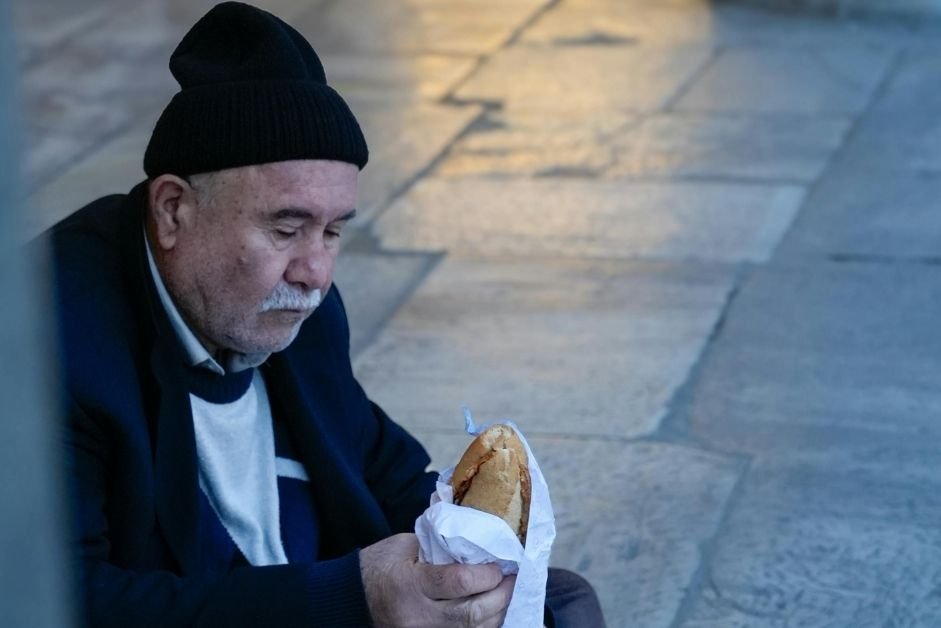
Nearly 4 in 10 older residents in İstanbul say they cannot make ends meet, while many report going without medicine, adequate food or social activities due to financial hardship, according to a new study published Friday by a municipal research body, the Birgün daily reported.
The report by the İstanbul Planning Agency, an institution affiliated with the İstanbul Metropolitan Municipality, highlights growing inequalities in health, income and well-being among people aged 65 and older in Turkey’s largest city, as the country faces high inflation and a rising cost of living.
The findings suggest that economic strain is translating into reduced access to basic needs among older residents. A total of 38.2 percent of respondents said their income was insufficient, while only 33.5 percent said it was adequate. The report found that 22.7 percent were unable to purchase needed medication over the past year, 20.6 percent could not visit a doctor or health facility and 36.8 percent said they could not maintain regular and sufficient nutrition.
The survey, based on interviews with 752 people aged 65 and over in İstanbul, is part of the “İstanbul Barometer,” a recurring study that tracks social and economic conditions in the city.
The report also documented broader financial pressures affecting daily life. Nearly half of respondents, 48.5 percent, said they could not travel to their hometowns for financial reasons, a culturally significant practice in Turkey where many urban residents maintain ties to their regions of origin. Fully 25.9 percent reported difficulty in paying utility bills, and 23 percent said they struggled to cover rent or housing costs. Participation in cultural activities was also limited, with 45.3 percent saying they could not afford to attend such events.
Health outcomes varied sharply across income groups. Among higher-income respondents, 62.7 percent described their health as “good,” compared with just 17.1 percent in lower-income groups. Overall, 35.6 percent of participants rated their health as good, while 25 percent described it as poor.
The findings come as Turkey’s population is aging, in line with broader global trends. Data from the Turkish Statistical Institute (TurkStat) show that the share of people aged 65 and older has risen significantly over the past decade, both nationally and in Istanbul.
The report also pointed to unmet mental health needs. Only 4.9 percent of respondents who said they needed psychological support were able to access it, while 21.3 percent said they could not. Women reported higher levels of need, with 34.8 percent indicating a demand for psychological support compared with 17.6 percent of men.
The study underscores the extent to which economic pressures, including persistent inflation in Turkey in recent years, are shaping the daily lives and well-being of older urban residents, particularly those in lower-income groups.