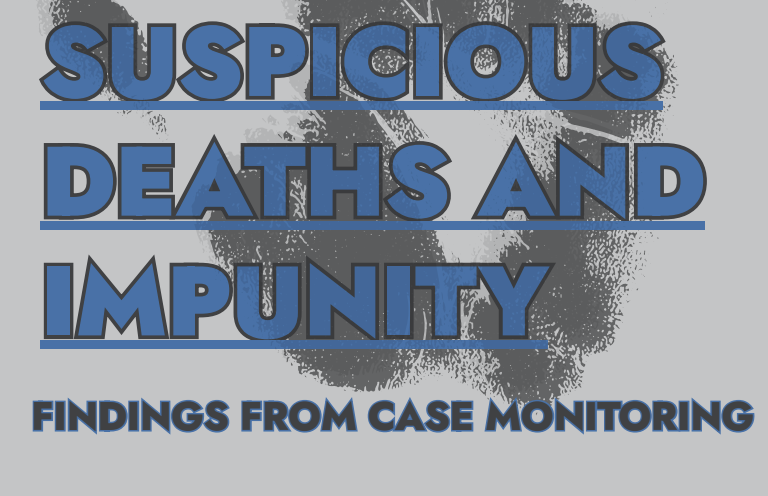
Shortcomings in investigations into suspicious deaths in Turkey have contributed to impunity and weakened accountability for violations of the right to life, according to a report released Thursday by Euromed Rights.
The report, based on court monitoring conducted by the Human Rights Association (İHD), examines the state’s obligation to investigate suspicious deaths and hold those responsible accountable. It argues that failures to prevent deaths, identify institutional shortcomings and conduct effective investigations can allow serious violations to go unaddressed.
The study monitored 10 cases involving workplace deaths, killings, alleged misconduct by public officials, natural disasters and other suspicious deaths. According to the report, the cases reveal recurring concerns about labor safety, healthcare oversight, judicial effectiveness and the ability of state institutions to protect life and ensure accountability.
The report examines cases including the 2015 Ankara train station bombing, the death of Gabonese student Jeannah Danys Dinabongho Ibouanga, the collapse of the Isias Hotel during earthquakes in 2023, the killing of Kurdish politician Mehmet Sincar, the death of Afghan worker Vezir Mohammad Nourtani, the so-called “Newborn Gang” case and the murder of 8-year-old Narin Güran.
Among the cases highlighted is that of Nourtani, an undocumented Afghan worker whose burned body was discovered after his death at an illegal coal mine in Turkey’s Black Sea province of Zonguldak. According to allegations cited in the report, mine operators transported the body to a forested area and burned it rather than notifying authorities after he died.
The report notes that investigators collected substantial evidence and promptly opened an investigation. However, it criticizes the deportation of Afghan workers who may have been important witnesses before their statements could be obtained and argues that the case exposed broader concerns about labor inspections, workplace safety enforcement and protections for undocumented migrant workers.
The report also examines the death of Jeannah Danys Dinabongho Ibouanga, a Gabonese national known as Dina, whose body was found in a stream near Karabük three months after she enrolled as a student at Karabük University. One defendant is currently on trial in connection with the case. According to the report, the case underscored the importance of conducting transparent and effective investigations capable of establishing the full circumstances surrounding suspicious deaths.
Another section focuses on the so-called “Newborn Gang” case, one of Turkey’s most closely watched criminal investigations. The report notes that 57 defendants, including healthcare workers and hospital personnel, are accused of offenses including intentional killing by omission, fraud and membership in a criminal organization. Prosecutors allege that newborn babies were subjected to unnecessary medical interventions in order to increase hospital revenues, resulting in the deaths of at least 10 infants.
According to the report, the allegations raise questions not only about individual criminal responsibility but also about whether oversight and regulatory mechanisms were capable of detecting and preventing such practices. It argues that protecting the right to life requires that institutions identify risks before deaths occur, not merely prosecute those responsible afterward.
The report also discusses the killing of Narin Güran, whose disappearance and death became one of Turkey’s most widely followed criminal cases. Narin’s uncle, mother and brother were sentenced to aggravated life after being convicted of jointly killing the child, while another defendant received a prison sentence related to the handling of evidence. The report cites concerns raised by trial observers regarding courtroom access and the conduct of lengthy hearings.
Euromed Rights said the monitored cases illustrate different aspects of the state’s responsibility to protect life, ranging from workplace safety and healthcare oversight to effective criminal investigations and judicial accountability.
Drawing on the case law of the European Court of Human Rights, the report argues that states have both a duty to protect individuals from foreseeable threats and an obligation to conduct effective investigations when suspicious deaths occur.
Turkish authorities have previously rejected criticism that the country’s justice system fails to provide accountability, maintaining that courts operate independently and investigations are conducted in accordance with the law.
The report concludes that combating impunity requires stronger oversight mechanisms, effective investigations and institutional safeguards capable of preventing avoidable deaths before they occur.