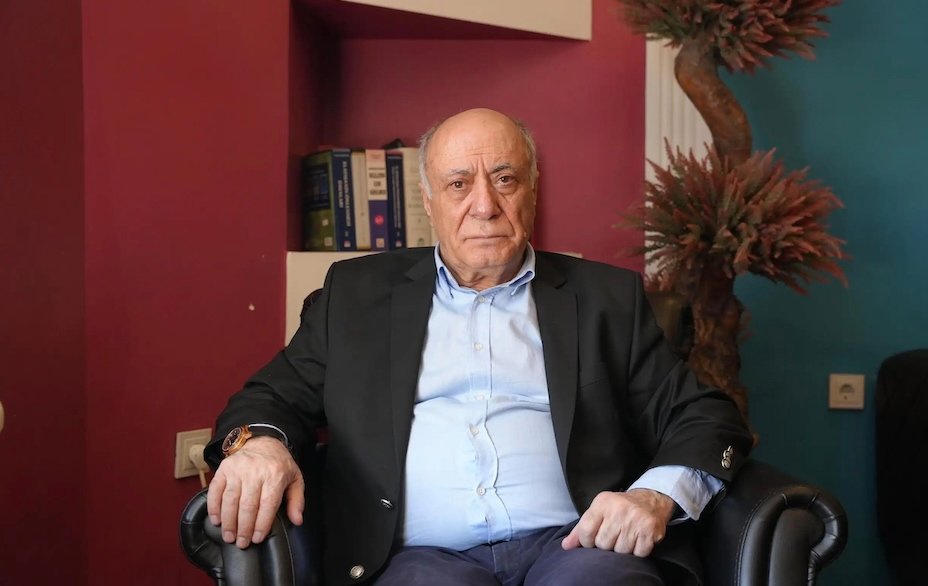
Former Kurdish lawmaker Mahmut Alınak was arrested on Thursday after Turkey’s Supreme Court of Appeals upheld his conviction on charges of insulting President Recep Tayyip Erdoğan, the Mezopotamya news agency (MA) reported.
Alınak, 74, was taken into custody following the ruling and transferred to a prison in the northeastern province of Kars to serve what local media described as his 11th prison sentence.
The İstanbul 2nd High Criminal Court sentenced Alınak in February 2021 to more than one year in prison on charges of insulting the president in a book he authored, titled “Mehmet Tunç ve Bêkes,” published in 2017.
The book, which was banned in December 2019, tells the story of Mehmet Tunç, co-chair of the Cizre People’s Assembly, and his brother Orhan Tunç, who died during a curfew imposed in the southeastern town of Cizre on December 14, 2015. It also describes events that took place during the period.
Alınak served as a lawmaker in 1987 and 1991.
Turkish authorities imposed curfews in dozens of towns and districts in the country’s southeast between July 2015 and February 2017 in operations aimed at driving out militants of the outlawed Kurdistan Workers’ Party (PKK), designated as a terrorist organization by Turkey and its Western allies.
Rights groups said at the time that the operations trapped thousands of residents in their homes and led to widespread abuses, including civilian deaths.
A 2016 report by the Turkish human rights group Mazlumder said more than 200 people were killed and over 10,000 homes destroyed in Şırnak’s Cizre district alone during the curfews.
Thousands of people are investigated, prosecuted or convicted each year in Turkey for insulting the president, a criminal offense under Article 299 of the Turkish Penal Code. Those found guilty can face up to four years in prison, with sentences increased by one-sixth if the offense is committed through the media.
The law has long been criticized by human rights and press freedom advocates, who say it is used to prosecute journalists, politicians and ordinary citizens for expressing views critical of the president or even satirizing him indirectly.
In 2021 the European Court of Human Rights ruled that the law should be amended or repealed, stating that giving special protection to the president stifles public debate and chills dissent. International human rights organizations have also repeatedly urged the Turkish government to review the law, which they describe incompatible with democratic norms and international free speech standards.