Ballistics reports that were long absent from one of Turkey’s main trials over a failed 2016 coup have surfaced nearly 10 years later, with a former colonel telling a court that the reports show weapons carried by his unit at military headquarters that night were not fired, Turkish Minute reported, citing journalist Müyesser Yıldız.
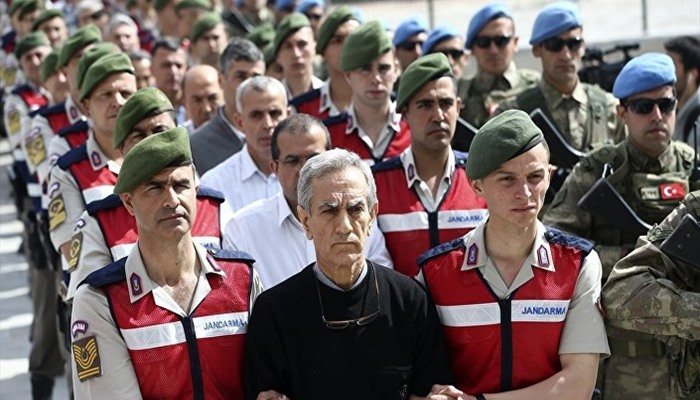
The claim was raised last week during hearings in a major trial concerning events at Turkey’s military headquarters in Ankara during the coup attempt of July 15, 2016.
Former Staff Col. Murat Korkmaz, who served in the Special Forces Command at the time, told the Ankara 17th High Criminal Court that he had spent years asking courts to determine whether his assigned M4 rifle had been found and whether it had undergone ballistic testing.
Korkmaz said courts were previously told that the weapon was missing or that no ballistic examination had been conducted.
He said the issue resurfaced after a separate case opened in 2023 over equipment allegedly missing from the Special Forces Command. In that case, a lower court asked the command for a list of weapons, equipment and other materials delivered after the coup attempt and sent for ballistic examination.
The Special Forces Command reported that Korkmaz’s rifle was among the items delivered, meaning it was not missing, but said it could not identify the list of items sent for ballistic testing, Yıldız reported.
Korkmaz said Ankara Regional Criminal Police Laboratory reports were later sent to the court after repeated requests and that the reports were dated November 2, 2016, less than four months after the coup attempt.
He told the court that the reports showed none of the 41 weapons carried by 52 Special Forces personnel who went to General Staff headquarters that night had been fired.
“Had these ballistic reports been requested or sent by the police to the prosecutor’s office at the time, this would not have happened,” Korkmaz said. “It was said, ‘The weapons were not found, there are no ballistics.’ Sentences were handed down.”
Korkmaz said he was convicted in connection with 10 killings and 16 injuries on the assumption that he had opened fire. He said some of the 52 personnel who went to General Staff headquarters were not even carrying weapons.
“A person without a weapon cannot fire,” he said.
Korkmaz also said one victim in the case file was described as having been hit by a steel armor-piercing round, but that no such weapon was among the weapons collected from General Staff headquarters.
The former colonel asked the court to reconsider his conviction based on the ballistics reports and acquit him.
The General Staff case is one of the most important trials stemming from the failed coup. According to the Turkish government, a faction within the Turkish military tried to overthrow the government of President Recep Tayyip Erdoğan, with more than 250 people killed during the attempt, which the government blames on the faith-based Gülen movement. The movement denies any involvement with the coup.
The case is being reheard after Turkey’s Supreme Court of Appeals partially overturned earlier verdicts. The state-run Anadolu news agency reported in January 2025 that 149 defendants would be retried after the top appeals court cited insufficient reasoning and incomplete examination in parts of the case.
The new claim adds to long-running questions over forensic evidence in coup trials, many of which involved accusations that soldiers fired on civilians or took part in attacks on state institutions.
Defense lawyers and rights advocates have for years criticized the trials, saying courts often relied on broad accusations and witness statements without tying defendants to specific acts through forensic evidence.
The ballistics claim is significant because it shows that reports were prepared in 2016 and may have supported the defense but were not made available to the courts before convictions were handed down.
This fits a record in which Ankara built its account of Turkey’s failed 2016 coup while key forensic and parliamentary material was withheld, ignored or left unresolved.
At the Bosporus Bridge in İstanbul, where civilians were killed after President Erdoğan urged people to take to the streets, court-file material said some fatal bullets were not fired from the defendants’ weapons and that some ammunition removed from victims did not belong to the Turkish military.
At the Gendarmerie command in Ankara, one of Turkey’s main internal security compounds, a defendant cited court transcripts saying investigators did not order autopsies for 10 civilians, did not include shell casings in the file and did not test suspects for gunshot residue.
A parliamentary inquiry into the coup also failed to resolve the record, attracting criticism for not hearing then-chief of General Staff Hulusi Akar or intelligence chief Hakan Fidan, two of the most important officials in the events of that night.
According to 2021 remarks by Selçuk Özdağ, a former ruling Justice and Development Party (AKP) lawmaker who served as deputy chairman of parliament’s coup inquiry commission, the parliamentary report after the inquiry was not officially published due to warnings by senior legal figures that its findings could help people accused of Gülen links in international proceedings and expose Turkey to claims for compensation.
The late emergence of ballistics reports that Korkmaz says were prepared in 2016 and showed his unit’s weapons were not fired reinforces the defense argument that Turkey’s coup courts punished defendants for deaths not supported by the forensic record.
The retrial is continuing at the Sincan Prison complex outside Ankara.