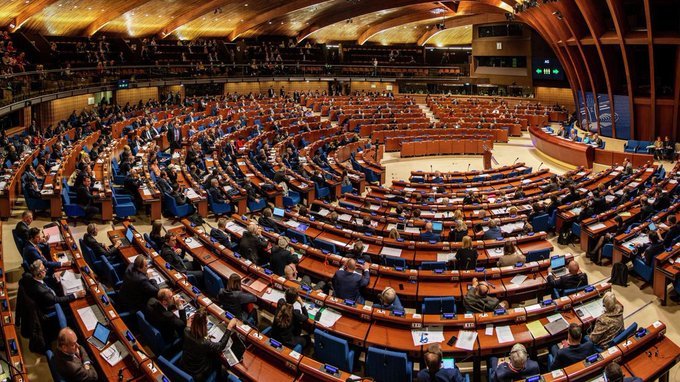
A committee of the Parliamentary Assembly of the Council of Europe (PACE) has in a draft resolution called for stronger international action against transnational repression, citing Turkey as being among countries accused of pursuing dissidents abroad through abductions, physical attacks, surveillance and misuse of legal and financial mechanisms.
The draft resolution, adopted by the Committee on Legal Affairs and Human Rights on May 26, is based on a report by Cypriot lawmaker Constantinos Efstathiou of the Socialist Group. It warns that authoritarian governments are increasingly extending repression beyond their borders through sophisticated methods that threaten state sovereignty, the rule of law and national security.
“Acts of transnational repression perpetrated by member States and those that occur or have effects in their territories undermine the values and principles of the Council of Europe and are incompatible with the European Convention on Human Rights,” according to the draft resolution.
The text will now be submitted to the full assembly at its June session for debate and a final vote. PACE previously adopted a resolution in 2023 condemning transnational repression as a growing threat to the rule of law and human rights, with its accompanying report expressing concern about Turkey’s use of extradition requests, INTERPOL notices and other international mechanisms against people allegedly linked to the Gülen movement.
An explanatory memorandum accompanying the draft resolution documents a number of cases involving Turkish intelligence operations and attacks on journalists living in exile across Europe and beyond.
Among the cases cited is the 2021 abduction of Orhan İnandı, the founder of the Sapat school network in Kyrgyzstan, by Turkey’s National Intelligence Organization (MİT). Turkish authorities accused İnandı of links to the faith-based Gülen movement, and Turkish President Recep Tayyip Erdoğan publicly acknowledged the operation after İnandı was brought to Turkey by MİT. He was later convicted on terrorism-related charges and imprisoned. His wife said he had been tortured in custody and denied adequate medical care.
Turkish President Recep Tayyip Erdoğan has targeted followers of the Gülen movement, inspired by the US-based cleric Fethullah Gülen, who died in 2024, since corruption investigations in December 2013 implicated him as well as some members of his family and inner circle. He dismissed the probes as a Gülenist conspiracy and later designated the movement as a terrorist organization in May 2016, intensifying a sweeping crackdown after a coup attempt in July of the same year that he accused Gülen of orchestrating. The movement denies involvement in the coup attempt or any terrorist activity.
The memorandum also cites attacks on two exiled Turkish journalists in Europe: a 2021 knife attack on Erk Acarer outside his apartment in Berlin and a 2022 assault on Ahmet Dönmez in Sweden after his vehicle was rammed. Dönmez sustained head injuries in the attack.
It further refers to a leaked Turkish government document from January 2024 showing that Turkish intelligence officers operating from the country’s embassy in Stockholm had conducted surveillance on journalists in Sweden.
The memorandum also highlights Turkey’s misuse of World-Check, a risk intelligence database now operated by the London Stock Exchange Group (LSEG), used by financial institutions for due diligence. It cites the cases of Mehmet Baltacı and İsmail Sezgin, who were included in the database based on allegations by Turkish authorities that they had links to the Gülen movement.
The draft resolution urges European states and institutions to adopt stronger measures against transnational repression, including targeted sanctions on individuals responsible for such acts, legal action against foreign diplomats involved in repression abroad and the creation of mechanisms to identify states that abuse financial regulatory systems to target political opponents.
It also recommends incorporating transnational repression into existing European Union sanctions frameworks and calls for stronger action by INTERPOL against countries that repeatedly misuse its notice system to pursue dissidents overseas, including the possibility of suspending access to the organization’s databases.
Organizations such as Human Rights Watch and Freedom House have identified Turkey as a leading perpetrator of cross-border suppression of dissent, citing a pattern of politically motivated extradition requests, surveillance and pressure on host governments. The U.S. State Department and the United Nations have also raised concerns about Ankara’s misuse of international mechanisms to pursue critics abroad, warning that such practices undermine international legal norms and endanger the rights of exiled individuals.