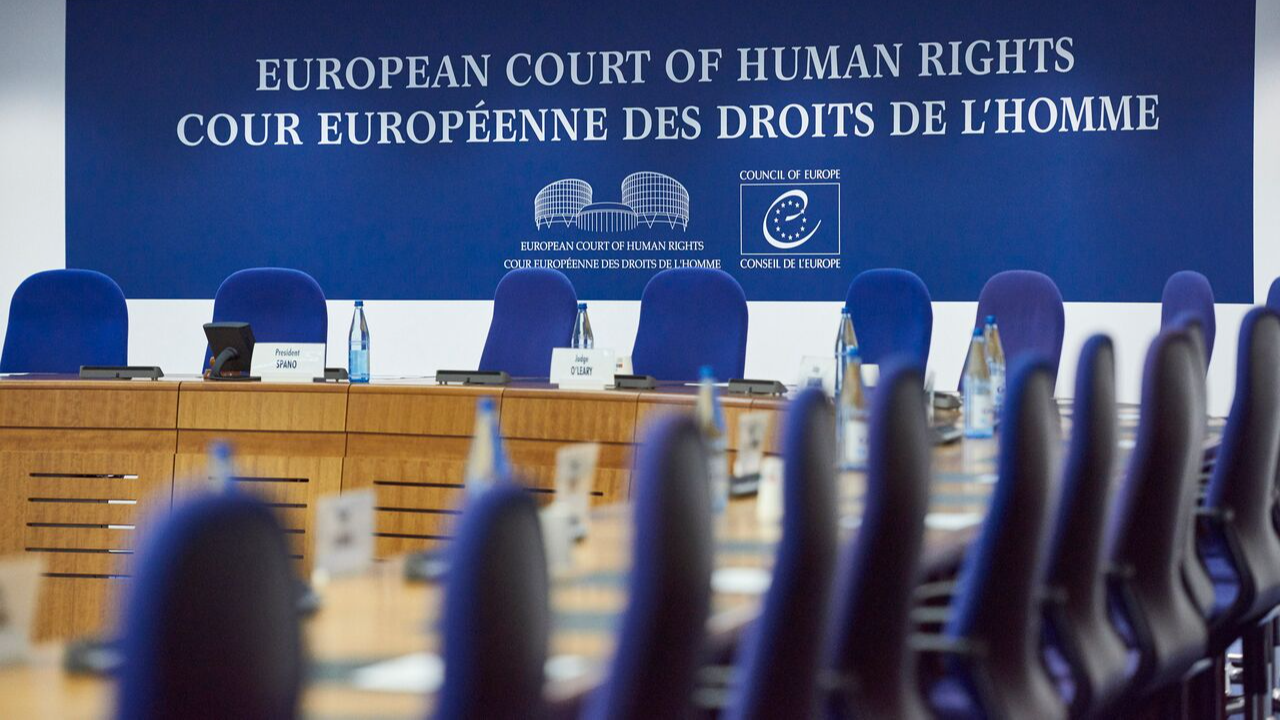
The European Court of Human Rights (ECtHR) has ruled that Turkey violated the rights of two Greek Orthodox priests by preventing them from serving on the boards of religious minority foundations in İstanbul, Turkish Minute reported.
The Strasbourg court said Tuesday in the case of Mavrakis and Others v. Turkey that the removals violated freedom of association, read in light of freedom of religion.
The case was brought by Niko Mavrakis and Corc Kasapoğlu, two Turkish nationals and Greek Orthodox priests who served in İstanbul. Mavrakis died in August 2025, and his wife and two sons continued the case before the court.
The dispute concerned three Greek Orthodox community foundations, including two church foundations and the Fener Greek Boys’ High School Foundation.
Community foundations in Turkey administer churches, schools, hospitals, cemeteries and other properties belonging to non-Muslim minorities. Their elections, property rights and autonomy have long been a source of legal disputes between minority communities and Turkish authorities.
According to the judgment, Mavrakis was elected in 2011 to the board of the Beşiktaş Cihannüma Greek Orthodox Church Foundation and in 2012 as a substitute board member of the Fener Greek Boys’ High School Foundation.
Kasapoğlu was elected in 2011 to the board of the Aya Konstantin Greek Orthodox Church Foundation in Koca Mustafa Paşa, Samatya, an İstanbul neighborhood with a historic Greek Orthodox presence.
Turkey’s Directorate General of Foundations, a state body that oversees foundations, later removed the priests from the board lists after learning that they were members of the clergy.
The directorate argued before Turkish courts that the 1923 Treaty of Lausanne, which recognized the Republic of Turkey and included protections for non-Muslim minorities, barred clerics from holding administrative and political posts.
The priests challenged the removals, saying no Turkish law or regulation barred clergy from serving on minority foundation boards.
The European court agreed, finding that the Turkish government had failed to identify any domestic legal rule allowing the removal of clergy from foundation management bodies.
The court said the rules in force at the time required candidates to be Turkish citizens, over 18, residents of the relevant electoral district, primary school graduates and free of certain criminal convictions. It said those rules did not include any ban on members of the clergy.
The court also said the Directorate General of Foundations had not shown that it had the authority to remove elected board members because of their clerical status.
It concluded that the interference was not “prescribed by law,” a requirement under the European Convention on Human Rights.
The court said it was not necessary to examine separately the priests’ discrimination complaint after finding a violation of freedom of association read in light of freedom of religion.
It ordered Turkey to pay 2,000 euros to Kasapoğlu and 2,000 euros jointly to Mavrakis’ heirs in non-pecuniary damages.
The ruling adds to European court case law on Turkey’s treatment of non-Muslim minority foundations, which have faced disputes over property, elections and state oversight.
Turkey’s Greek Orthodox community, centered mainly in İstanbul, is one of the non-Muslim minorities covered by the Lausanne Treaty. Community representatives and rights groups have long said state restrictions limit the ability of non-Muslim minorities to manage their own institutions.