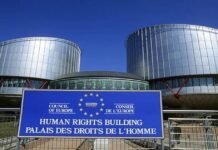
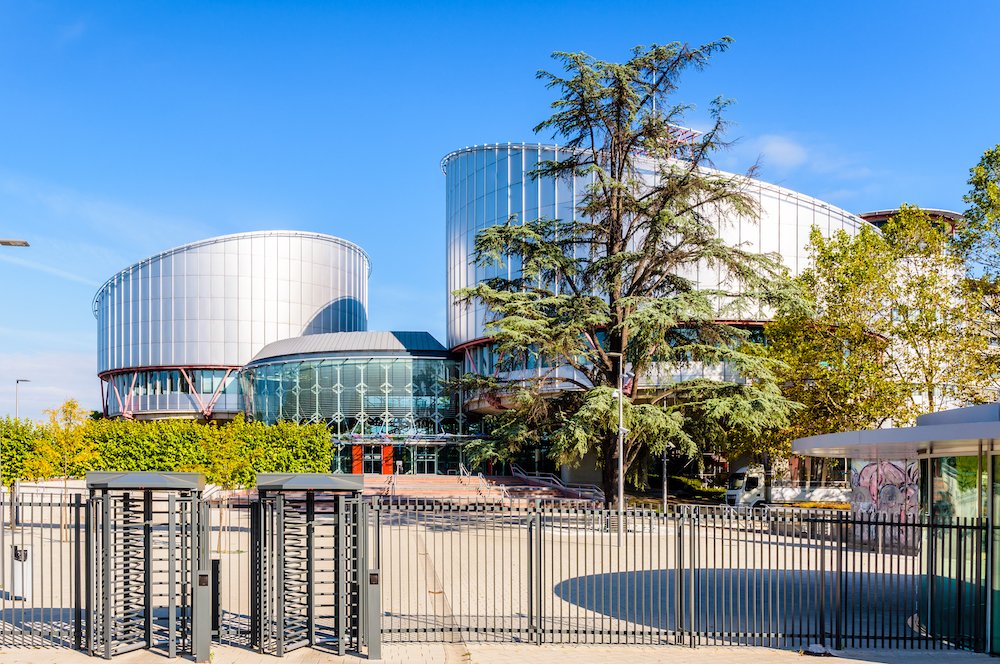
The European Court of Human Rights (ECtHR) has communicated to the Turkish government questions regarding applications alleging rights violations in the conviction of military officers and cadets over their alleged involvement in a coup attempt in 2016.
The court asked Turkey whether the applicants’ convictions were supported by sufficient reasoning and individualized assessments and whether restrictions on access to legal counsel and the absence of oral hearings at the appeals stage were compatible with fair trial guarantees. The questions were communicated to the Turkish government on May 13, with the documents made public on Monday.
The court also asked whether the application of Article 309 of the Turkish Penal Code, which criminalizes attempting to overthrow the constitutional order, had been sufficiently clear and foreseeable in the applicants’ cases.
The applications mainly allege violations of the right to a fair trial under Article 6 of the European Convention of Human Rights (ECHR) and the principle of no punishment without law under Article 7.
The first group of applicants consists of 14 Air Force Academy cadets and three privates from the Kuleli Military High School who were sentenced to aggravated life for attempting to overthrow the constitutional order due to their alleged roles in events on İstanbul’s Bosporus Bridge on the night of the coup attempt.
They argued that Turkish courts failed to provide sufficient legal reasoning, restricted their access to lawyers and applied Article 309 of the Turkish Penal Code in an unforeseeable and overly broad manner. Four applicants also complained that trial courts refused to collect further evidence requested by the defense.
The second group consists of 15 lower-ranking members of the Turkish Armed Forces stationed in the eastern province of Kars, who were initially acquitted but later sentenced to more than 12 years in prison in a retrial for aiding an attempt to overthrow the constitutional order.
They argued that the courts failed to provide transparent and individualized reasoning for their convictions and improperly applied provisions on criminal intent.
The ECtHR asked whether the applicants had received a fair hearing and whether their convictions were compatible with the principle of no punishment without law.
Turkey experienced a controversial military coup attempt on the night of July 15, 2016. President Recep Tayyip Erdoğan immediately accused the Gülen movement, inspired by the late US-based cleric Fethullah Gülen, of orchestrating the plot and significantly expanded an already underway crackdown on the movement’s supporters. The movement strongly denies involvement in the coup attempt or any terrorist activity.
The abortive putsch left 251 people dead and more than a thousand injured. The next morning the Turkish government immediately started a wide-ranging purge of military officers, judges, police officers and other government officials. According to official figures, 150 of the Turkish Armed Forces’ 326 generals and admirals, more than 24,000 officers as well as 4,156 judges and prosecutors were summarily removed from their jobs by emergency decree-laws for alleged ties to “terrorist organizations.”