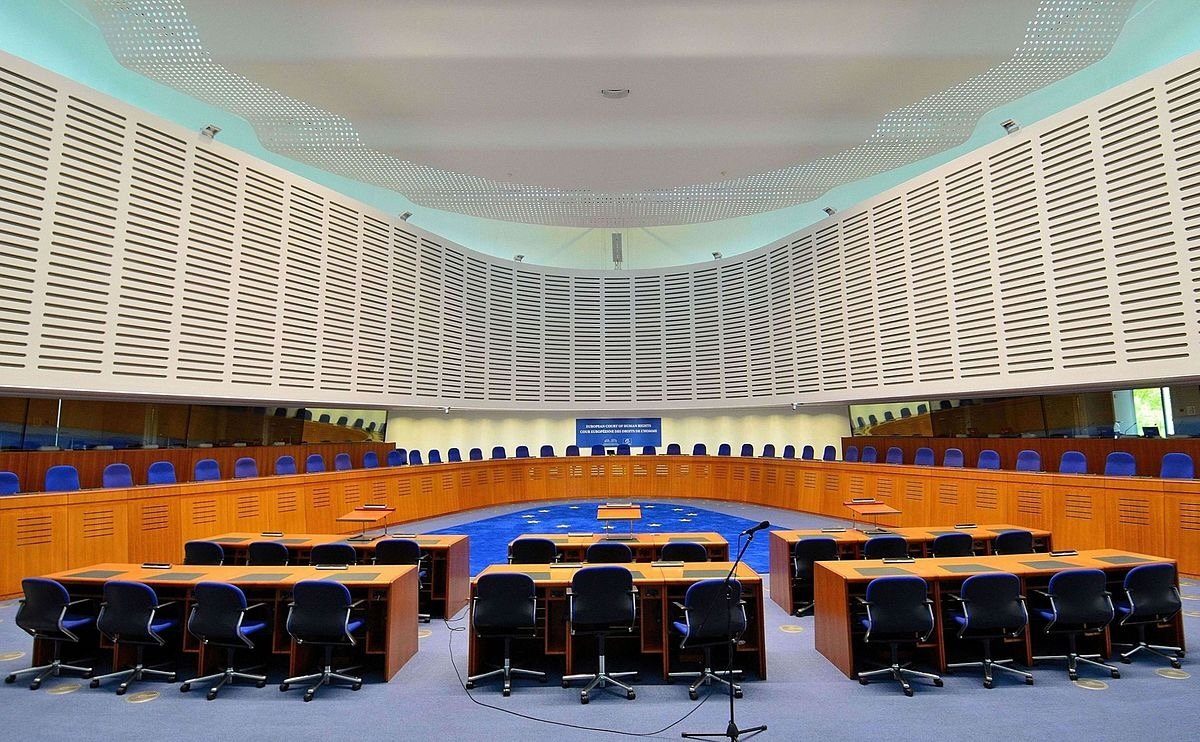
Five Turkish law professors have called on courts to fully apply European human rights rulings in cases involving people convicted of links to the faith-based Gülen movement, saying lawful activities and unverified digital evidence cannot by themselves prove membership in a terrorist organization.
According to the Bold Medya news website the professors, in a joint legal opinion they released, said prosecutors must establish that defendants knowingly and intentionally joined the movement and that European Court of Human Rights (ECtHR) findings must be considered in other cases presenting similar circumstances. The opinion could affect large numbers of convictions stemming from a post-coup crackdown in which alleged use of the encrypted ByLock messaging application and participation in previously legal institutions were frequently cited as evidence.
The opinion was signed by professors Adem Sözüer, İzzet Özgenç, Faruk Turhan, Cumhur Şahin and Tolga Şirin and presented by Levent Mazılıgüney, a lawyer with the Ankara Bar Association.
Turkish President Recep Tayyip Erdoğan has targeted followers of the Gülen movement, inspired by the late Muslim cleric Fethullah Gülen, since corruption investigations in December 2013 implicated him as well as some members of his family and inner circle. He dismissed the probes as a Gülenist conspiracy and designated the movement as a terrorist organization in May 2016, intensifying a sweeping crackdown after a coup attempt in July of the same year that he accused Gülen of orchestrating. The movement denies involvement in the coup attempt or any terrorist activity.
The professors based their conclusions principally on European court rulings in the cases of Yüksel Yalçınkaya and Şaban Yasak, both of whom were convicted of membership in the movement, as well as subsequent judgments involving similar prosecutions.
The legal opinion said the Strasbourg-based court had not introduced new standards for Turkish courts but had required them to fully apply protections already contained in Turkey’s constitution, penal code and criminal procedure law.
It identified four principles that the professors said should govern such prosecutions: courts must establish direct intent to join an organization; lawful civic activities cannot alone be treated as evidence of a crime; digital evidence whose reliability has not been demonstrated cannot support a conviction; and European court judgments must be taken into account in comparable cases.
In a landmark 2023 judgment the European court ruled that Turkey had violated Yalçınkaya’s rights in proceedings that relied decisively on his alleged use of ByLock, an encrypted messaging app that was available on Apple’s App Store and Google Play.
Turkish authorities have considered ByLock to be a secret tool of communication among supporters of the Gülen movement since a coup attempt on July 15, 2016, despite a lack of evidence that ByLock messages were related to the abortive putsch.
The court found violations of Yalçınkaya’s right to a fair trial, freedom of association and the principle that no one may be punished without a sufficiently clear legal basis. It said Turkish courts had effectively treated ByLock use as sufficient proof of knowingly belonging to a terrorist organization, creating a systemic problem requiring broader measures from Turkey.
The European court reached similar conclusions in July 2025 in a case involving 239 applicants convicted of Gülen links. It again rejected the categorical assumption that a person could generally be convicted of membership in a terrorist organization on the basis of ByLock use alone and noted that thousands of comparable applications were pending.
The professors also said activities that were lawful when they occurred, such as belonging to associations or participating in other civil society activities, could not alone establish criminal responsibility. Courts must determine whether defendants knew they were contributing to a criminal organization, the opinion said.
The opinion also said retrials ordered following European court findings should be used to remedy violations for the benefit of those convicted rather than as an opportunity for prosecutors to collect new evidence against them.
Mazılıgüney called on parliament and other political authorities to adopt legislation addressing differences in how lower courts implement rulings by the European court and Turkey’s Constitutional Court. He said inconsistent application of those judgments had prolonged rights violations, undermined legal certainty and generated additional cases before domestic and international courts.