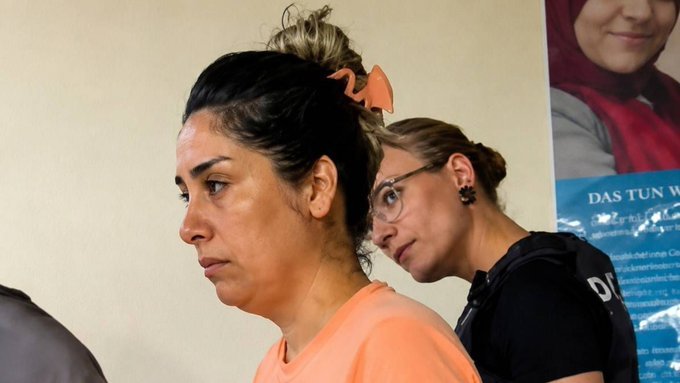
A woman who was seeking asylum in Switzerland but was deported to Turkey despite her lawyer’s warnings that she faced a high risk of imprisonment over her pro-Kurdish political expression was detained upon arrival in Turkey and later jailed pending trial with her 15-month-old baby, the Bianet news website reported Thursday.
Bahar Yalçınkaya was deported from the Rückkehrzentrum Ober Halden return center in Hinteregg, in the canton of Zurich, together with her two children and was detained immediately after entering Turkey. Following a day in police custody, a court ordered her pretrial detention and sent her to Bakırköy Women’s Prison in İstanbul along with her youngest child.
Her lawyer in Switzerland, Murat Özten, had previously said he informed Swiss authorities that Yalçınkaya was the subject of ongoing criminal investigations and court proceedings in Turkey and therefore faced a high likelihood of being imprisoned if returned. According to the lawyer, the investigations concern allegations that Yalçınkaya disseminated propaganda linked to Turkey’s Kurdish political movement.
Turkish authorities frequently prosecute expressions of support for Kurdish political causes as propaganda for the outlawed Kurdistan Workers’ Party (PKK) under the country’s counterterrorism legislation. The PKK, designated a terrorist organization by Turkey and its Western allies, began an armed insurgency against the Turkish state in 1984. It declared a ceasefire and announced its dissolution in 2025.
Yalçınkaya had been living for nearly two years at the Hinteregg return center with her two children, aged five years and 15 months. Her younger child was born in Switzerland.
According to Bianet, a resident at the same facility said police officers forcibly removed Yalçınkaya from her room during the deportation operation. The witness alleged that she was handcuffed behind her back in front of her children before all three were put on a flight to Turkey.
Özten described the manner of the deportation as legally and humanly unacceptable, saying he filed a written complaint with Swiss migration authorities after the incident but had not received a response.
Yalçınkaya’s detention shortly after her return has raised questions about whether Swiss authorities adequately assessed the risks she faced before returning her to Turkey.
Switzerland’s asylum applications are examined by the State Secretariat for Migration (SEM). When an asylum application is rejected, SEM may order the applicant’s removal, while cantonal authorities are responsible for enforcing deportations. Switzerland is bound by the principle of non-refoulement under the 1951 Refugee Convention and the European Convention on Human Rights, which prohibits returning individuals to countries where they face a real risk of persecution, torture or other serious human rights violations.
Swiss public broadcaster SRF reported in late 2025 that at least a dozen Turkish nationals whose asylum applications had been rejected in Switzerland were arrested or imprisoned shortly after returning to Turkey, prompting criticism from refugee organizations that Swiss authorities were failing to adequately assess individual risks before ordering removals. SEM said at the time that it took the reports seriously and would review the cases individually.
Human rights groups have long argued that Turkey’s broad counterterrorism legislation has been used to criminalize peaceful expression and political activity.
This article is republished from Turkish Minute.