Turkey’s proposed legal framework for implementing its renewed peace process with the outlawed Kurdistan Workers’ Party (PKK) drew criticism from opposition parties and legal experts, with critics questioning both the way the legislation was prepared and whether it complies with constitutional principles, Turkish Minute reported.
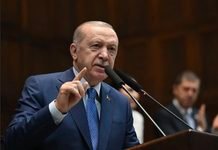
The 12-article bill, submitted to parliament on Wednesday by President Recep Tayyip Erdoğan’s ruling Justice and Development Party (AKP) and its far-right ally, the Nationalist Movement Party (MHP), would suspend investigations, prosecutions and prison sentences for many PKK-related offenses if the group’s disbandment and laying down of arms are officially confirmed. Intentional killings and certain other serious crimes would be excluded.
Speaking after the proposal was submitted, main opposition New Party leader Özgür Özel criticized the process by which the legislation was drafted, saying opposition parties had not been meaningfully involved despite the issue’s significance, according to a report by the ANKA news agency.
Özel said lawmakers from other parties received the bill only shortly before it was formally submitted to parliament after ruling alliance lawmakers had already signed it, describing the procedure as “contrary to the spirit of the process.”
While reiterating his party’s support for efforts to end the decades-long conflict, Özel argued that legal arrangements should proceed along with broader democratic reforms addressing the root causes of the Kurdish issue, a term prevalent in Turkey’s public discourse that refers to the demand for equal rights by the country’s Kurdish population and their struggle for recognition.
He added that his party would also present technical legal objections to the proposal.
Ali Babacan, leader of the opposition Democracy and Progress (DEVA) Party, welcomed the submission of legislation aimed at completing the PKK’s disbandment but criticized what he described as a lack of transparency in its preparation.
In a statement posted on X, Babacan criticized the ruling alliance for collecting lawmakers’ signatures before sharing the final text of the proposal with other political parties, saying such an important process should be conducted transparently and through consultation rather than behind closed doors.
He also argued that limiting the bill to PKK-related cases violated the principle of equality before the law because people in similar legal circumstances would receive different treatment, saying broader reforms strengthening the rule of law, democracy and fundamental freedoms should accompany the initiative.
Müsavat Dervişoğlu, leader of the nationalist opposition İYİ (Good) Party, rejected the proposal outright, calling it an “act of betrayal” during his party’s parliamentary group meeting on Tuesday.
Dervişoğlu also criticized AKP and MHP lawmakers for signing the proposal before seeing its final text, arguing they did not know what they were endorsing.
The Islamist opposition New Welfare Party (YRP) also voiced objections. Deputy Chairman Suat Kılıç called for the legislation to be put to a nationwide referendum, arguing that neither the public nor most lawmakers had been adequately informed about its content.
Legal experts likewise questioned key aspects of the proposal.
According to legal assessments published by the T24 news website, constitutional law professor Tolga Şirin argued that although the bill is presented as a special legal mechanism, its practical effect would amount to an amnesty.
“This bill is, in terms of its consequences, an amnesty proposal,” Şirin said, warning that it could face constitutional challenges if enacted without the parliamentary majority required for general amnesties.
He also argued that several provisions were drafted too vaguely to ensure legal certainty, created unequal treatment between people in comparable legal situations and gave the implementation board established under the bill broad authority to seek the removal of legal restrictions arising from investigations, trials and convictions, raising questions about the division of powers between the executive and the judiciary.
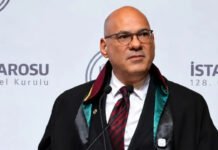
Like Şirin, criminal law scholar İzzet Özgenç, one of the principal drafters of Turkey’s current Penal Code, argued that the proposal could function in practice as a conditional general amnesty.
He said some provisions could allow senior PKK members to avoid prosecution or regain rights such as eligibility for elected or appointed public office even before their supervision periods had expired. Özgenç also argued that the exclusion of intentional killings might prove ineffective if prosecutors suspend cases against organization leaders without first determining whether they participated in or ordered such crimes.
Warning that the bill used imprecise terminology and contained contradictory provisions, he said its enactment in its current form would lead to “an inextricable state of chaos” in practice and called for it to be withdrawn and redrafted within a broader rule-of-law framework.
Government officials have rejected suggestions that the legislation amounts to a general amnesty. Parliament Speaker Numan Kurtulmuş and Justice Minister Akın Gürlek have both said the bill is intended solely to regulate the legal consequences of the PKK’s disbandment and giving up of arms and does not constitute either a general or personal amnesty.
The bill is the latest step in Turkey’s renewed effort to end its decades-long conflict with the PKK.
The initiative began in October 2024, when MHP leader Devlet Bahçeli, a key ally of Erdoğan, unexpectedly called on imprisoned PKK leader Abdullah Öcalan to urge the group to lay down its arms. Öcalan issued that appeal in February 2025, after which the PKK declared a ceasefire, announced its dissolution, held a symbolic weapons-burning ceremony in northern Iraq and began withdrawing its fighters.
Those developments raised questions about the legal status of PKK members who comply with the group’s decision to lay down its arms, including whether they could return to Turkey without immediately facing prosecution or imprisonment.
The PKK, designated as a terrorist organization by Turkey and its Western allies, has waged an armed campaign against the Turkish state since 1984. The conflict has claimed tens of thousands of lives.
An earlier peace process launched in 2013 collapsed in 2015, triggering renewed fighting and widespread destruction in predominantly Kurdish southeastern Turkey.