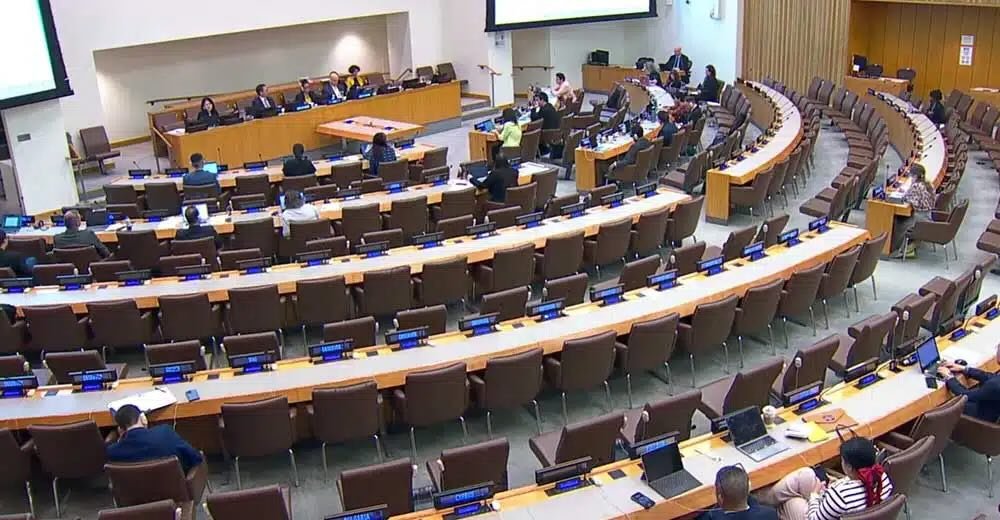
Rights advocates and independent United Nations experts are warning that a key UN committee that controls access for nongovernmental organizations is at risk of falling further under the influence of governments accused of restricting civil society, with Turkey among the countries expected to win seats in next week’s election, Agence France-Presse reported
The election for the 19-member UN Committee on Non Governmental Organizations is scheduled for April 8 at the UN Economic and Social Council. The body plays a key role in deciding which civil society groups receive accreditation to participate in UN activities.
In a statement issued on Wednesday, 40 independent UN experts said they were concerned that some states on the committee were using the accreditation process to keep rights groups out of UN spaces, especially organizations working on human rights.
“We are increasingly concerned by attempts of a number of states to shut civil society out of UN spaces,” the experts said.
They warned that the election was shaping up to be largely noncompetitive and featured mostly countries whose governments have poor records on civil society. The experts said some committee members repeatedly defer NGO applications across multiple sessions, delaying accreditation for years.
They cited the International Dalit Solidarity Network, which waited 15 years before gaining access in 2022, and the Committee to Protect Journalists, which spent four years seeking accreditation before succeeding in 2016.
Human Rights Watch also raised concerns this week, saying that most of the governments seeking seats have records ranging from problematic to abysmal when it comes to rights and civic freedoms.
Under the current lineup of candidates, Turkey is expected to win one of four seats allocated to the Western group, along with the United States, Britain and Israel, because the number of candidates does not exceed the number of available seats. Similar dynamics in most regional groups mean that several countries accused of suppressing civil society are likely to secure seats without facing competition.
The only competitive race is in the Central and Eastern Europe group, where Belarus is competing with Estonia and Ukraine for two seats.
The experts urged UN member states that support civil society participation to challenge the current trend by entering the race.