UN special rapporteurs have urged Turkey to strengthen judicial safeguards and accountability measures in its peace law concerning the outlawed Kurdistan Workers’ Party (PKK), citing excessive government discretion over its implementation and a lack of provisions to address past abuses.
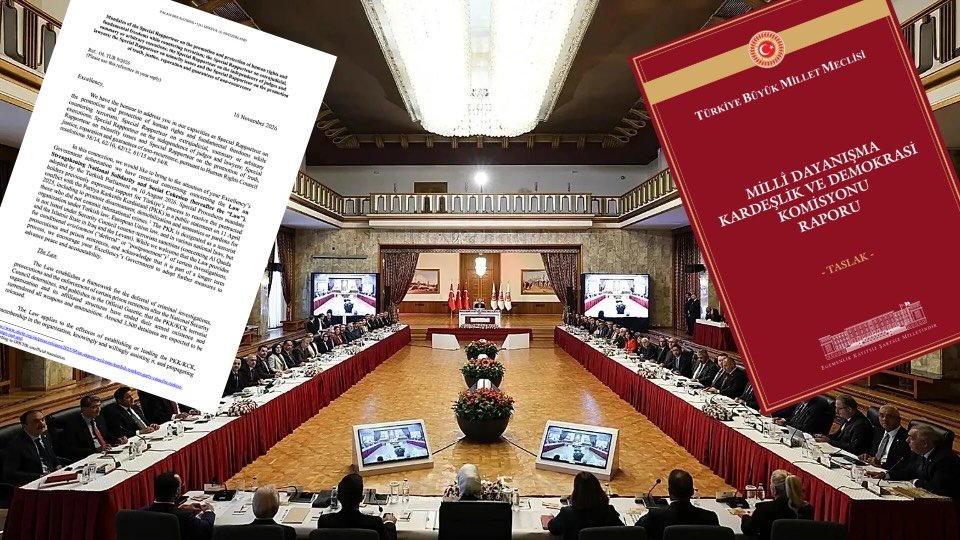
In a six-page letter dated November 16, the experts said the Law on Strengthening National Solidarity and Social Cohesion made the deferral of criminal proceedings and sentences dependent on a National Security Council decision that did not appear to be subject to independent judicial review. They also called for independent monitoring, investigations into past abuses, efforts to establish the truth and compensation for victims.
The letter was signed by Ben Saul, the UN special rapporteur on human rights and counterterrorism; Morris Tidball-Binz, the special rapporteur on extrajudicial executions; Margaret Satterthwaite, the special rapporteur on judicial independence; Nicolas Levrat, the special rapporteur on minority issues; and Bernard Duhaime, the special rapporteur on truth, justice and reparations.
The PKK, designated as a terrorist organization by Turkey and its Western allies, decided in May 2025 to disband following a February call by its imprisoned leader, Abdullah Öcalan. Turkey’s parliament established a cross-party commission in August 2025, which approved a report outlining proposed legal and political measures in February 2026. Parliament passed the bill introduced by lawmakers from President Recep Tayyip Erdoğan’s ruling Justice and Development Party (AKP) and its nationalist ally, the Nationalist Movement Party (MHP), on August 10.
The law took effect on August 18 after being published in the Official Gazette. It allows certain criminal investigations, trials and prison sentences related to the PKK to be deferred under specified conditions.
The experts welcomed the law’s deferral provisions as a step toward peace, saying the approach was consistent with international law, but called for broader coverage and additional safeguards.
Under the law the National Security Council (MGK) must confirm that the PKK and its affiliates have disbanded and laid down their arms before criminal proceedings and sentences can be suspended. The council’s decision must be published in the Official Gazette.
The UN experts said the council’s authority could allow the government to delay or block implementation even if the conditions were met. They also said oversight was largely left to a government board, with no independent monitoring or legal safeguards to prevent future governments from reversing earlier commitments.
The experts urged Turkey to expand the law’s scope to include a wider range of conflict-related acts that did not constitute war crimes or other international crimes, even if classified as terrorism under Turkish law. They said this could include attacks on military targets that complied with the laws of war.
The rapporteurs also said the law did not adequately address abuses committed by either side during the conflict. They called for investigations into serious crimes and efforts to locate missing people, stressing that peace agreements could not override the obligation to prosecute serious international crimes.
They also urged Turkey to review its counterterrorism laws and criminal provisions concerning the dissemination of allegedly false information and insulting the president, citing concerns about vague definitions and overly broad interpretations.
The experts said the law lacked measures to help former members of armed groups reintegrate into civilian life, including support for employment, education and family reunification. They also called for stronger protections for Kurdish minority rights, political participation and freedoms of expression and association.
The rapporteurs asked the Turkish government whether it planned to expand the law’s coverage to acts that did not violate international humanitarian law and review its counterterrorism legislation. They also sought answers on independent verification of the disarmament process, reintegration measures for former members of armed groups and plans to address past abuses.