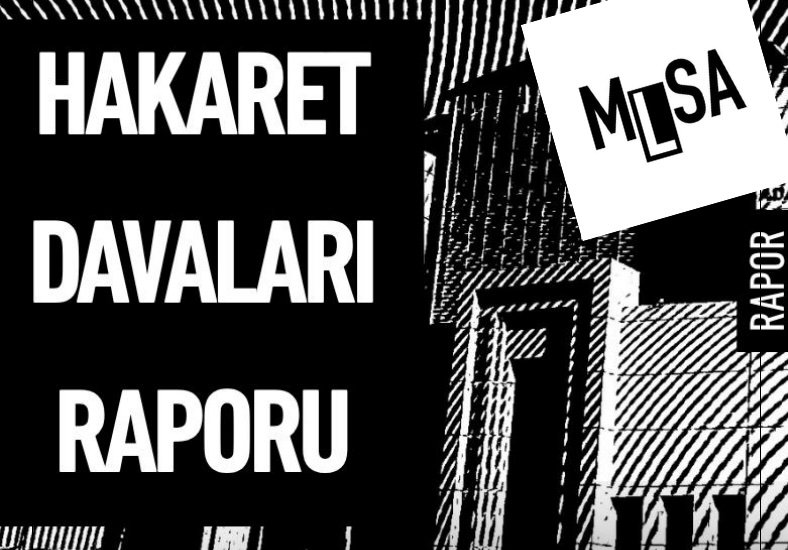
Turkish journalists accounted for nearly two-thirds of defendants in cases involving charges of insulting the president or public officials over a 17-month period, with President Recep Tayyip Erdoğan the leading complainant, according to a new report by the Media and Law Studies Association (MLSA).
Prosecutors used social media posts and news reports as evidence in more than one-third of the hearings, according to the report, which the MLSA said showed that the prosecutions directly target journalists’ routine professional activities.
The report, which monitored 120 hearings between January 2025 and May 2026, found that politicians accounted for 9.2 percent of defendants after journalists and media workers, followed by artists and cartoonists at 3.3 percent.
Cases involving charges of insulting President Erdoğan accounted for 43,3 percent of the monitored hearings, while cases involving accusations of insulting public officials made up 34 percent, the report said.
The MLSA said the insult prosecutions showed a pattern of judicial harassment aimed at silencing critical reporting and investigative journalism through prolonged, repetitive litigation.
The report cited journalist Furkan Karabay, who appeared as a defendant in 15 hearings during the reporting period, as an example of repetitive litigation. It also pointed to the long-running case against journalist Sedef Kabaş, saying lengthy criminal proceedings can themselves serve as a deterrent by forcing defendants to repeatedly appear in court.
Thousands of people in Turkey are investigated, prosecuted or convicted each year for insulting the president under Article 299 of the Turkish Penal Code (TCK), which carries a prison sentence of up to four years. Sentences can be increased by one-sixth if the offense is committed through the media.
Separate provisions criminalize insulting public officials, another charge frequently used in the cases monitored by the MLSA.
Referring to European Court of Human Rights (ECtHR) rulings finding violations of freedom of expression in cases brought under Article 299, the report said courts have increasingly imposed judicial supervision measures, particularly international travel bans, in insult cases, creating pressure on journalists without resorting to pretrial detention.
Of the 32 cases concluded during the monitoring period, 12 ended in conviction, with nine resulting in suspended sentences. Eleven cases ended in acquittal, while others remain pending.
Article 299 of the TCK has long been criticized by human rights and press freedom advocates, who say it is used to prosecute journalists, politicians and ordinary citizens for expressing views critical of the president or even satirizing him indirectly.
In 2021 the ECtHR ruled that the law should be amended or repealed, stating that giving special protection to the president stifles public debate and chills dissent. International human rights organizations have also repeatedly urged the Turkish government to review the law, which they describe as incompatible with democratic norms and international free speech standards.
According to Expression Interrupted, a press freedom monitoring group, 22 journalists are currently behind bars in Turkey. The country’s deteriorating media landscape was further pointed out in the 2026 World Press Freedom Index published by Reporters Without Borders (RSF), where it was ranked 163rd out of 180 nations.
The MLSA is an İstanbul-based freedom of expression watchdog that has been active since 2018, providing legal assistance to individuals whose rights have been violated and representing them in national and international legal proceedings.