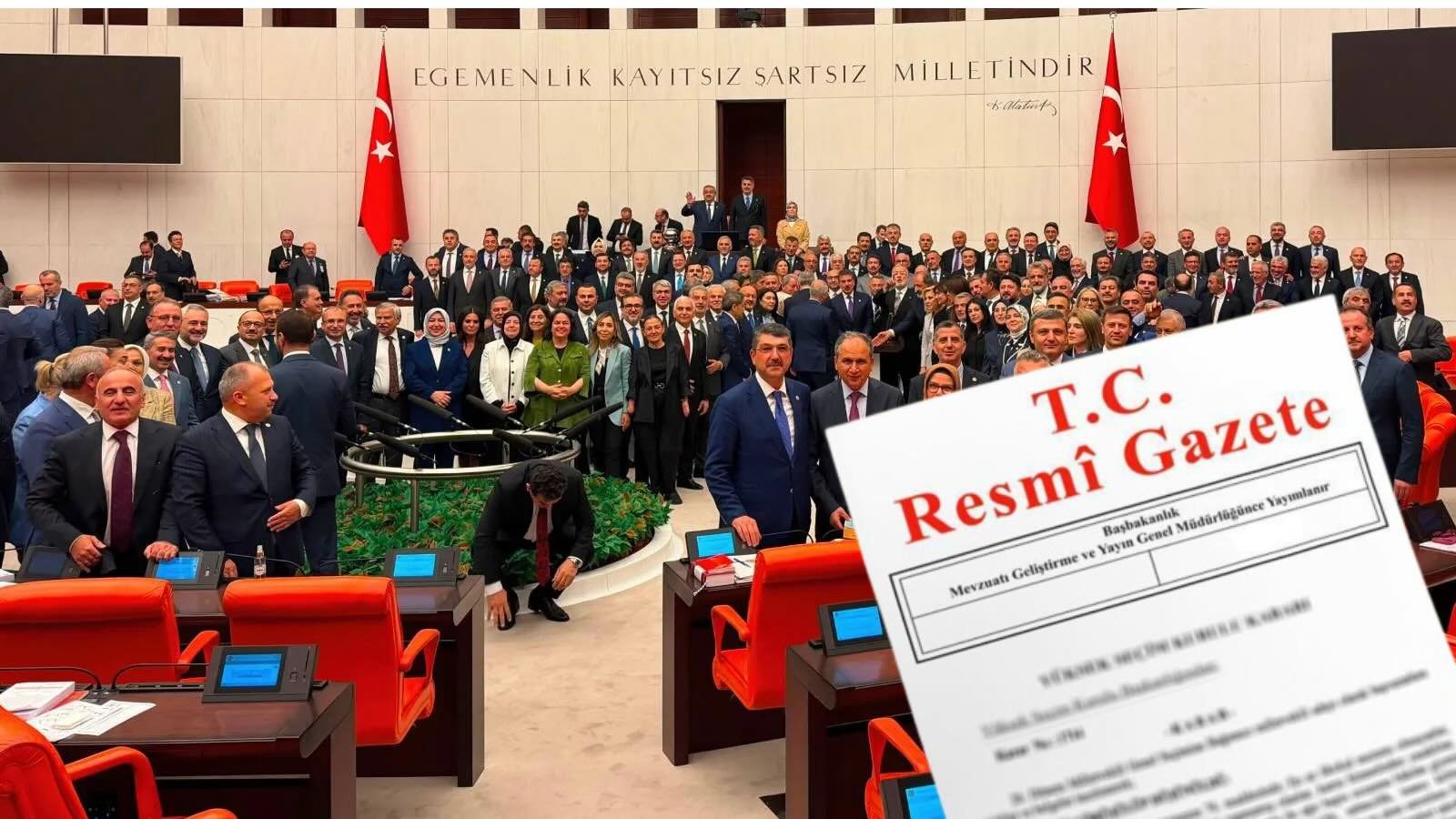
A law allowing some members of the outlawed Kurdistan Workers’ Party (PKK) and people prosecuted or convicted of PKK-related crimes to have their cases or sentences suspended took effect in Turkey on Tuesday following its publication in the Official Gazette.
The legislation is the most concrete legal step yet in a peace initiative launched in late 2024 to end the PKK’s four-decade conflict with the Turkish state, which has claimed more than 40,000 lives.
The relief will apply only if Turkish authorities determine that the group and its affiliates have ended their activities and surrendered all weapons under their control.
The 12-article Law on Strengthening National Solidarity and Social Integration was approved by parliament on August 10 with 467 votes in favor, 87 against and seven abstentions.
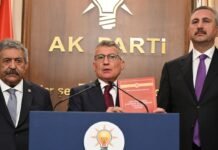
President Recep Tayyip Erdoğan called the vote a “historic consensus” and thanked lawmakers who supported the measure, including his far-right ally Devlet Bahçeli, whose Nationalist Movement Party (MHP) helped launch the latest peace initiative.
Erdoğan also thanked Parliament Speaker Numan Kurtulmuş, lawmakers from his ruling Justice and Development Party (AKP) and opposition parties that supported the law.
“We will continue to manage the process with the same sincerity and care, taking into account the sensitivities of our entire nation, particularly the families of our martyrs and our veterans,” Erdoğan said in a post on X.
Turkey and its Western allies designate the PKK as a terrorist organization.
Relief depends on laying down of arms
Although the law has taken effect, investigations, trials and prison sentences will not be suspended immediately.
Turkish security agencies must first determine that the PKK, its umbrella organization the Kurdistan Communities Union (KCK) and all affiliated groups have ended their activities and surrendered the weapons and ammunition under their control.
The National Security Council must confirm that finding and its decision must be published in the Official Gazette. Prosecutors and courts can begin applying the law only after those steps have been completed.
People seeking to benefit from the law must submit a written application within six months of the National Security Council decision’s publication.
The law applies to founding or leading the PKK/KCK, membership in the organization, knowingly assisting it, disseminating its propaganda, financing its activities and committing offenses as part of the group’s operations.
Investigations and trials involving offenses that carry a maximum sentence of 15 years or less will be suspended for five years. Proceedings involving offenses punishable by more than 15 years, life imprisonment or aggravated life imprisonment will be suspended for 10 years.
The same periods will apply to prison sentences. A judge responsible for the enforcement of sentences will decide whether an eligible sentence should be suspended.
If a person commits no new terrorism offense during the suspension period, an investigation will be closed, a pending trial will be dismissed or a prison sentence will be considered served. Committing a new terrorism offense will cancel the suspension, allowing the investigation, trial or enforcement of the sentence to continue.
The statute of limitations will not run during the suspension period and evidence will be preserved. Property subject to confiscation may still be seized and transferred to the Treasury.
Decisions by prosecutors to suspend investigations can be challenged before a criminal magistrate of peace within two weeks. Court decisions suspending trials can also be appealed within two weeks.
Detention orders will be reviewed
The law does not automatically release everyone detained or imprisoned on eligible charges.
Courts will review detention and judicial supervision orders in cases covered by the law. They may lift those measures if they find that the legal grounds for keeping them in place no longer exist.
Cases pending before a regional appeals court or the Supreme Court of Appeals will be sent back to lower courts so the suspension provisions can be considered.
A committee chaired by Turkey’s vice president will oversee implementation, while a parliamentary commission will monitor the process.
The committee may later ask a court to remove restrictions on a person’s legal or political rights arising from an investigation, trial or conviction. Courts will make the final decision.
Meanwhile, Vice President Cevdet Yılmaz said in a statement on X on Tuesday that the committee established to oversee the PKK’s laying down of arms and dissolution would hold its first meeting on August 24 to determine its working procedures and consider forming subcommittees.
For prison sentences suspended for five years, the committee can request the removal of those restrictions after two years. For sentences suspended for 10 years, it can make such a request after three years.
Weapons, ammunition, explosives, vehicles and other materials surrendered by PKK members will be registered by the authorities.
Killings excluded
The law excludes intentional killings committed as part of PKK activity. It also excludes offenses committed before June 1, 2005, that carry life or aggravated life sentences.
The second exclusion appears to prevent imprisoned PKK leader Abdullah Öcalan from benefiting. Öcalan has been serving an aggravated life sentence since 1999, but the law does not mention him by name.
The measure does not formally grant an amnesty. Instead, it establishes a conditional suspension system under which cases and sentences remain in place for five or 10 years.
Critics argue that the result will be similar to an amnesty because cases will eventually be dismissed and sentences will be considered served if those covered by the law commit no new terrorism offenses during that period.
Could Demirtaş benefit?
The law could make former pro-Kurdish Peoples’ Democratic Party (HDP) co-chair Selahattin Demirtaş eligible for release, depending on how authorities classify his convictions and pending cases. Demirtaş is among the country’s best-known Kurdish political figures.
Demirtaş has been imprisoned since 2016 on terrorism-related charges. The European Court of Human Rights has repeatedly called for his release, ruling that his prolonged detention pursued the political purpose of limiting pluralism and public debate.
New Party leader Özgür Özel criticized the absence of a clear provision for Demirtaş and said the legislation failed to include other democratic reforms sought by the opposition.
“There is no clear legal provision for Selahattin Demirtaş, only uncertainty that leaves the decision open to arbitrary action,” Özel said before the vote.
Özel said he and senior New Party officials would support the law despite their objections because they did not want to block an opportunity for peace. The party allowed its lawmakers to vote individually, with 35 backing the legislation and 54 opposing it.
“We will not stand in the way of peace,” Özel said. “We will clear the way for peace so that no more soldiers are killed, no more children become veterans and no more families receive devastating news.”
He accused the government of conducting the process through private meetings and failing to address lengthy pretrial detention, politically influenced courts and the removal of elected mayors.
The Republican People’s Party (CHP), the pro-Kurdish Peoples’ Equality and Democracy Party (DEM Party), the MHP and most lawmakers from the New Path group, an umbrella group comprising lawmakers from several small parties, also supported the law.
DEM Party co-chair Tuncer Bakırhan described it as an initial step toward ending the conflict through politics.
“This law and this process do not mean concessions or defeat,” he said. “The only winner will be our 86 million citizens.”
Bakırhan said Kurdish politicians would continue campaigning for democratic rights but argued that ending the violence had to come first.
“We must first put out the fire that has burned us all,” he said. “The lesson of 50 years of conflict is that fire cannot be extinguished with fire.”
A joint message from Demirtaş and jailed former Diyarbakır mayor Selçuk Mızraklı was also read during the parliamentary debate. They rejected claims that the initiative was based on a secret bargain and said it should be followed by reforms to strengthen democracy, justice, equality and freedom.
Nationalist opposition
The nationalist İYİ (Good) Party voted unanimously against the law. Its leader, Müsavat Dervişoğlu, described the measure as a concealed amnesty and accused Erdoğan of pursuing the initiative to win Kurdish support for constitutional amendments that could extend his rule.
“The PKK is not laying down its arms; it is changing its methods,” Dervişoğlu told parliament. He claimed that the group would try to achieve through politics what it had failed to obtain through violence.
The Islamist New Welfare Party abstained. Its leader, Fatih Erbakan, said the law offered relief to PKK members without expanding the rights and freedoms of Turkey’s Kurdish population.
Erbakan said, however, that his party could not vote against provisions intended to secure the PKK’s laying down of arms and dissolution.
Bahçeli attended the parliamentary debate, highlighting the unusual role of a hard-line nationalist party in promoting negotiations with the PKK.
MHP deputy chair Feti Yıldız called the vote a “historic day,” saying the initiative had proceeded without the death or injury of a single soldier.
The current peace effort began after Bahçeli made a surprise call in October 2024 for Öcalan to urge the PKK to disband.
Öcalan later urged the PKK to give up its weapons and cease operating as an armed organization, saying Kurdish demands should now be pursued through politics. The group accepted the call and later organized a public event in northern Iraq where militants set fire to a collection of weapons.
The latest talks come more than a decade after negotiations between the government and the PKK broke down in 2015. The breakdown was followed by renewed clashes and increased pressure on Kurdish elected officials, political parties and civil society groups.
Critics say an end to the armed conflict must be accompanied by reforms addressing Kurdish rights, judicial independence and political participation.
This article is republished from Turkish Minute.