Turkey’s ruling alliance submitted legislation to parliament on Wednesday that would suspend investigations, trials and prison sentences for many offenses linked to the outlawed Kurdistan Workers’ Party (PKK) while excluding intentional killings and other serious crimes, Turkish Minute reported.
The 12-article proposed legislation, titled “Law on Strengthening National Solidarity and Social Integration,” was signed by lawmakers from President Recep Tayyip Erdoğan’s ruling Justice and Development Party (AKP) and its far-right ally, the Nationalist Movement Party (MHP).
The proposal would create a legal framework for former PKK members to return to Turkey and rejoin civilian life as part of the latest effort to end the group’s decades-long armed campaign.
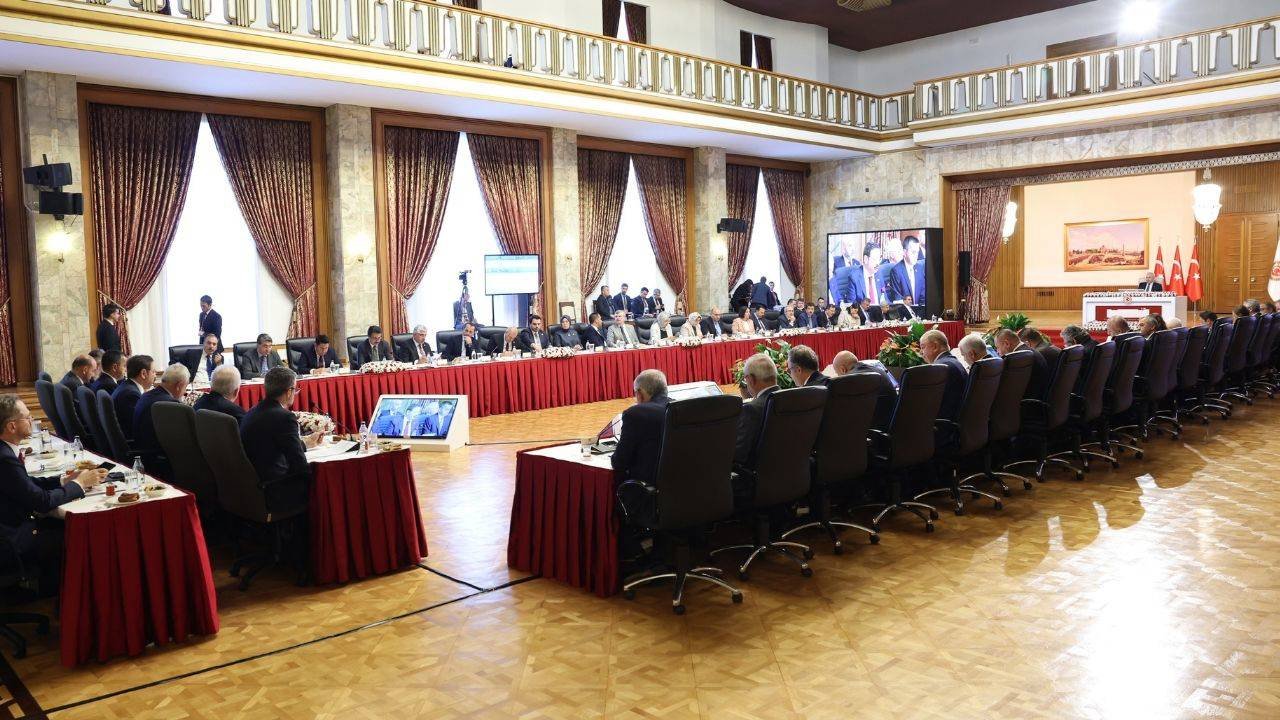
Parliament’s justice committee is expected to begin discussing the bill on Friday before sending it to the General Assembly. The ruling alliance hopes to pass it before parliament begins its summer recess.
Which offenses would be covered?
According to Turkish media reports, the legislation would apply to offenses including establishing or leading the PKK or the Kurdistan Communities Union (KCK), membership in the organization, knowingly assisting it and spreading its propaganda.
The KCK is an umbrella group that includes the PKK.
The bill would also cover crimes committed as part of the organization’s activities and offenses involving the financing of terrorism when committed for the PKK’s benefit.
Intentional killings committed as part of the organization’s activities would be excluded.
The bill would also exclude crimes committed before June 1, 2005, that are punishable by life imprisonment or aggravated life imprisonment.
Turkish media reports said those restrictions would prevent imprisoned PKK leader Abdullah Öcalan from benefiting from the legislation.
Öcalan has been serving an aggravated life sentence on İmralı Island in the Sea of Marmara since 1999.
Cases and sentences would be suspended
Under the proposal investigations and trials for offenses carrying prison terms of up to 15 years would be suspended for five years.
Proceedings involving offenses carrying sentences of more than 15 years, life imprisonment or aggravated life imprisonment would be suspended for 10 years.
If the person committed no new crime during that period, prosecutors would close the investigation or courts would dismiss the case.
A similar system would apply to people who have already been convicted.
Prison sentences totaling no more than 15 years would be suspended for five years. Longer sentences, including life and aggravated life sentences, would be suspended for 10 years.
If the person commits no new offense during that period, the sentence will be treated as completed.
The bill would also allow courts to release eligible people from pretrial detention and lift other court-ordered restrictions.
Those decisions could be appealed within two weeks.
Deadlines for prosecuting offenses or enforcing sentences would be suspended during the period.
Reuters reported that authorities would oversee the return of former PKK members after they laid down their arms, determine how each person would be processed through the justice system and support their reintegration into civilian life.
Laying down of arms must be officially confirmed
People seeking to benefit from the law would have to apply in writing within six months after the National Security Council (MGK) publishes a decision in the Official Gazette confirming that the PKK has ended its activities as an organization and fully laid down its arms.
Applications could be filed with local chief public prosecutors’ offices or institutions authorized to enforce the law.
The interior and defense ministries would jointly prepare separate rules governing surrender and registration procedures after consulting with security agencies.
A board chaired by the vice president would oversee implementation of the law.
Its members would include the ministers of justice, foreign affairs, interior and defense, the presidential secretary-general, the head of the National Intelligence Organization (MİT) and the secretary-general of the MGK.
Reuters reported that MİT would verify whether the PKK had fully laid down its arms.
The board would periodically review decisions suspending cases and sentences.
It could also ask courts or prosecutors to remove legal restrictions resulting from an investigation, trial or conviction.
Such restrictions could be removed after two years for people subject to a five-year suspension and after three years for those subject to a 10-year suspension.
The bill also calls for the establishment of a 17-member parliamentary commission to monitor implementation of the law.
Öcalan not expected to benefit
The PKK has said the legislation should apply to all its members and include measures securing Öcalan’s “physical freedom.”
Turkish media reports, however, indicate that neither Öcalan nor senior members of the organization would be covered by the proposal.
The bill is the latest step in Turkey’s renewed effort to end its decades-long conflict with the PKK.
The initiative began in October 2024, when MHP leader Devlet Bahçeli, a key ally of Erdoğan, unexpectedly called on Öcalan to urge the group to lay down its arms.
Öcalan issued that appeal in February 2025.
The PKK subsequently declared a ceasefire, announced its dissolution, held a symbolic weapons-burning ceremony in northern Iraq and began withdrawing its fighters from Turkey.
Those developments raised questions about the legal status of PKK members who comply with the group’s decision to lay down its arms, including whether they could return to Turkey without immediately facing prosecution or imprisonment.
The PKK, designated as a terrorist organization by Turkey and its Western allies, has waged an armed campaign against the Turkish state since 1984. The conflict has claimed tens of thousands of lives.
An earlier peace process launched in 2013 collapsed in 2015, triggering renewed fighting and widespread destruction in predominantly Kurdish southeastern Turkey.