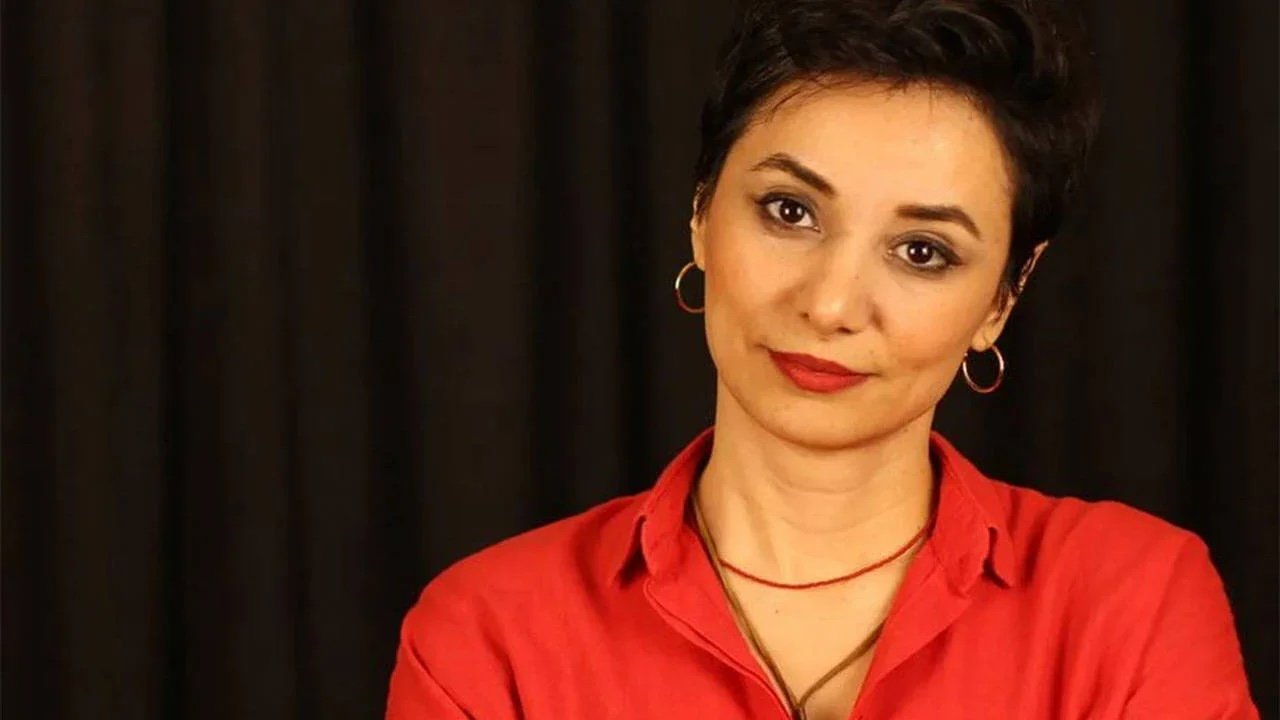
A Turkish journalist has been questioned as a suspect in an “espionage” investigation launched after an email complaint sent to police departments across the country accused her, without presenting concrete evidence, of links to foreign intelligence services, Turkish Minute reported.
Journalist Şule Aydın gave a statement as a suspect after a person identifying himself as “Ahmet Türkeş” sent the complaint to police departments in all 81 Turkish provinces, according to journalist Barış Pehlivan from the Cumhuriyet daily.
The complaint, sent on April 14, 2025, alleged that Aydın may have been in contact with intelligence agencies including the CIA, the US foreign intelligence service; Mossad, Israel’s national intelligence agency; and MI6, Britain’s foreign intelligence service, as well as outlawed groups.
According to Pehlivan, Ankara prosecutors opened an investigation into Aydın in 2025 after the email was sent and later instructed the İstanbul Anadolu Chief Public Prosecutor’s Office in April to question her as a suspect to determine whether her social media posts could constitute a crime.
An İstanbul prosecutor subsequently instructed police to take Aydın’s statement regarding the allegations. Aydın went to a police station with her lawyer, Gamze Pamuk, and gave a statement.
The email accused Aydın of using “insulting, mocking, belittling and provocative expressions” targeting the Turkish state, President Recep Tayyip Erdoğan, members of the judiciary and police through her social media accounts and YouTube broadcasts.
The complainant asked prosecutors to take action against Aydın on accusations including insulting the president, denigrating state institutions, inciting hatred and enmity among the public and espionage.
The complaint also targeted Aydın’s YouTube series “Tımarhanede Bu Hafta” (This Week in the Madhouse), a satirical political commentary program in which she discusses current affairs, government policies, the judiciary, corruption allegations, opposition politics and media narratives in a sharply critical and often humorous style.
The complainant asked that the program be evaluated as part of “organized criminal activity” and called for a separate investigation into Aydın over money laundering.
Pehlivan said the email further requested that Aydın’s social media accounts be examined in coordination with the Security Directorate General, its counterterrorism and cybercrime departments and the National Intelligence Organization (MİT), and that the accounts be “urgently” shut down.
In a section titled “Agent Activities,” the complainant alleged that Aydın was carrying out “a deliberate psychological warfare activity targeting national unity and public order” and claimed she may have links to groups and intelligence agencies referred to in the complaint as “hostile structures,” including foreign intelligence services and the outlawed Kurdistan Workers’ Party (PKK).
Pamuk said the complaint was based on sweeping accusations rather than concrete evidence and appeared to be an attempt to criminalize Aydın’s journalism.
“What matters in criminal law is not the weight of the accusatory labels but whether these allegations are supported by concrete evidence,” Pehlivan quoted Pamuk as saying.
“There is no material evidence, no technical finding, no concrete act constituting a crime and no causal link. In this form, the complaint does not qualify, in terms of criminal procedure, as one capable of substantiating suspicion of a crime.”
It remains unclear whether the investigation will lead to an indictment.
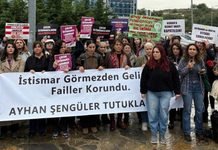
The revelation comes amid growing pressure on journalists in Turkey, where press freedom groups say detentions, prosecutions, censorship and regulatory penalties are being used to silence critical reporting.
At least 13 journalists and one cartoonist were detained in Turkey in the first three months of 2026, while dozens of others continued to face trial under laws on counterterrorism, defamation, public order and insulting the president, according to a media monitoring report by the Bianet news website.
According to Expression Interrupted, a press freedom monitoring group, 26 journalists are currently behind bars in Turkey. Turkey fell to 163rd out of 180 countries in the 2026 World Press Freedom Index published by Reporters Without Borders (RSF) on April 30, down from 159th in 2025, as the group warned that authoritarianism is deepening and media pluralism is increasingly under threat in the country.