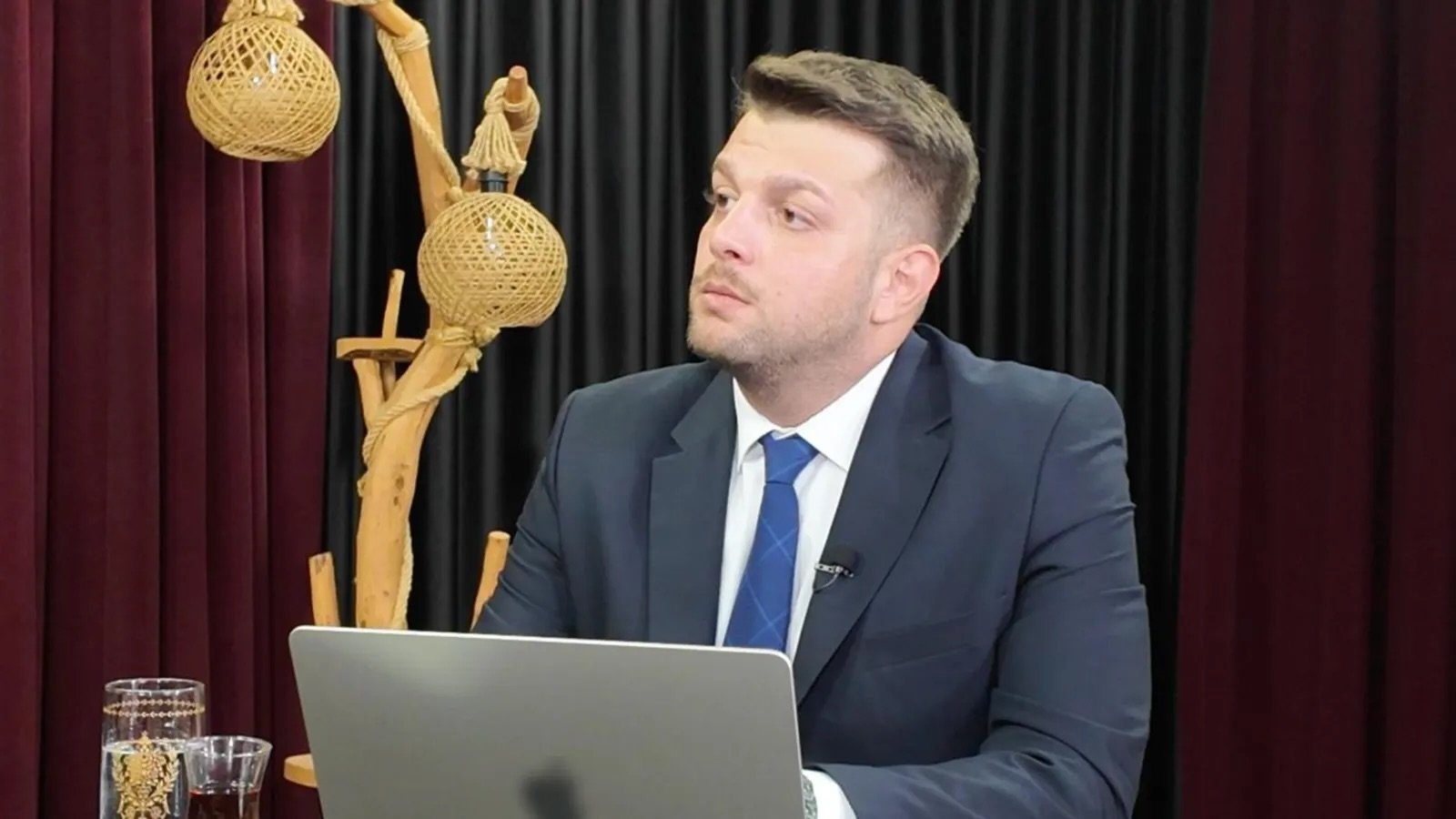
A Turkish court on Monday placed journalist Yiğit Uzun under house arrest for four months on allegations of spreading misleading information, a day after he published an article on an investment fund scandal, the Karar daily reported.
Uzun, a columnist for the pro-government Diriliş Postası daily, said counterterrorism police searched his home in İzmir and seized his electronic devices on November 1 before detaining him and transferring him to Ankara the following day for questioning.
His lawyer, Kaan Bayramzade, initially announced that Uzun had been released in Ankara on November 2 after questioning by prosecutors. Uzun later said on X he had been called back for further questioning and put under house arrest for four months, to be followed by judicial supervision and an international travel ban. He said his lawyers would challenge the decision.
Uzun said he was being investigated under Article 217/A of the Turkish Penal Code, which criminalizes publicly disseminating misleading information, but that he still did not understand why he had been detained.
Uzun had been reporting on an investment fund scandal involving alleged financial irregularities and politically connected figures. His November 1 column examined corporate appointments and business ties in Germany and Spain involving companies linked to Tera, a Turkish financial group at the center of the scandal. It remains unclear which of his articles prompted the investigation.
Following his detention, Diriliş Postası removed his columns from its website without explanation. Uzun also referred to the removal in his statement and said he would continue working as a journalist even if his articles were deleted.
Uzun’s X account was among those targeted by an access-blocking order on October 5, along with accounts belonging to other journalists, activists and organizations.
The scandal emerged after investment funds failed to meet withdrawal requests amid allegations of stock-market manipulation. On September 17 Turkish regulators ordered the liquidation of 131 funds managed by seven companies, affecting more than 455,000 investors. Officials had warned of suspected market manipulation involving investment funds as early as November 2025, raising questions about regulatory oversight. The investigation expanded to financial regulators on Tuesday, when police detained four former senior Capital Markets Board officials and a serving banking regulator official.
Justice Minister Akın Gürlek said investigators had identified 141 individuals and 73 companies that made a combined 187.6 billion lira (about $3.8 billion) in allegedly illicit profits through funds managed by Tera, Pusula and Hedef. The full list of individuals and companies has not been made public.
Introduced in 2022, Article 217/A of the Turkish Penal Code, commonly known as the disinformation law, provides for prison sentences of one to three years for those convicted of publicly spreading false information in a way that causes concern, fear or panic among the public.
The law has prompted widespread criticism from press freedom and rights groups, which say its vague wording gives authorities broad powers to investigate and prosecute journalists and social media users over reporting and online commentary.
According to Expression Interrupted, a press freedom monitoring group, 27 journalists are currently behind bars in Turkey. The country’s deteriorating media landscape was further pointed out in the 2026 World Press Freedom Index published by Reporters Without Borders (RSF), where it was ranked 163rd out of 180 nations.