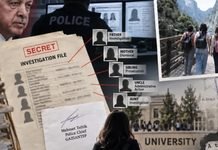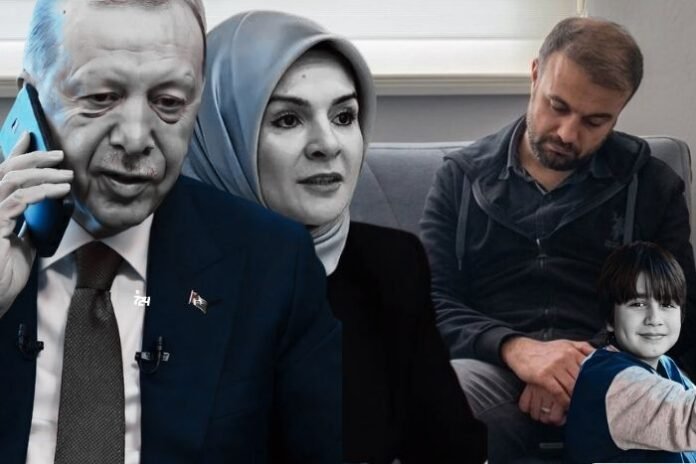
Facing mounting condemnation from opposition politicians, journalists and civil society figures, Turkish government officials have contacted and visited the family of a school shooting victim whose father was purged from public service over alleged links to the faith-based Gülen movement, in an apparent effort to contain the backlash over alleged discrimination, the TR724 news website reported.
Criticism erupted after an official list of victims that circulated on social media showed Yusuf Tarık’s name written in lowercase and in parentheses, unlike the others. The absence of senior government officials at his funeral, while ministers attended the funerals of other victims, further fueled allegations of discriminatory treatment.
Yusuf Tarık Gül was one of nine people killed in a middle school shooting in Kahramanmaraş province on April 15. His father, former police officer Burak Gül, was dismissed from public service over alleged links to the Gülen movement after a coup attempt in 2016 and was later sentenced to more than six years in prison and released last year.
Opposition politicians from across the political spectrum condemned the alleged discrimination, including Ali Öztunç of the Republican People’s Party (CHP), Mahmut Arıkan and Şerafettin Kılıç of the Felicity Party (Saadet), Ömer Faruk Gergerlioğlu of the Peoples’ Equality and Democracy Party (DEM Party), Turhan Çömez of the İYİ (Good) Party, Bülent Kaya of the New Path Party (Yeni Yol) and Yavuz Ağıralioğlu of the Key Party (Anahtar).
Journalists, artists and civil society figures also voiced criticism. Journalist Levent Gültekin said the incident reflected a broader pattern of bureaucratic exclusion of individuals dismissed by emergency decrees and their families. Gültekin described the treatment as “inhumane” and said authorities moved to engage with the family only after the public outcry.
Gültekin added that the ruling Justice and Development Party (AKP) should take lessons from the incident and reconsider its approach toward people dismissed from state institutions through emergency decrees following the coup attempt.
AKP Kahramanmaraş lawmaker İrfan Karabulut had earlier claimed that ministers did not attend the funeral at the family’s request. However, Burak Gül later accepted condolence calls from President Recep Tayyip Erdoğan and Family and Social Services Minister Mahinur Göktaş six days after the attack.
Senior AKP officials, including the party’s deputy chair, who also heads its women’s branch, also visited Gül, who said he raised the problems of people dismissed by emergency decrees and urged authorities to find a solution.
Despite the outreach, the stigmatization of people dismissed by emergency decrees has continued in the pro-government media. The Hürriyet daily deleted, without explanation, a social media post about a letter Yusuf Tarık had sent to his father in prison.
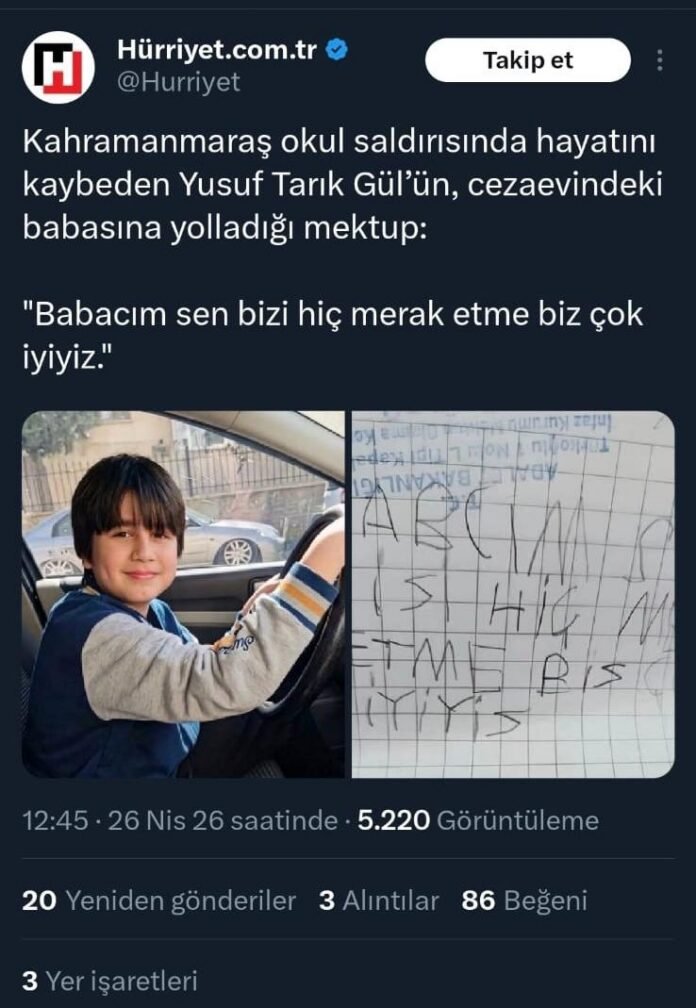
Meanwhile, Fatma Zehra Fidan, a sociologist also dismissed by an emergency decree, said she was briefly detained on charges of disseminating terrorist propaganda after sharing information about the family and was later released under judicial supervision with an international travel ban.
President Erdoğan has targeted followers of the Gülen movement, inspired by the late Muslim cleric Fethullah Gülen, since corruption investigations in December 2013 implicated him as well as some members of his family and inner circle. He dismissed the probes as a Gülenist conspiracy and later designated the movement as a terrorist organization in May 2016, intensifying a sweeping crackdown after the coup attempt in July of the same year that he accused Gülen of orchestrating. The movement denies involvement in the failed coup or any terrorist activity.