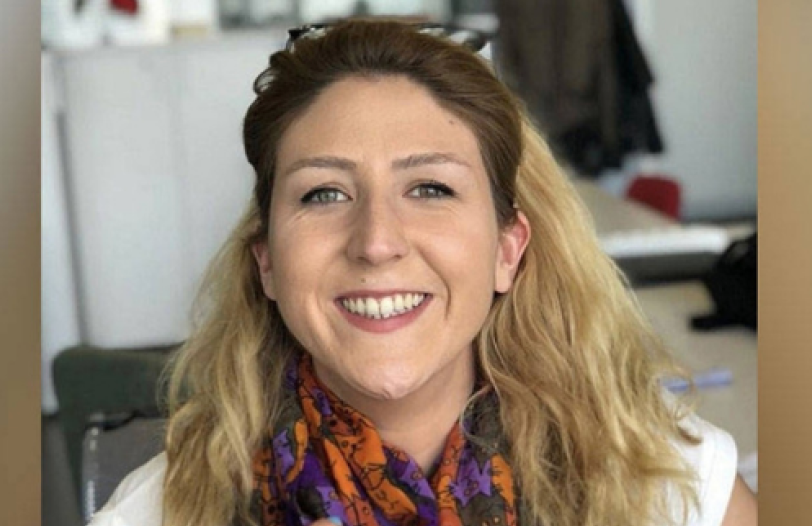
A Turkish court on Wednesday again handed down a suspended sentence of 15 months to journalist Neşe İdil on charges of disseminating terrorist propaganda in her social media posts, in a retrial following a ruling by Turkey’s Constitutional Court.
According to the Media and Law Studies Association (MLSA), the İstanbul 22nd High Criminal Court repeated its previous judgment in February 2024 after the Constitutional Court found a violation of her right to a fair trial and ordered a retrial in October 2025.
The case stems from İdil’s 2015 posts on X showing armed members of the Women’s Protection Units (YPJ) celebrating the liberation of the Syrian Kurdish town of Kobani from Islamic State in Iraq and the Levant (ISIL).
The YPJ is the female branch of the People’s Protection Units (YPG), which Ankara views as an offshoot of the outlawed Kurdistan Workers’ Party (PKK), which has waged a decades-long insurgency against the Turkish state and is designated as a terrorist organization by Turkey and its Western allies.
İdil’s lawyer, Didare Hazal Sümeli, said the posts fell within the scope of freedom of expression and did not meet the legal criteria for propaganda because they did not incite any segment of society. She added that the investigation was unlawfully launched based on a complaint filed through the Presidency’s Communication Center (CİMER).
Sümeli also said the YPG, with which the YPJ is affiliated, were not designated as a terrorist organization at the time of the post and cited Supreme Court of Appeals rulings in similar cases.
İdil has the right to appeal the court’s decision.
The case is one of many in recent years in which Turkish authorities have used broadly worded counterterrorism laws to prosecute journalists, writers and academics, most commonly alleging links to the outlawed Kurdistan Workers’ Party (PKK),
Press freedom and human rights groups state that such cases often rely on reporting activity, sources or published content rather than evidence of involvement in violence.
Turkey’s use of counterterrorism laws against journalists, human rights defenders, lawyers and opposition figures has attracted sustained criticism from international bodies including the United Nations, the European Union and the Council of Europe, which have urged Ankara to end violations of international human rights standards and restore key legal safeguards.
According to Expression Interrupted, a press freedom monitoring group, 27 journalists are currently behind bars in Turkey. The country’s deteriorating media landscape was further pointed out in the 2025 World Press Freedom Index published by Reporters Without Borders (RSF), where it was ranked 159th out of 180 nations.