
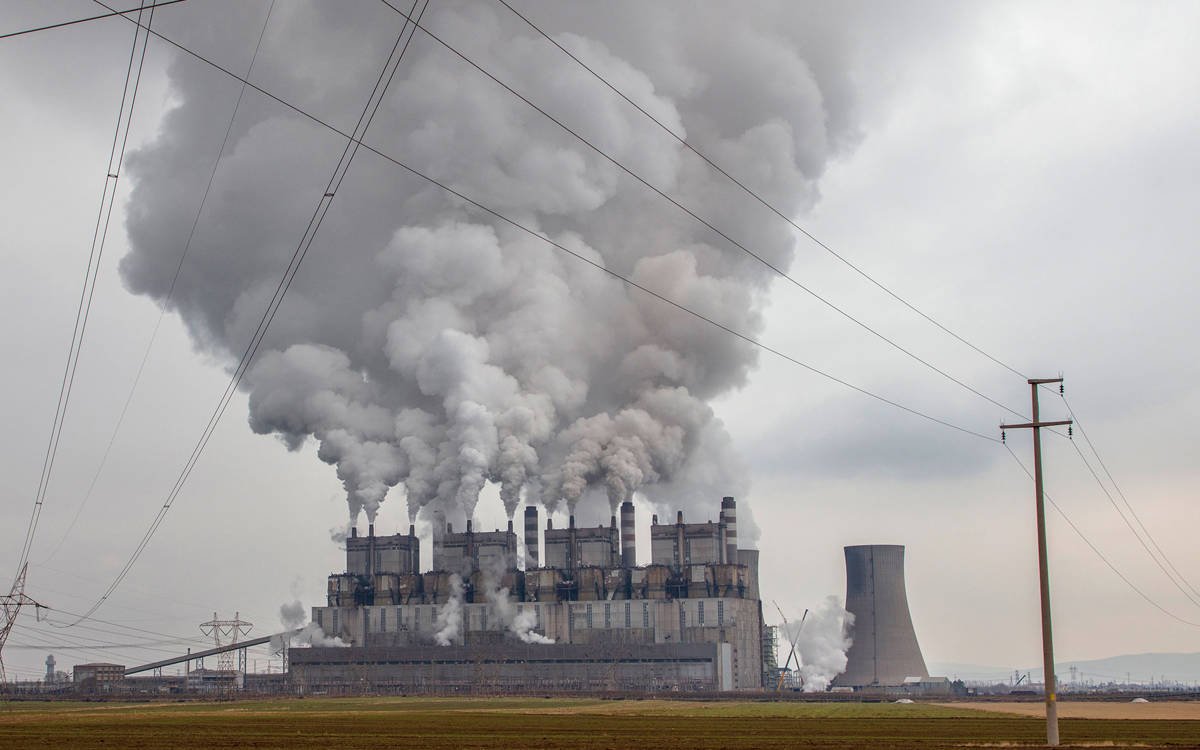
The Turkish government’s continued support for expanding coal power undermines its credibility as host of the United Nations climate summit, Human Rights Watch said Wednesday, pointing to efforts to revive a project rejected by courts and advance another through the permitting process.
The criticism came as world leaders gathered in the Mediterranean city of Antalya for COP31, where Turkish officials have promoted electrification and renewable energy investment as central to the global response to climate change.
But the government has set no timetable for ending coal-fired power generation and continues to support projects that would prolong the country’s dependence on fossil fuels, the rights group said.
“Yet Turkish authorities seem determined to expand coal, even as they host COP31, taking Türkiye in the wrong direction when it comes to combatting climate change and protecting community members’ right to health,” said Deniz Bayram, an assistant Europe and Central Asia researcher at Human Rights Watch.
At the center of the criticism is a proposal to add two units to the Afşin-Elbistan A coal-fired power plant in southern Turkey’s Kahramanmaraş province.
Two administrative courts issued rulings against the expansion in June in five legal challenges brought by local governments, civil society groups and residents. The Turkish government appealed a ruling the following month, according to Human Rights Watch.
Also in July, authorities began the permitting process for expanding an existing coal-fired power plant in the northwestern province of Çanakkale, the group said.
Human Rights Watch, which submitted a legal brief supporting one of the challenges to the Afşin-Elbistan project, said court-appointed experts had identified substantial shortcomings in its environmental impact assessment.
Those included inadequate analysis of air quality, prolonged exposure to pollution and the combined health effects of emissions.
The experts also found that the assessment had not properly examined risks to children, older people and people with chronic illnesses, or the long-term respiratory and cardiovascular effects of pollutants released by burning fossil fuels.
According to the rights group, an expert report also found that attendance figures for a public consultation had been falsified and that most people who attended opposed the expansion.
The dispute reflects a broader tension in the government’s energy policy: expanding electricity use and renewable power while maintaining support for coal.
Coal supplied about 34 percent of Turkey’s electricity in 2025, remaining its largest source of power, according to the Ember energy research group. Wind and solar together supplied 22 percent.
A national energy plan announced November 5 aims to expand electrification and strengthen energy independence by 2040. Human Rights Watch said the plan included ambitious renewable energy commitments but no concrete target for phasing out fossil fuels.
At COP31, the Turkish government is also promoting a nonbinding goal for electricity to meet 35 percent of global final energy demand by 2035. Environmental campaigners have questioned the initiative because it does not require that the additional electricity come from clean sources.
Human Rights Watch also pointed to the continued clearance of forest and olive groves around Akbelen in Turkey’s Aegean region for coal mining to supply two existing power plants, despite opposition from local residents.
The group extended its criticism to Australia, which is leading COP31 negotiations while Turkey holds the conference presidency. Australia, a major coal exporter, is also pursuing fossil fuel expansion, it said.
“The COP31 co-hosts Türkiye and Australia should adopt resolute policies to end the expansion of new fossil fuel projects and set a clear timeline for phasing out existing coal power plants,” Bayram said. “Cancelling coal projects that are still in the permit procedure could be an important step toward this.”
This article is republished from Turkish Minute.