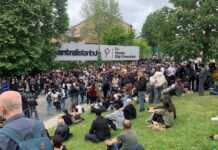
Turkish police monitored peaceful demonstrations by critics of President Recep Tayyip Erdoğan in Norway, Finland and Denmark, identifying participants allegedly linked to the faith-based Gülen movement and forwarding their personal information for use in criminal proceedings in Turkey, Nordic Monitor reported.
The information collected about the demonstrators was sent to the Turkish National Police’s Counterterrorism Department, which on August 11 instructed provincial police departments to identify participants already facing legal proceedings in Turkey and forward their findings to the relevant courts and prosecutors.
An August 19 letter from the Antalya Provincial Police Department, marked “secret” and signed by deputy provincial police chief Yasin Neciboğlu, confirmed that police had prepared an investigative report on one of the identified individuals and sent it to the Antalya 2nd High Criminal Court. Nordic Monitor said the individual was a British national but withheld the person’s name and other identifying details to protect them from possible reprisals.
A classified Turkish police document dated August 19, 2026, reveals intelligence gathering on Gülen movement supporters in Norway, Finland and Denmark. Redactions were made by Nordic Monitor:
Turkish President Recep Tayyip Erdoğan has targeted the faith-based Gülen movement, inspired by Muslim cleric Fethullah Gülen, who died in 2024, since corruption investigations in December 2013 implicated him as well as some members of his family and inner circle. He dismissed the probes as a Gülenist conspiracy and designated the movement as a terrorist organization in May 2016, intensifying a sweeping crackdown after a coup attempt in July of the same year that he accused Gülen of orchestrating. The movement denies involvement in the coup attempt or any terrorist activity.
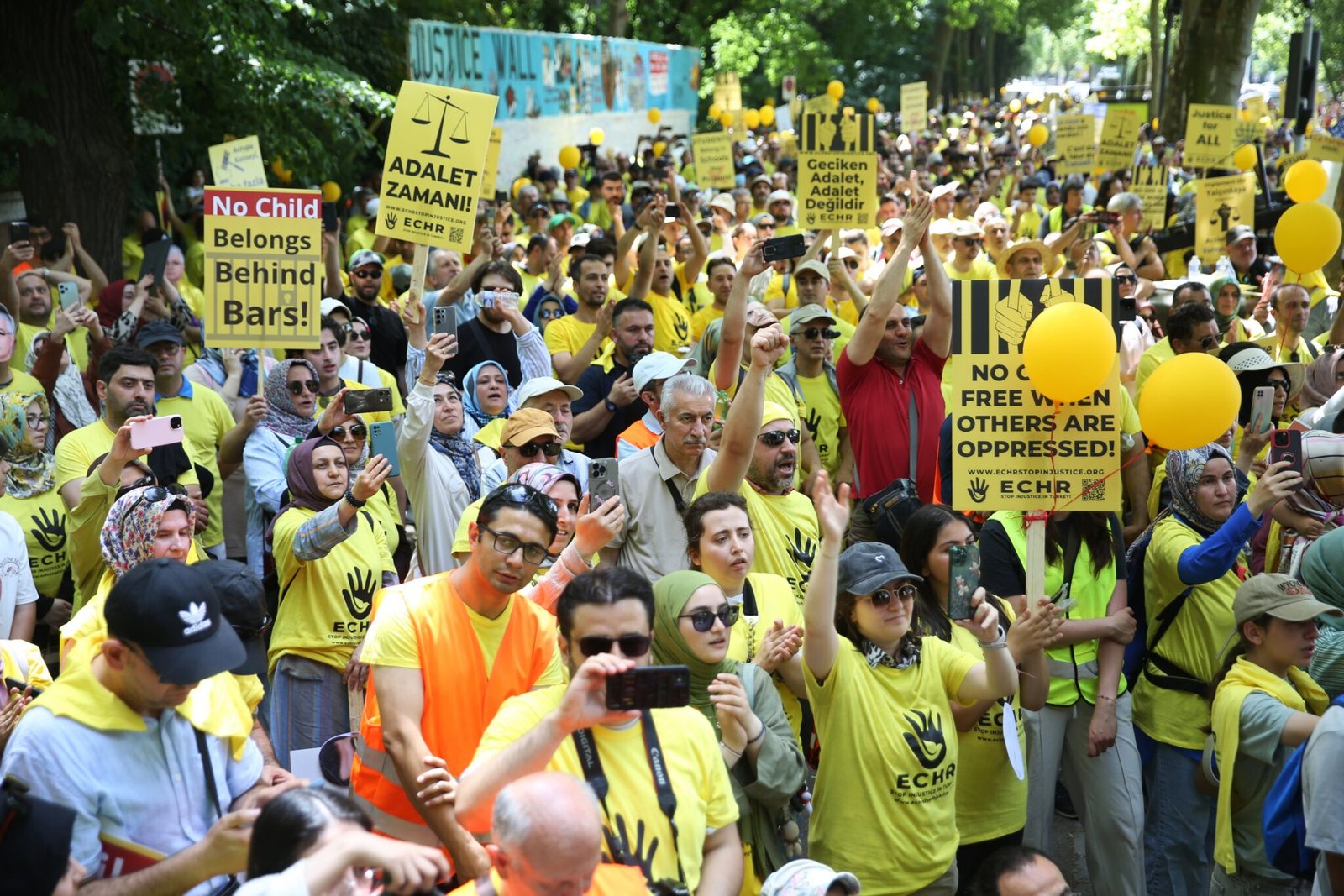
A separate investigative report prepared by two Antalya counterterrorism officers on August 19 included a photograph of people wearing yellow vests bearing a handprint emblem, along with a social media reference and information identifying at least one participant in the demonstrations.
A classified Turkish police investigative report dated August 19, 2026, documents the identification and profiling of a Gülen movement supporter who participated in a peaceful demonstration in Europe. Redactions were made by Nordic Monitor:
The report described the individual as having links to the Gülen movement but cited no evidence of violence or other criminal conduct during the demonstration.
The police report described the investigation as open-source research, citing images shared on social media. The documents did not specify who initially collected the information or how the individuals were identified. They also did not establish whether Turkish intelligence officers conducted covert surveillance in the three countries or whether participation in the demonstrations resulted in new criminal charges.
The demonstrations were held in solidarity with a larger protest outside the Council of Europe headquarters in Strasbourg, France, where participants demanded that Turkey comply with judgments of the European Court of Human Rights (ECtHR).
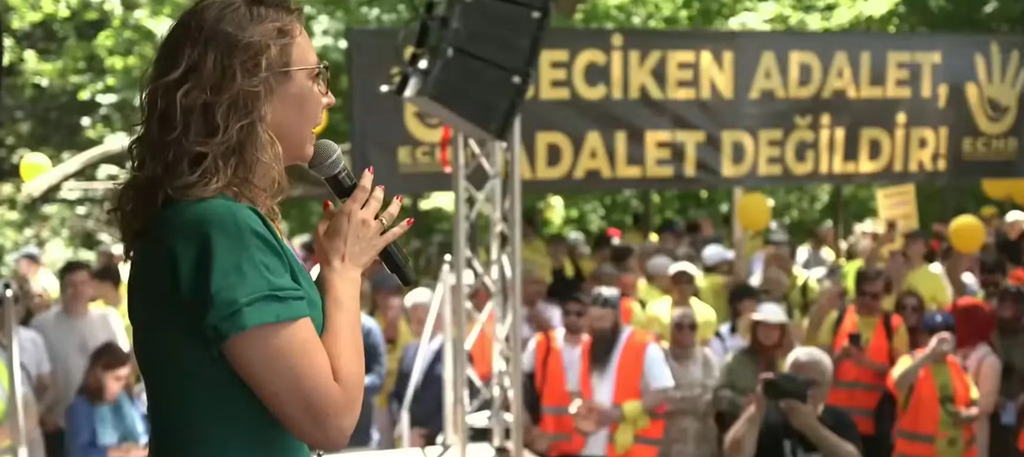
The gathering, the fifth annual Justice March organized by the Peaceful Actions Platform, a coalition of civil society groups, drew thousands of demonstrators on June 24. Protesters urged European institutions to take stronger action over Turkey’s failure to implement binding ECtHR rulings, including those concerning former teacher Yüksel Yalçınkaya, imprisoned businessman Osman Kavala and Kurdish politician Selahattin Demirtaş.
The coalition also criticized Ankara’s continued use of sweeping terrorism allegations against people accused of links to the Gülen movement.
In a September 2023 judgment, the ECtHR found that Turkey violated Yalçınkaya’s right to a fair trial and freedom of association, as well as the principle that there can be no punishment without law. The court identified systemic problems in how Turkish courts handled evidence used to convict people of terrorism offenses based on alleged membership in the Gülen movement.
The Erdoğan government has pursued critics abroad as part of a broader campaign of transnational repression aimed at silencing dissent, particularly those who fled the country after the 2016 coup attempt. Its methods have included surveillance and profiling through diplomatic missions, misuse of international policing mechanisms, denial of consular services and, in some cases, abductions and forcible returns.
The latest disclosures follow earlier reports that Turkish authorities collected information about government critics participating in demonstrations elsewhere in Europe.
In September 2025, the Stockholm Center for Freedom (SCF) reported that Turkish prosecutors had launched criminal investigations into people identified in social media photographs of a demonstration in Copenhagen held in solidarity with a June 2025 protest in Strasbourg. Classified documents showed that Turkish counterterrorism authorities had forwarded information about the demonstrators to prosecutors in several provinces.
In June 2026, SCF reported on a separate Nordic Monitor investigation into Turkish intelligence gathering on participants in the June 2025 Strasbourg demonstration. Information about one participant who had been granted asylum in Germany was later submitted to a Turkish criminal court as additional material in an ongoing case.