Several Turkish conglomerates behind controversial coal mining, quarrying and coastal development projects have been named climate supporters or implementation partners of COP31 by Turkey’s summit presidency, ahead of the UN climate conference in Antalya next month, the BirGün news website reported on Thursday.
Limak Holding, IC Holding and Sinpaş are listed as “climate supporters” on the official COP31 Türkiye website, while Cengiz Holding appears among the summit’s “implementation partners.”
COP31, the 31st United Nations Climate Change Conference, is scheduled to take place in the Mediterranean city of Antalya November 9-20 under Turkey’s presidency.
The COP31 Türkiye website describes climate supporters as stakeholders that “share the vision of COP31 Antalya and contribute to climate action,” including representatives of the private sector, public institutions and civil society.
The listings have drawn scrutiny because the companies have been involved in coal mining, quarrying and large-scale development projects that environmental campaigners say damaged forests, coastlines and local ecosystems.
They also raise questions about how the Turkish COP31 presidency assesses the environmental records of companies publicly associated with a summit intended to accelerate action on climate change.
Coal mining and Akbelen Forest
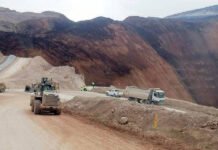
Limak Holding and IC Holding jointly own YK Energy, which operates the Yeniköy and Kemerköy coal-fired power plants in the southwestern province of Muğla.
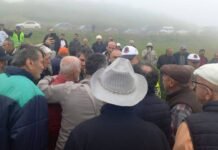
The company sought to expand lignite mining into Akbelen Forest in the province’s Milas district to supply coal to the plants, triggering years of resistance from residents and environmental activists.
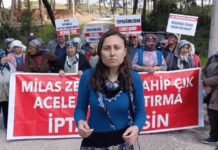
Villagers in nearby İkizköy and environmental campaigners had opposed the expansion since 2019 through protests and legal challenges.
Large-scale tree cutting began in July 2023 after gendarmerie units blocked access to the area and intervened against protesters, prompting nationwide criticism from environmental groups and opposition politicians.
YK Energy has defended the project, saying the company obtained the legally required permits and that mining was necessary to maintain coal supplies for the two power plants. The company has also said the felling of trees in forested areas can only take place with authorization from the Directorate General of Forestry and has denied allegations that it operated outside permitted areas.
The controversy prompted WWF-Turkey to remove Limak Holding Chairwoman Ebru Özdemir from its board in August 2023. WWF said her professional activities were incompatible with the organization’s principles and reiterated its opposition to mining in Akbelen.
The direct connection to coal has made the inclusion of Limak and IC Holding among COP31’s climate supporters particularly notable as the summit’s Turkish presidency says accelerating the clean energy transition is among its priorities.
Sinpaş project faces environmental and legal disputes
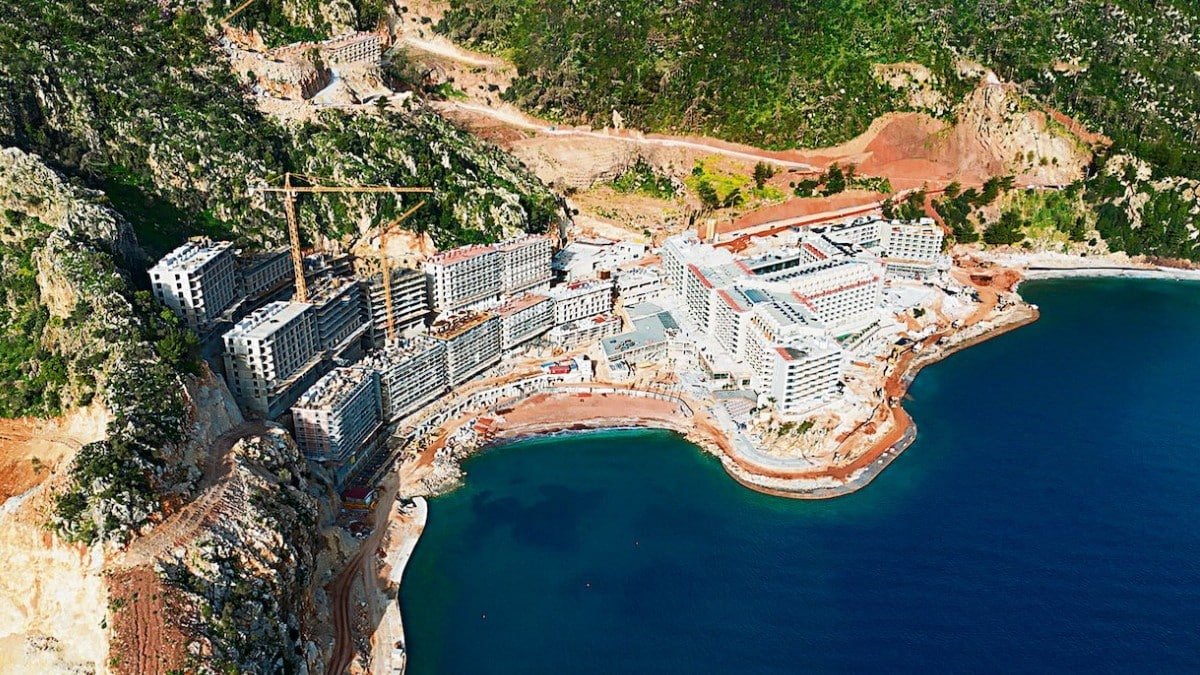
Another company listed as a climate supporter is Sinpaş, whose subsidiary Kızılbük Real Estate Investment Trust, or Kızılbük GYO, has faced years of controversy over a hotel and timeshare development in the coastal resort town of Marmaris, also in Muğla province.
The project is located at Kızılbük Bay within the boundaries of Marmaris National Park and has been opposed by local environmental groups concerned about construction along the coastline and its effects on the surrounding ecosystem.
Turkish authorities have previously imposed fines connected to the project.
Environment ministry inspections found that explosives had been used despite a project commitment that they would not be and that excavated material had entered the sea. The company was fined for both violations, according to earlier official responses reported by BirGün.
The Marmaris Municipality has also imposed penalties over construction and coastal work it said violated planning and shoreline regulations, although several aspects of the project have been the subject of continuing litigation.
In May the Marmaris Urban Policies Association released footage it said showed construction equipment operating directly on the seabed during a period when construction restrictions were in force. The group accused the company of damaging the marine ecosystem.
Kızılbük GYO has denied allegations that it is committing environmental destruction and says its project is being developed with permits issued by the relevant authorities. The company has portrayed the development as an investment that will support year-round tourism and employment in Marmaris.
The project’s legal status has also shifted through a series of court rulings. In September Kızılbük GYO announced that an appeals court had upheld a ruling overturning the Marmaris Municipality’s revocation of 25 Phase 3 construction permits, making that decision final.
Cengiz Holding among ‘implementation partners’
Cengiz Holding, which is listed by the Turkish COP31 presidency as an implementation partner, has also faced long-running opposition to mining and quarrying projects in various parts of Turkey.
Its mining project in Cerattepe, in the northeastern province of Artvin, prompted large demonstrations and legal challenges by residents and environmental organizations concerned about potential damage to forests and water resources.
The company also faced protests over a quarry in the İkizdere district of nearby Rize province in 2021, where residents said extraction for the İyidere logistics port project threatened forests, streams and local livelihoods.
Local authorities subsequently banned demonstrations in the district for a period amid the protests.
Cengiz Holding said the quarry site had been selected by the Ministry of Transport and Infrastructure rather than by the company and that all legally required permits had been obtained. It said the site would be rehabilitated and replanted after the necessary material for the port had been excavated.
Cengiz Holding and Limak Holding are also among five large companies that opposition politicians have for years referred to as the “gang of five,” accusing them of benefiting disproportionately from major government contracts during the rule of President Recep Tayyip Erdoğan.
The group also includes Kalyon, Kolin and MNG.
The companies have denied allegations of improper favoritism, while the government has defended major infrastructure projects carried out under public-private partnership and other contracting models.
The controversy over the COP31 listings comes as Turkey seeks to present the Antalya summit as focused on implementation and measurable climate action.
The Turkish COP31 presidency says its priorities include accelerating the clean energy transition, supporting green and low-carbon industry, protecting vulnerable ecosystems and promoting climate-resilient cities.
Its official website also invites companies to apply to become sponsors, climate supporters or partners and says participating organizations can showcase projects and initiatives related to climate action.
This article is republished from Turkish Minute.