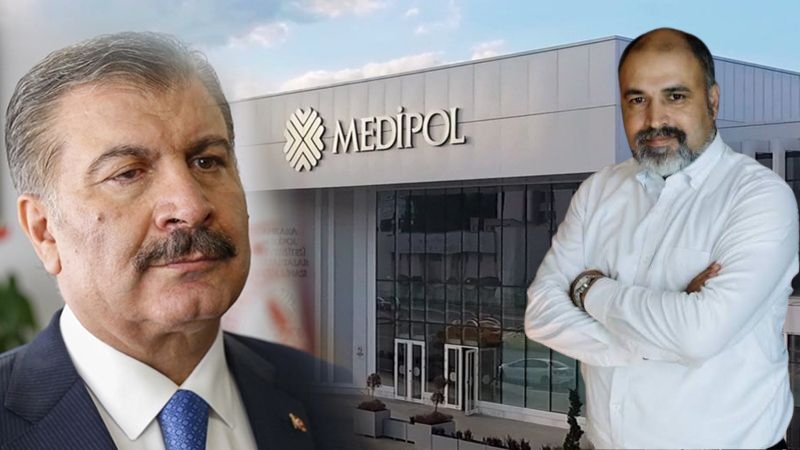
Turkish authorities have blocked access to an investigative report, podcast and social media posts about former health minister Fahrettin Koca and the Medipol healthcare and education group he founded, on national security and public order grounds, days after a court rejected a request to restrict the same content.
The restrictions target an investigative report by Celal Eren Çelik, editor-in-chief of the Haber Alternatif news website, titled “Medipol İmparatorluğu” (Medipol Empire), along with a related podcast on YouTube and his posts on X, according to the Freedom of Expression Association (İFÖD).
The content was blocked under Article 8/A of Turkey’s Internet Law No. 5651, which allows restrictions on online content on grounds including national security and public order. X also made Çelik’s posts inaccessible in Turkey.
The restrictions came after Ankara Medipol University, İstanbul Medipol University, Medipolitan Health and Education Services Inc. and two foundations sought an interim court order restricting the content. The İstanbul 24th Civil Court of First Instance rejected the request on August 12.
Çelik’s report examines the growth of Medipol and Koca’s role in the network as well as allegations concerning the allocation of public land and resources to Medipol-linked institutions and their ties to the health bureaucracy. Koca served as Turkey’s health minister from 2018 to 2024.
The report discusses, among other issues, the allocation of a former state tobacco building and a large tract of land in İstanbul, as well as land in Ankara, to Medipol universities.
The investigation also cites allegations dating from the COVID-19 pandemic that licensing applications by three pharmaceutical companies were delayed in order to favor a similar drug project involving Medipol University.
A related podcast by Çelik discusses the same allegations and raises questions about why the Health Ministry allegedly did not act on the “Newborn Gang” case during Koca’s tenure. The case involves allegations that healthcare workers at private hospitals subjected newborns to unnecessary medical procedures to increase hospital revenue, resulting in the death of at least 10 infants.
Turkey authorities have repeatedly used Law No. 5651 to restrict online content on national security and public order grounds. Courts and administrative authorities have used the provision to block news reports, social media posts, accounts and websites. Press freedom and digital rights groups have criticized Article 8/A for allowing content to be blocked without adequate judicial scrutiny.
Online censorship in Turkey has expanded sharply in recent years. According to the İFÖD’s EngelliWeb project, authorities blocked more than 232,000 websites and domain names in 2025, bringing the total number restricted since 2018 to more than 1.5 million.