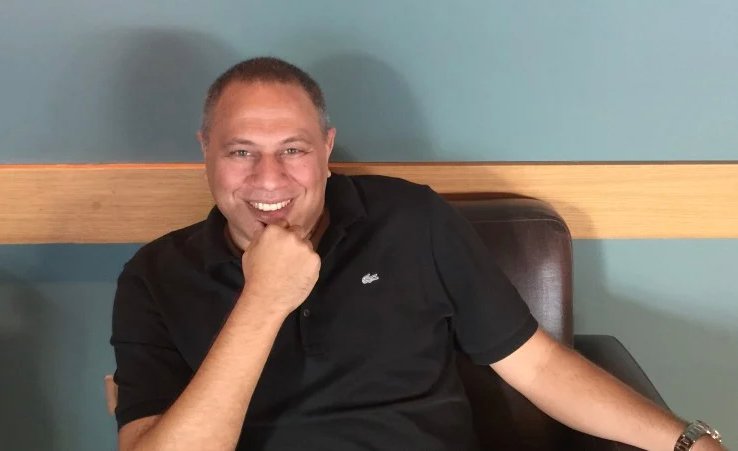
Turkish authorities have blocked access to the X account of prominent digital rights advocate Yaman Akdeniz, a co-founder of the Freedom of Expression Association (İFÖD), citing national security and public order.
İFÖD said on Thursday that the account was blocked under Article 8/A of Turkey’s internet law and was subsequently withheld by X in Turkey.
Akdeniz, a law professor at İstanbul Bilgi University, is one of Turkey’s best-known experts on internet law, freedom of expression and digital rights. He is also a co-founder of İFÖD, whose EngelliWeb project tracks and publicizes court and administrative orders blocking access to social media accounts, websites and news reports.
Akdeniz said he would not open a new account and would challenge the restriction.
“I received information from X that my account would be closed, but there is no information about what the decision is,” he told journalist Hilmi Hacaloğlu.
“I knew my account had been at risk for a long time, but I did not expect it today. In the current climate, it is in line with the ordinary course of events. I will fight to get my account back.”
Fellow digital rights lawyer Kerem Altıparmak criticized the move, noting that Akdeniz had spent two decades challenging online censorship in Turkey and had been among those who successfully fought an earlier nationwide Twitter ban before the Constitutional Court.
“Yaman Akdeniz, who has been fighting digital censorship in Turkey for 20 years — and whose application to the Constitutional Court helped keep X itself accessible — has now had his own account blocked, and X has complied,” Altıparmak said.
“X is cutting off the branch it is sitting on and destroying one of the last remaining spaces to breathe.”
Akdeniz was among the applicants in a landmark 2014 case in which Turkey’s Constitutional Court ruled that the nationwide blocking of Twitter violated freedom of expression and lacked a legal basis.
The move against Akdeniz comes amid a wider wave of social media restrictions in Turkey.
Turkish courts have recently blocked 194 X accounts, including those of economists, academics, journalists and politicians, amid turmoil in the country’s investment-fund market and investigations into alleged market manipulation.
According to İFÖD, the restricted accounts had a combined following of about 12 million.
The affected accounts included economist and columnist Uğur Gürses, economist Veysel Ulusoy, finance professor Bilge Yılmaz, journalists Naz Yavuzarslan and Dinçer Gökçe and actor Orhan Aydın.
İFÖD has criticized the growing use of Article 8/A to block entire social media accounts rather than individual posts, arguing that such measures can restrict large amounts of lawful content and disproportionately interfere with freedom of expression.
Turkey remains one of Europe’s worst performers on internet freedom. Freedom House rated the country “Not Free” in its 2025 Freedom on the Net report, giving it a score of 31 out of 100. Turkey ranked last among the European countries assessed, with the watchdog citing repeated website blocks, social media restrictions and prosecutions over online content.
This article is republished from Turkish Minute.