Turkish authorities blocked access to at least 659 online accounts, posts, mobile applications and websites related to İstanbul Pride events and protests against a NATO summit in Ankara, according to an analysis by the Expression Interrupted press freedom monitoring platform.
Of the restricted items 339 were related to İstanbul Pride events held in June and 320 to protests against the July 7–8 NATO summit in Ankara. They included 454 X and Instagram accounts, 177 online posts, 24 mobile applications, three domain names and one news article.
At least 300 of the blocked items were the result of court orders citing national security and public order concerns, a justification Turkish authorities have frequently used to restrict online content.
The measures affected journalists, news outlets, civil society organizations, political parties, youth groups and LGBTI+ organizations. Fifty social media accounts and websites belonging to 41 independent media outlets and journalists were among those blocked.
The affected outlets included the independent news platform Sendika.Org, whose X account was blocked by court order on July 2, although the order had not yet been enforced.
Sendika.Org editor Ali Ergin Demirhan had both his original X account and a replacement account withheld in Turkey. He described the practice as a systematic effort to prevent journalists from reaching readers through alternative accounts.
Journalist Aslı Alpar, founder of the Muzır Neşriyat independent media platform, also had her X account blocked ahead of the Pride march. The court based its decision on a 2013 X post in which Alpar criticized legislation aimed at preventing violence against women for failing to mention LGBTI+ people as the basis for the restriction. Alpar described the measure as preventive censorship intended to restrict journalists’ ability to report on protests.
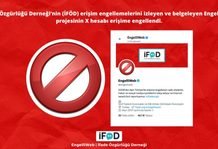
Online censorship in the country has expanded sharply in recent years. According to Freedom of Expression Association’s (İFÖD) EngelliWeb, authorities blocked more than 232,000 websites and domain names in 2025, bringing the total number restricted since 2018 to more than 1.5 million.
Turkey has faced repeated criticism from press freedom groups and human rights organizations for its restrictions on free expression and its pressure on independent journalism. Social media platforms are frequently targeted by government orders, especially when posts involve high-ranking officials or politically sensitive material.
The US-based democracy watchdog Freedom House’s “2025 Freedom on the Net” report placed Turkey among the five countries with the steepest long-term declines in internet freedom. The organization cited broad censorship practices and intensified digital controls over the past 15 years, giving Turkey a score of 31 out of 100, putting it in the bottom tier of the 72 countries assessed.