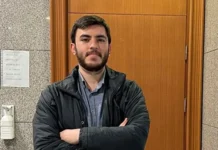

A former Turkish official who exposed corruption at a state-run company operating under Turkey’s Ministry of Culture and Tourism was detained on Wednesday ahead of his trial, a move that has renewed concerns over accountability and whistleblower protection in Turkey.
Tayhan Şimşek is due to appear before a judge at Ankara’s 84th Criminal Court of First Instance on February 19 on charges of “unlawfully obtaining or disseminating personal data” and “illegally recording personal data.”
Şimşek was appointed general manager of TURAŞ, a state-run company overseeing beach and water treatment operations in touristic regions, in August 2022. Shortly after assuming the role, he submitted a report directly to the tourism minister documenting irregularities within the company.
Rather than addressing the findings or launching an investigation, the tourism ministry filed a criminal complaint against Şimşek with the Ankara Chief Public Prosecutor’s Office. Facing mounting pressure, he resigned on December 24, 2022.
The ministry’s complaint framed Şimşek’s request for asset declarations from certain managers as a criminal act. The prosecutor’s office filed an indictment on June 23, 2025, which was accepted by the court.
According to Şimşek’s report, revenues from some facilities were underreported, and certain facilities were falsely listed as outsourcing services to justify improper payments. He also requested asset declarations from several managers to investigate potential illegal enrichment.
Turkey has been in decline in fighting corruption since 2013, the year major scandals implicated top government figures and led to the jailing of investigators rather than the accused. Police and prosecutors involved in the 2013 corruption investigations were jailed, while then-prime minister Recep Tayyip Erdoğan and the members of his family who were implicated have never appeared in court.
The erosion of the rule of law worsened after a coup attempt in July 2016, when more than 4,000 judges and prosecutors were removed under the pretext of an anti-coup fight. The AKP government is accused of replacing the purged judicial members with young and inexperienced judges and prosecutors who have close links to the AKP.
The Council of Europe’s (CoE) anti-corruption watchdog GRECO has repeatedly called on Turkey to implement longstanding recommendations, including improving legislative transparency, managing conflicts of interest, enforcing asset declaration rules, narrowing parliamentary immunity and providing confidential ethics training.
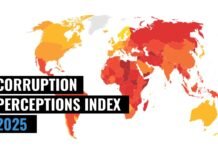
According to the 2024 Corruption Perceptions Index by Transparency International, Turkey continues to rank well below the global average, with a score of 34 out of 100, underscoring persistent concerns over public sector integrity.