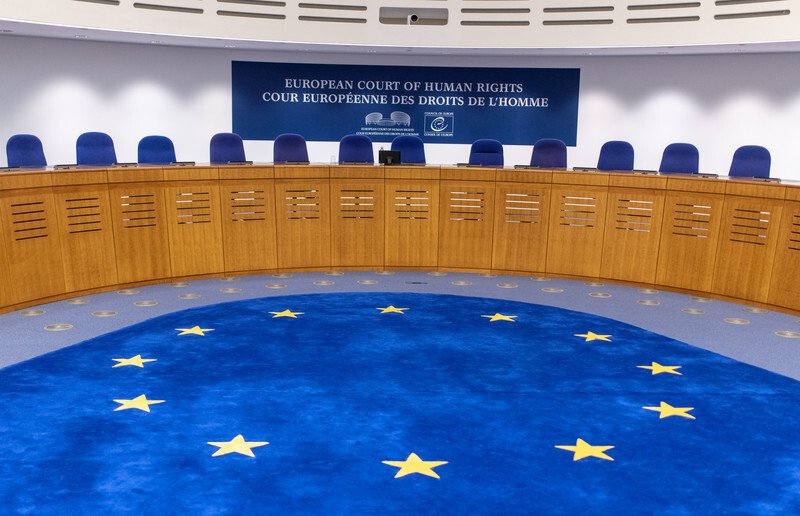
The European Court of Human Rights (ECtHR) has communicated to the Turkish government questions regarding applications filed by 62 people who allege that their lengthy pretrial detention following a coup attempt in 2016 lacked sufficient legal justification and violated their rights.
The court asked whether the applicants’ arrest was based on reasonable suspicion; whether their pretrial detention had been ordered on sufficient grounds; and whether they had an effective means to challenge its lawfulness. It also asked whether compensation under Article 141 of the Turkish Code of Criminal Procedure constituted an effective remedy.
The questions were communicated to the Turkish government on June 23, with the documents made public last week.
The applications were filed by 62 individuals, mostly former military officers and police officers, who were detained over alleged links to the faith-based Gülen movement and accusations of membership in a terrorist organization.
The complaints concern violations of the right to liberty and security under Article 5 of the European Convention on Human Rights. Several applicants also alleged violations of Article 3 prohibiting torture and inhuman or degrading treatment or punishment
Turkish President Recep Tayyip Erdoğan has targeted the Gülen movement, a worldwide civic initiative inspired by the ideas of Muslim cleric Fethullah Gülen, who died in 2024, since corruption investigations in December 2013 implicated him as well as some members of his family and inner circle. He dismissed the probes as a Gülenist conspiracy and designated the movement as a terrorist organization in May 2016, intensifying a sweeping crackdown after the coup attempt in July of the same year that he accused Gülen of orchestrating. The movement denies involvement in the coup attempt or any terrorist activity.
The applicants said their detention was not based on reasonable suspicion and that its duration was excessive. They also complained of procedural violations, including delayed rulings on release requests, a lack of oral hearings during detention reviews, limited access to case files, delays in the notification of decisions, delays in the reviews and lengthy proceedings before Turkey’s Constitutional Court.
Some applicants also complained of ill-treatment and poor conditions while in police custody.
According to the latest figures from the justice ministry, more than 127,000 people have been convicted of alleged links to the movement since 2016, with 10,485 still in prison and legal proceedings ongoing against 83,404 individuals.