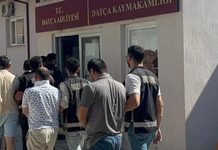
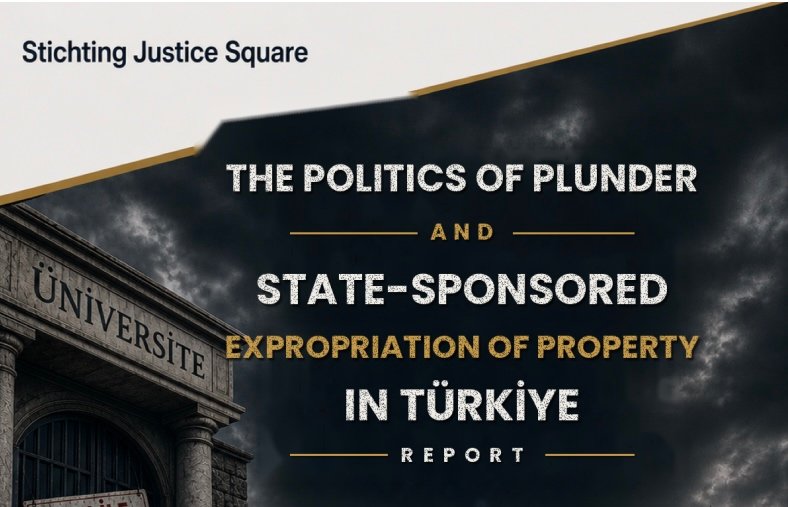
Turkish authorities have seized 1,326 companies over alleged links to the Gülen movement since a 2016 coup attempt, taking control of assets worth $32 billion in a process that violated property rights and legal safeguards, according to a new report by the Netherlands-based human rights group Stichting Justice Square.
The report, titled “The Politics of Plunder and State-Sponsored Expropriation of Property in Turkey,” says the seizures extended beyond commercial companies to schools, universities, dormitories, foundations, associations and media organizations.
The report found that emergency powers introduced after the coup attempt as temporary measures evolved into a permanent system of seizure and economic liquidation, violating property rights and legal certainty. Some companies were financially weakened under trustee management and later sold below what the report said was their actual value.
Although the state of emergency ended in July 2018, the trusteeship mechanism remained in place through subsequent legislation. Under a law adopted in February 2025, courts can appoint Turkey’s Savings Deposit Insurance Fund (TMSF) as trustee for companies or assets when there is “strong suspicion” of certain crimes, including money laundering and terrorism-related offenses, without requiring a final conviction. The law also allows the TMSF to sell all or part of the companies or their assets or to dissolve and liquidate them.
Turkish President Recep Tayyip Erdoğan has targeted the faith-based Gülen movement, inspired by Muslim cleric Fethullah Gülen, who died in 2024, since corruption investigations in December 2013 implicated Erdoğan as well as some members of his family and inner circle. He dismissed the probes as a Gülenist conspiracy and designated the movement as a terrorist organization in May 2016, intensifying a sweeping crackdown after the coup attempt in July of the same year that he accused Gülen of orchestrating. The movement denies involvement in the coup attempt or any terrorist activity.
TMSF was appointed as trustee for the 1,326 companies, with trusteeship later lifted for 643 of them, while the fund continues to control 683 companies in 35 provinces.
Under emergency decrees, authorities permanently closed 1,595 associations, 155 foundations, 1,061 private schools, 841 student dormitories, 223 tutoring centers, 48 hospitals and other health facilities, 15 universities and 19 labor unions, transferring their assets to the Treasury or other state bodies, according to the report.
The closed foundations alone owned 2,214 properties, while the report estimated the value of the school properties at about $2.76 billion at the time.
The seizures affected some of Turkey’s largest industrial groups and best-known brands, including Boydak Holding, Koza İpek Holding, Naksan Holding and Kaynak Holding.
Boydak Holding included major furniture brands İstikbal and Bellona as well as cable manufacturer HES Kablo, which were subsequently sold.
Twenty-two Koza İpek Holding companies, spanning mining and media, were transferred to the TMSF and subsequently confiscated, including Koza Altın, which accounted for roughly a third of Turkey’s gold production and was later transferred to the state-owned Turkey Wealth Fund.
Authorities also seized 42 companies belonging to Gaziantep-based Naksan Holding. According to the report, Naksan Plastik was later sold for less than one-tenth of what it said was the company’s actual value.
The seizures also affected Turkey’s media sector. Emergency decrees issued after the coup attempt provided for the assets and property of shuttered media organizations to be transferred to the Treasury without compensation. The report counted 187 media organizations permanently closed under emergency decrees, including 70 newspapers, 33 television stations and 34 radio stations.
Zaman, once the country’s highest-circulation newspaper, Samanyolu TV, Cihan News Agency, Kanaltürk and Bugün TV were among prominent media organizations seized or put under trusteeship over alleged Gülen links, with the assets of the Samanyolu and İpek media groups subsequently transferred to the state without compensation.
The report said property was in some cases put up for sale before the criminal proceedings underlying the seizures had been completed. It cited Dumankaya, formerly a major housing developer, whose 86 properties were put up for sale after the TMSF began liquidation proceedings before there was a final court decision.