
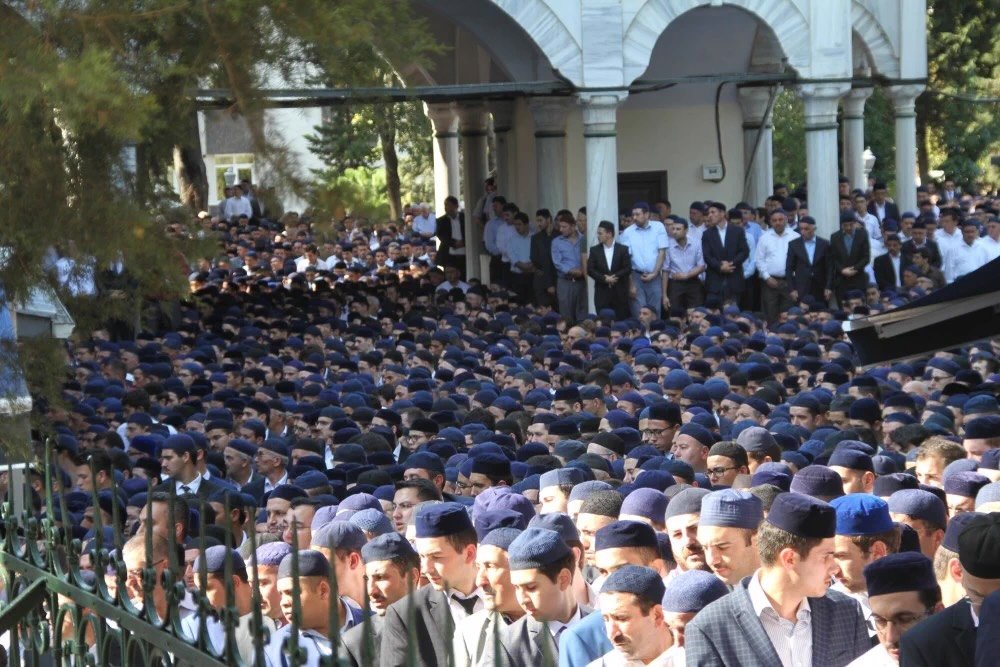
Turkish prosecutors have ordered 29 people detained and put court-appointed trustees in charge of 23 companies in the latest sweep against businesses linked to the Süleymanlılar religious community.
Police searched the suspects’ homes and workplaces on Sunday, the state-run Anadolu news agency reported, citing the Ankara Chief Public Prosecutor’s Office.
It was not immediately clear how many of the 29 had been detained as of Monday.
The case focuses on Alihan Kuriş, the jailed leader of the community, which its followers call the Süleymanlılar. Outsiders in Turkey often refer to the group as the Süleymancılar.
Prosecutors accuse Kuriş and others of running a criminal network involved in money laundering, fraud of public institutions and tax offenses.
According to prosecutors, people and companies linked to Kuriş moved money and assets inside Turkey and abroad, arranged off-the-books transfers and tried to disguise money believed to have come from crime.
They are also accused of hiding cash in shipments of aid supplies and sending it abroad through logistics companies and trusted couriers. Some of the money was allegedly transferred through online payment systems.
The investigation has also taken on a political dimension. Prosecutors said digital evidence, witness statements and financial records pointed to attempts to influence elections through organized activities and funding.
They did not say which elections or political parties were involved and said they were still examining the allegation.
The trustees will run the 23 companies while the investigation continues. Their appointment does not transfer ownership of the companies to the state or amount to a finding of guilt.
Sunday’s operation was the fourth major phase of the investigation, which began in August.
A court on August 17 jailed Kuriş and 31 other suspects pending trial. Six others were put under house arrest.
Kuriş denied leading a criminal organization or taking part in money laundering or fraud during questioning. He also denied giving criminal orders to anyone.
The Süleymanlılar grew out of Quran teaching begun by Islamic scholar Süleyman Hilmi Tunahan in the 1920s. The community runs Quran courses, student dormitories, charities and businesses in Turkey and has a large presence in Europe, particularly Germany.
Kuriş, one of Tunahan’s grandsons, took over the group’s leadership in 2016.
The investigation reached Germany earlier this month, when Justice Minister Akın Gürlek said Ankara had asked German authorities to help obtain information about money sent abroad.
In Germany, the community operates through the Cologne-based Association of Islamic Cultural Centers (VIKZ), one of the country’s oldest major Muslim umbrella organizations.
VIKZ has denied claims in the pro-government Turkish media about its new headquarters in Cologne. It says the project is being financed through German bank loans, donations and volunteer work, with no funding from Turkey.
The case has prompted questions about the government’s motives because the Süleymanlılar have never been close to President Recep Tayyip Erdoğan’s ruling Justice and Development Party (AKP) and have at times reportedly supported opposition parties.
Critics fear the government could use financial investigations and company takeovers against religious communities that withdraw political support or are seen as close to Erdoğan’s opponents.
The government denies that it is targeting the Süleymanlılar over their beliefs or political position. Gürlek has said the case concerns alleged financial crimes rather than the religious community itself.
This article is republished from Turkish Minute.