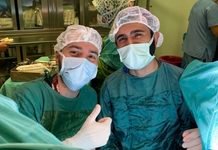
Uğur Öztaş, an 89-year-old educator jailed over alleged links to the faith-based Gülen movement who suffered a stroke and became paralyzed in prison, has died nine months after his release on medical grounds, the TR724 news website reported.
Öztaş died in İzmir on Sunday after suffering serious health problems. His condition had continued to deteriorate following his release from prison on December 5, 2025. He was admitted to intensive care on Tuesday and was intubated.
Öztaş was a literature teacher and the founder and former principal of Fatih College in İstanbul. He also served as general manager of the now-closed Zaman newspaper from 1986 to 1989, which was put under state trusteeship in 2016 and later shut down by an emergency decree.
Öztaş was sentenced to more than eight years in prison for membership in a terrorist organization over his alleged links to the Gülen movement. He was imprisoned after the sentence was upheld and had spent roughly two years behind bars by the time of his release in December 2025.
Turkish President Recep Tayyip Erdoğan has targeted the Gülen movement, a worldwide civic initiative inspired by the ideas of Muslim cleric Fethullah Gülen, who died in 2024, since corruption investigations in December 2013 implicated him as well as some members of his family and inner circle. He dismissed the probes as a Gülenist conspiracy and designated the movement as a terrorist organization in May 2016, intensifying a sweeping crackdown after a coup attempt in July of the same year that he accused Gülen of orchestrating. The movement denies involvement in the coup attempt or any terrorist activity.
In November 2025 opposition lawmaker and human rights advocate Ömer Faruk Gergerlioğlu raised concerns about Öztaş’s condition, saying his longstanding health problems had been neglected in prison and that he had become paralyzed. Gergerlioğlu also said access to him at the hospital was severely restricted and called on authorities to release him.
Turkish authorities have frequently been criticized over their treatment of sick prisoners. Rights groups report each year that dozens of seriously ill inmates die either in prison or shortly after being released, often when their illnesses have reached an advanced stage.
According to the latest figures from the justice ministry, more than 127,000 people have been convicted of alleged links to the movement since 2016, with 10,485 still in prison and legal proceedings ongoing against 83,404 individuals.