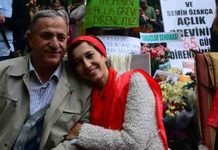

Turkey’s Constitutional Court has ruled that fining a labor union member for participating in a peaceful gathering during the state of emergency after a 2016 coup attempt violated his right to freedom of assembly, the ANKA news agency reported Tuesday.
In its unanimous ruling dated September 22, the court found no documented disruption of public order and no evidence that Cafer Sevgül, a member of the Education and Science Workers’ Union (Eğitim-Sen), had organized or directed the gathering.
The case stemmed from a press statement organized by local branches of the Confederation of Public Employees’ Trade Unions (KESK) in Tunceli province on October 30, 2016. Sevgül was fined 219 lira (about $70 at the time) for attending the gathering held without authorization from the governor’s office.
The Tunceli Criminal Magistrate of Peace rejected his objection to the fine in December 2016. Sevgül applied to the Constitutional Court the following month.
The court cited its 2020 ruling in Hüseyin Karabulut and Others, involving fines imposed on other participants in the same gathering. In that decision it held that peaceful participants who did not know or could not have known whether organizers had complied with legal requirements should not be fined solely for attending. The court found no reason to depart from that precedent in Sevgül’s case.
The Constitutional Court sent the case back to the Tunceli Criminal Magistrate of Peace for a retrial to remedy the violation. It also awarded Sevgül 40,257 Turkish lira (about $825) in legal costs.
Turkey’s state of emergency, declared following the July 2016 coup attempt, remained in force until July 2018. During that period, provincial governors repeatedly banned demonstrations, marches and press statements, with police detaining people participants in prohibited gatherings.
The European Commission said in its 2018 report that emergency decrees had restricted freedom of expression, freedom of assembly and procedural rights. Some restrictions continued after emergency rule ended, including expanded powers for provincial governors to prohibit public assemblies, according to international rights groups.