
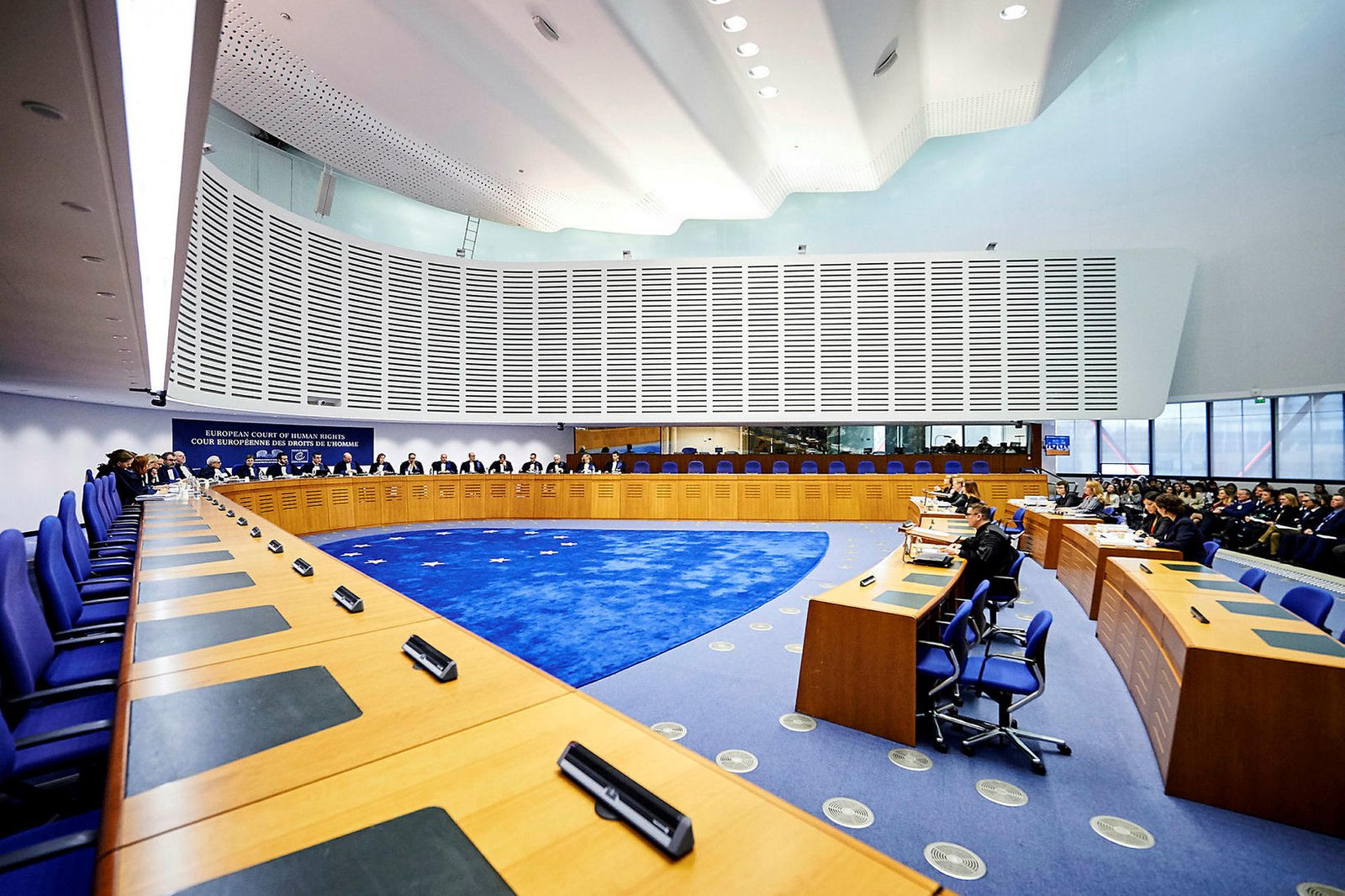
The European Court of Human Rights (ECtHR) ruled on Tuesday that Turkey subjected a former senior judge and a prosecutor imprisoned over alleged links to the faith-based Gülen movement to degrading treatment by keeping them in prolonged isolation.
In its ruling the Strasbourg-based court unanimously found that the treatment of Süleyman Kul, a former judge at Turkey’s Supreme Court of Appeals, and İlhan Akıllı, a prosecutor, violated Article 3 of the European Convention on Human Rights (ECHR), which prohibits torture and inhuman or degrading treatment.
Both were jailed after a coup attempt in July 2016 on charges of membership in an armed terrorist organization over their alleged ties to the Gülen movement. Their confinement in single-person cells was ordered by the prison administrations, not imposed as disciplinary punishment.
Turkish President Recep Tayyip Erdoğan has targeted the faith-based Gülen movement, inspired by Muslim cleric Fethullah Gülen, who died in 2024, since corruption investigations in December 2013 implicated him as well as some members of his family and inner circle. He dismissed the probes as a Gülenist conspiracy and designated the movement as a terrorist organization in May 2016, intensifying a sweeping crackdown after the coup attempt in July of the same year that he accused Gülen of orchestrating. The movement denies involvement in the attempted coup or any terrorist activity.
Kul spent six years, eight months alone in a single cell at Marmara Prison before his release on probation in June 2023. During the first 19 months, he had no contact with other prisoners and was allowed one hour of outdoor exercise a day by himself. From May 2018 he was permitted two hours of daily outdoor exercise with two other prisoners.
The court accepted Kul’s account that hourly prison checks and lighting repeatedly disrupted his sleep. A psychiatrist diagnosed him with an adjustment disorder in November 2018 and noted that he was struggling to cope with confinement in a single cell.
The ECtHR found that prison authorities had failed to adequately reassess the need for Kul’s prolonged isolation or evaluate its impact on his mental health despite the psychiatric diagnosis. It concluded that the combined effects of his isolation, sleep disruption and psychological difficulties amounted to degrading treatment.
Akıllı spent approximately one year, five months in one-person cells at Eskişehir Prison between September 2016 and February 2018. During the first eight months, he was allowed only 30 minutes of outdoor exercise a day and had no contact with other prisoners. He was also unable to participate in social or sports activities throughout this confinement in single cells.
The court accepted Akıllı’s account of the restrictions, finding that prison records contradicted the Turkish government’s claim that he had been allowed one hour of outdoor exercise a day throughout his detention.
The court also found that prison authorities had relied on general security concerns without adequately explaining why Akıllı’s continued isolation was necessary. Domestic courts had failed to conduct a substantive review of the restrictions despite his repeated complaints.
The ECtHR ordered Turkey to pay Kul €7,000 and Akıllı €3,000 in non-pecuniary damages, along with €1,500 each for legal costs and expenses.
The judgment is not yet final. Either side may request referral of the case to the court’s Grand Chamber within three months.
In the same judgment, the court found no violation of Article 3 in the cases of two other prisoners, Musa Gökçe and Eşref Köse, who had also challenged their prolonged confinement in single cells.