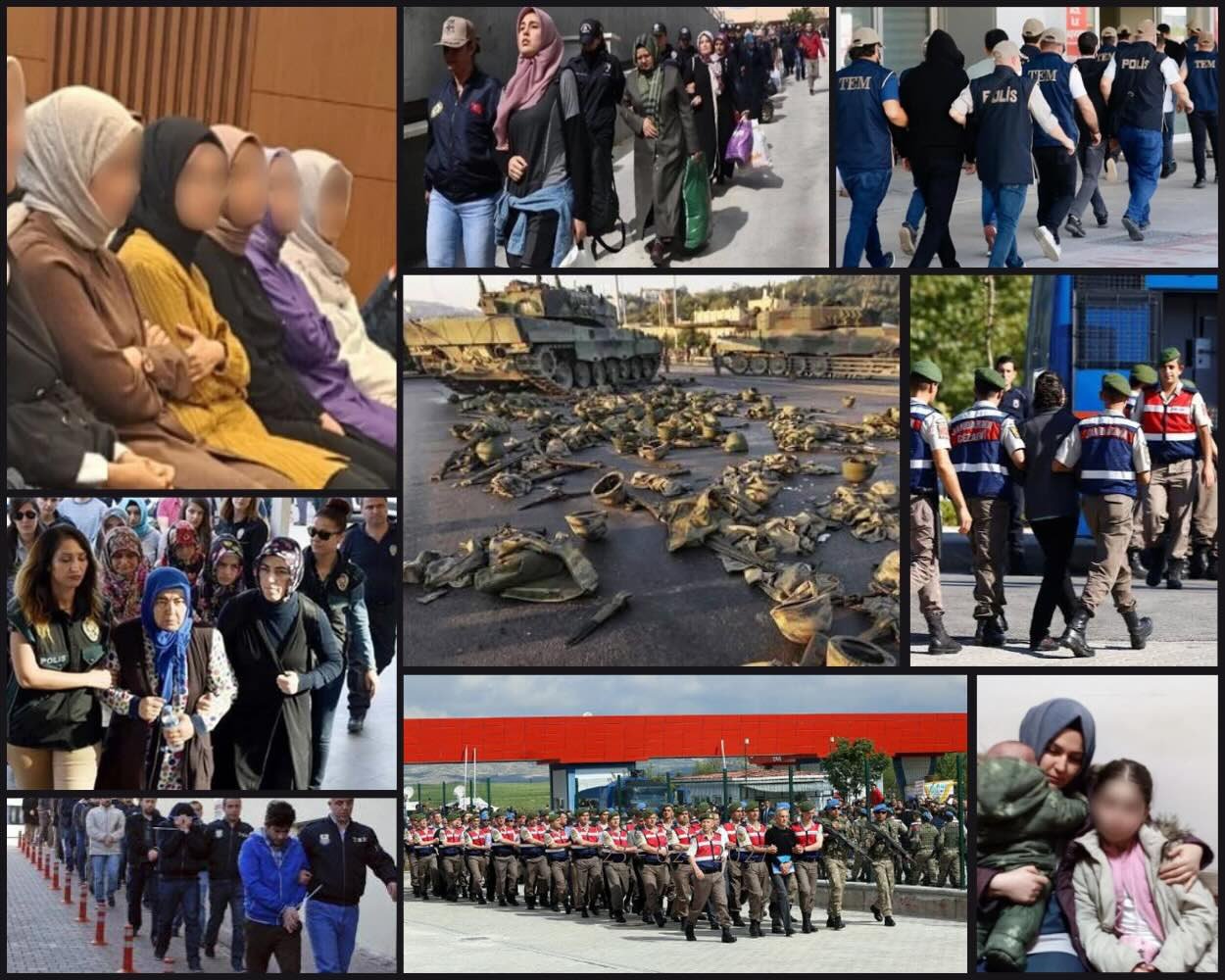
In excess of 720,000 people have been investigated and more than 127,000 have been convicted in Turkey over alleged links to the faith-based Gülen movement since a coup attempt on July 15, 2016, Justice Minister Akın Gürlek has said.
In an interview published on Sunday by the pro-government Sabah daily, Gürlek said authorities had initiated legal proceedings against 720,338 people, of whom 127,102 had been convicted, while investigations or trials involving another 83,404 were still ongoing.
Gürlek said 289 coup-related trials had been concluded, resulting in the conviction of 4,891 people. Of those, 1,634 received aggravated life sentences, 1,366 were sentenced to life in prison and 1,891 received sentences of varying lengths. He added that the Supreme Court of Appeals had upheld 236 of the 271 case files sent to it.
Turkish President Recep Tayyip Erdoğan’s campaign against the Gülen movement, a worldwide civic initiative inspired by the ideas of the late Muslim cleric Fethullah Gülen, began after corruption investigations in December 2013 implicated Erdoğan as well as members of his family and inner circle. Erdoğan dismissed the probes as a conspiracy and formally designated the movement as a terrorist organization in May 2016.
Following the July 15, 2016 coup attempt, which he immediately accused the Gülen movement of orchestrating, Erdoğan significantly expanded an already underway crackdown on the movement’s supporters. The movement strongly denies involvement in the coup attempt or any terrorist activity.
Gürlek also said arrest warrants had been issued for 33,827 people and that 10,485 people accused or convicted of involvement in the coup attempt or of membership in the Gülen movement were currently being held in Turkish prisons.
According to the minister in the first six months of 2026 alone Turkish authorities carried out 1,065 operations targeting alleged members of the Gülen movement and detained 2,451 people.
Since the 2016 coup attempt, Turkish courts have convicted alleged Gülen movement supporters on terrorism-related charges based on activities such as working at a private school affiliated with the movement, depositing money in the now-shuttered Bank Asya, using the ByLock messaging application, being a member of a labor union linked to the movement, subscribing to certain newspapers and magazines, and aiding families of people jailed or dismissed from their jobs over alleged links to the movement.
The European Court of Human Rights has ruled against Turkey in such cases. In Yüksel Yalçınkaya v. Türkiye and Yasak v. Türkiye, the Grand Chamber found that Turkish courts had inferred membership in an armed terrorist organization from ByLock use or alleged association without establishing the elements of the offense through an individualized assessment.
UN experts have similarly criticized Turkey’s use of vague counterterrorism laws and guilt by association to criminalize lawful activity, warning that the resulting pattern of arbitrary detention, if widespread or systematic, may amount to crimes against humanity.