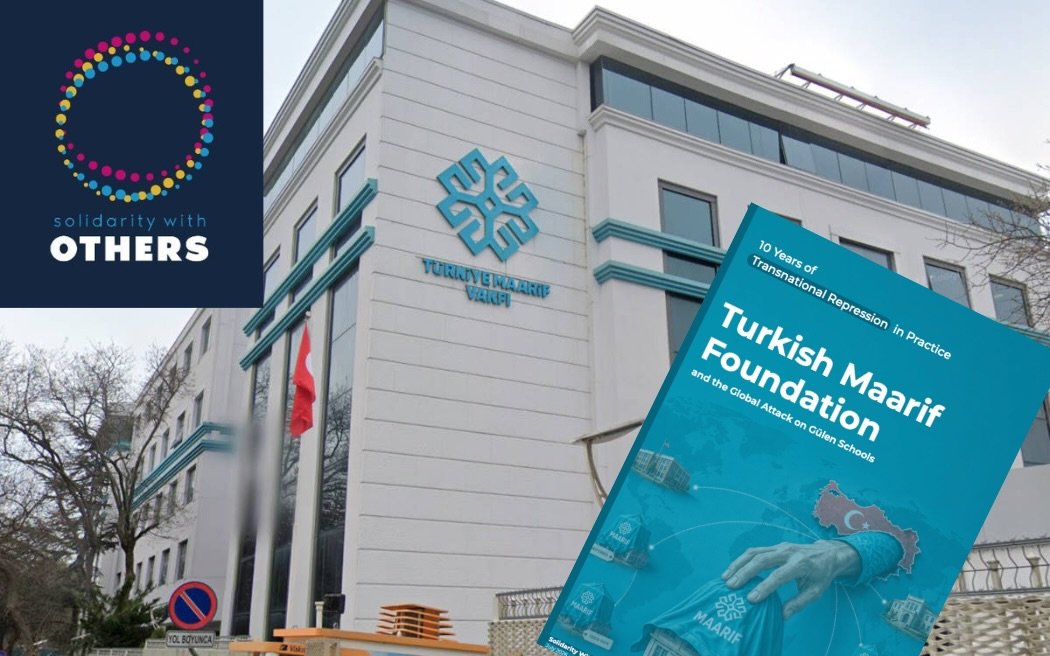
The Turkish government used the state-controlled Maarif Foundation (TMV) to secure the closure, confiscation or transfer to the TMV of at least 162 educational institutions linked to the faith-based Gülen movement in 29 countries through methods ranging from diplomatic pressure to coercive interventions involving security forces or intelligence services, according to a new report.
Drawing on comparative case studies from 14 countries, it shows how the TMV was established weeks before a coup attempt in 2016 and became the main instrument of Ankara’s campaign aimed at dismantling a global network of schools associated with the movement.
The report, titled “Turkish Maarif Foundation and the Global Attack on Gülen Schools” and published by the Belgium-based human rights group Solidarity with OTHERS, says many of the closures and transfers took place without transparent procedures, effective judicial remedies or adequate compensation. Of the 162 institutions identified, 131 were transferred directly to the TMV, while the broader campaign affected approximately 7,800 employees.
Turkish President Recep Tayyip Erdoğan has targeted the Gülen movement, a worldwide civic initiative inspired by the ideas of Muslim cleric Fethullah Gülen, who died in 2024, since corruption investigations in December 2013 implicated him as well as some members of his family and inner circle. He dismissed the probes as a Gülenist conspiracy and later designated the movement as a terrorist organization in May 2016, intensifying a sweeping crackdown after the coup attempt in July of the same year that he accused Gülen of orchestrating. The movement denies involvement in the coup attempt or any terrorist activity.
The report places the TMV’s overseas campaign within Turkey’s broader post-coup crackdown, noting that authorities shut down 3,492 Gülen-linked institutions inside the country after 2016, including about 1,350 schools, and revoked the work permits of nearly 20,000 education personnel.
It includes cases from Mali, Niger, Afghanistan, Liberia and Venezuela, describing a recurring pattern in which governments closed or transferred schools following pressure from Ankara. In several countries, Turkish teachers and administrators were detained or deported.
In Liberia, for example, authorities confiscated the passports and residence documents of staff at two Gülen-linked schools and their family members in April 2022. Security personnel later took staff members and their families from their homes to the airport and deported them without prior judicial or administrative proceedings or an opportunity to challenge the decision. Some of those deported were under international protection.
According to the report, these measures resulted in violations of the rights to property, work, freedom of movement and access to justice for school owners, employees and their families.
In its legal assessment, the report says the documented pattern provides a reasonable basis to consider whether the campaign amounts to persecution as a crime against humanity under Article 7 of the Rome Statute of the International Criminal Court.
Despite its legal status as a foundation, the TMV is structurally embedded in the Turkish state apparatus, the report says. Its governing board includes senior government officials and presidential appointees.
The report describes a pattern of “elite circulation” between the TMV’s leadership and Turkey’s diplomatic and state bureaucracy, with senior foundation officials moving among posts at the TMV, the foreign ministry, Turkish embassies and other government institutions.
Further underscoring its state-backed character, the TMV enjoys legal privileges not available to ordinary private foundations, including exemption from oversight by Turkey’s Court of Accounts. The foundation has received steadily increasing public funding since 2022, with annual government transfers rising to 7.8 billion lira ($195 million) in 2026.
The report’s findings portray the TMV not simply as an overseas education provider but as part of a state-backed campaign that extended Turkey’s post-2016 crackdown beyond its borders, often at the expense of due process, property rights and the livelihoods of thousands of educators.
In addition to securing the transfer or closure of Gülen-linked schools in some countries, the Turkish government has conducted a widespread campaign of transnational repression since 2016, targeting alleged movement supporters abroad through surveillance, abductions, forced returns and pressure on host governments. The campaign has drawn sustained scrutiny from international watchdogs and human rights bodies. In a 2023 report, Freedom House ranked Turkey as the world’s second most prolific perpetrator of transnational repression, behind only China.