Ten years after a coup attempt on July 15, 2016, Turkey continues to operate one of the world’s most extensive systems of transnational repression, pursuing critics and perceived opponents across dozens of countries.
The Turkish government has employed a range of methods, including covert abductions and forcible returns, diplomatic surveillance and profiling, the misuse of extradition and international policing mechanisms, restrictions on passports and consular services, financial blacklisting and pressure through state-backed religious and educational networks.
The campaign has primarily been directed at people affiliated with the faith-based Gülen movement, but journalists, Kurdish activists, leftists and other government critics have also faced similar pressure.
Turkish President Recep Tayyip Erdoğan has targeted followers of the Gülen movement, inspired by the late Muslim cleric Fethullah Gülen, since corruption investigations in December 2013 implicated him as well as some members of his family and inner circle. He dismissed the probes as a Gülenist conspiracy and designated the movement as a terrorist organization in May 2016, intensifying a sweeping crackdown after the coup attempt in July of the same year that he accused Gülen of orchestrating. The movement denies involvement in the attempted coup or any terrorist activity.
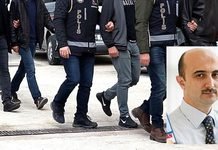
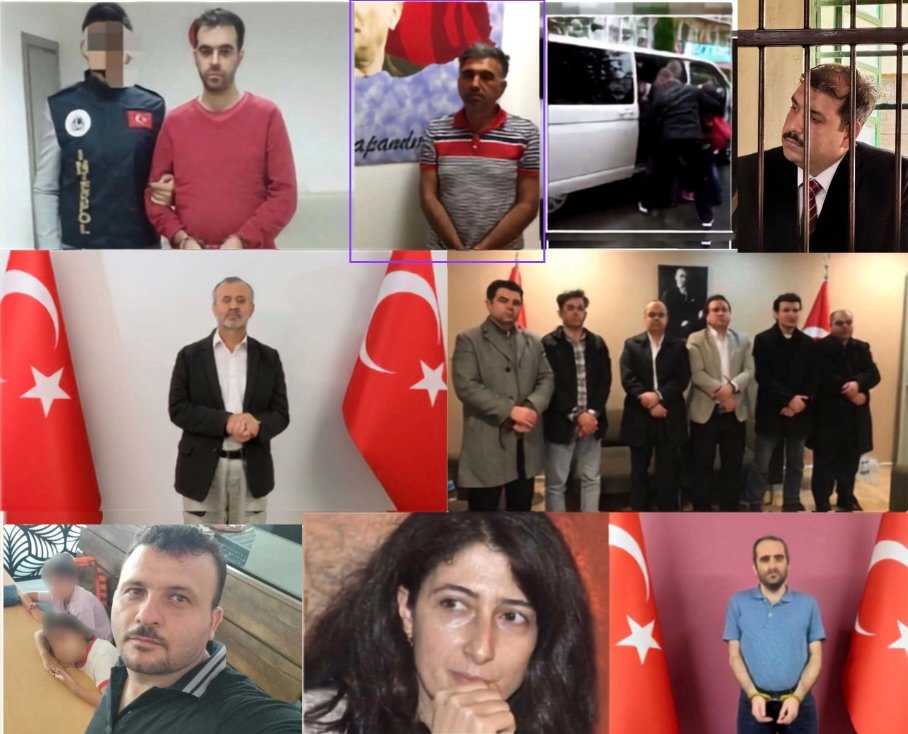
Turkey has carried out covert renditions in cooperation with foreign intelligence or law enforcement agencies in a number of countries. As of 2025 the National Intelligence Organization (MİT) had publicly acknowledged 128 operations to forcibly return people accused of links to the Gülen movement. Many were transferred outside formal extradition procedures and later reported arbitrary detention, enforced disappearance, torture or other ill-treatment.
In Pakistan in 2017 armed men seized educator Mesut Kaçmaz, his wife and their two teenage daughters at their home despite the family’s UN refugee protection and court orders barring deportation. They were held incommunicado before being forcibly returned to Turkey. The following year six Turkish educators were abducted in Kosovo and flown to Turkey without normal extradition proceedings, triggering a political crisis after it emerged that Kosovar security officials had acted without informing senior government leaders.
Similar operations were carried out in many other countries, including Cambodia, Kyrgyzstan and Kazakhstan. In one particularly striking case, former teacher Zabit Kişi was abducted from Kazakhstan in 2017 and taken to Turkey, where he said he was held for 108 days in a windowless, three-square-meter container and subjected to torture, including electric shocks, fractured ribs and crushed toes.
SCF documented many of the early cases in a report on abductions, renditions and forcible returns.
International bodies have found serious rights violations in several rendition cases. The UN Working Group on Arbitrary Detention concluded that the arrest, detention and forcible transfer of the six educators from Kosovo by Kosovar and Turkish agents were arbitrary and violated international human rights standards, while the European Court of Human Rights found that Moldova and Azerbaijan violated the rights of Turkish nationals by circumventing extradition safeguards and carrying out extra-legal transfers to Turkey.
Since the coup attempt, Turkish embassies and consulates have increasingly served as operational hubs for surveillance and profiling. They have compiled information on critics, schools, associations and businesses, with some of those profiles later transmitted to prosecutors in Turkey and used to open terrorism-related investigations.
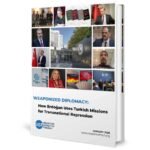
SCF’s 2026 report, “Weaponized Diplomacy: How Erdoğan Uses Turkish Missions for Transnational Repression,” found that the broader use of diplomatic and consular missions to profile, pressure and pursue perceived opponents extended across 115 countries on five continents.
Critics abroad could be denied documents, prevented from registering births or marriages, separated from relatives or exposed to prosecution when they returned to Turkey. Such administrative measures turned ordinary dealings with the Turkish state into a source of pressure.
Ankara also sought to internationalize domestic accusations through international policing mechanisms. The SCF report titled “How Erdoğan Weaponized the International Criminal Police Organization (INTERPOL) to Persecute Political Opponents” documented attempts to use INTERPOL notices, diffusions and travel-document databases against critics whose alleged offenses were political in nature.
Turkish authorities have also frozen the assets of hundreds of citizens living abroad under terrorism-financing legislation. SCF’s report “Turkey’s Transnational Repression: Abuse of Asset Freezing Mechanisms Under the Pretext of Prevention of Terrorist Financing” documented how administrative asset-freeze lists affected people living abroad even in the absence of a criminal conviction. Those listed were subsequently flagged in commercial financial-risk databases with “non-conviction terrorism” labels, resulting in bank account closures, the denial of financial services and damage to their credit records.
State-backed institutions outside the diplomatic service and security apparatus reinforced the campaign. The Religious Affairs Directorate (Diyanet) used overseas mosque networks to collect information on alleged Gülen followers, prompting investigations in several European countries. The Turkish Maarif Foundation, established in 2016, became the government’s principal vehicle for taking over schools linked to the movement. By 2024, 232 schools in 21 countries had been transferred to the foundation, extending Ankara’s control over education networks that had previously operated independently of the Turkish state.
With the pattern becoming clearer, Turkey’s campaign has sparked sustained international criticism. In 2020 four UN special rapporteurs sent a joint communication expressing serious concern over what they described as Turkey’s “systematic practice of state-sponsored extraterritorial abductions and forcible returns” involving at least 100 Turkish nationals. The UN Working Group on Arbitrary Detention has repeatedly concluded that Turkey and cooperating states were responsible for arbitrary detention and unlawful transfers.
The US State Department, in its 2022 human rights report, pointed to Turkey’s transnational pressure and identified its tactics. Freedom House counted 132 incidents of direct physical transnational repression by Turkey since 2014 and ranked it the world’s second most prolific perpetrator in 2023. Human Rights Watch documented cooperation between MİT and foreign authorities in renditions. Amnesty International has issued urgent appeals warning that abducted individuals face a risk of torture upon return.
Germany’s Office for the Protection of the Constitution said in its 2025 annual report that MİT continued to target perceived opponents abroad, including Gülen movement supporters.
Since the 2016 coup attempt, Ankara has turned transnational repression into an enduring state policy, adapting its methods to local conditions by relying on covert operations and forcible returns where foreign authorities cooperated, and on diplomatic, legal, financial or social pressure where they did not.
Despite repeated findings by UN mechanisms, international courts and human rights organizations, the system remains largely intact. Ten years after the coup attempt, Turkey continues to pursue perceived opponents abroad using all the means at its disposal.