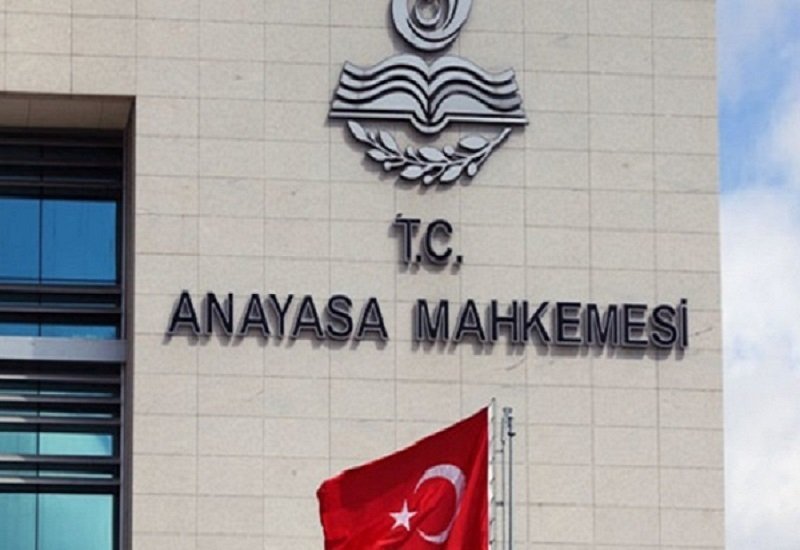
Turkey’s Constitutional Court has faulted the dismissal of a former police officer accused of links to the faith-based Gülen movement, ruling that authorities relied on digital files supplied by a secret witness without sufficiently verifying or explaining the evidence against him.
The decision, published Tuesday in the Official Gazette, found that Mehmet Emin Okyay’s dismissal violated his right to respect for private life and ordered a retrial before an Ankara administrative court. The court said the authorities and lower courts had not shown with sufficient reasoning that the records proved Okyay’s alleged movement links.
The case centers on files obtained from a secret witness known by the code name “Garson,” who Turkish authorities said provided two microSD cards and a phone containing information on thousands of police officers allegedly categorized according to their ties to the movement.
Turkish President Recep Tayyip Erdoğan has targeted followers of the Gülen movement, inspired by the late Muslim cleric Fethullah Gülen, since corruption investigations in December 2013 implicated him as well as some members of his family and inner circle. He dismissed the probes as a Gülenist conspiracy and later designated the movement as a terrorist organization in May 2016, intensifying a sweeping crackdown after a coup attempt in July of the same year that he accused Gülen of orchestrating. The movement denies involvement in the coup attempt or any terrorist activity.
Okyay, who worked as a police officer in the central province of Niğde, was dismissed from public service in 2017 under an emergency decree issued after the coup attempt. Authorities accused him of links to the Gülen movement.
The Constitutional Court said Okyay’s dismissal affected his professional life, reputation and ability to maintain social and professional relationships, bringing the case within the scope of the right to respect for private life.
According to the ruling, the emergency commission that reviewed Okyay’s dismissal cited information obtained from the Garson files, including coding that allegedly placed him within the Gülen movement’s police network.
Okyay denied links to the movement. The ruling said he told authorities he had not stayed in Gülen-linked houses or dormitories, had not used encrypted messaging programs, had not made donations to the movement and had not sent his children to schools affiliated with it. The court also cited a 2017 decision by prosecutors in Niğde not to pursue criminal charges against him.
The Garson files have been used in multiple criminal and administrative cases involving police officers accused of Gülen links. In testimony cited by the Constitutional Court, Garson said the files included information on about 4,700 people and had been compiled through the movement’s alleged police structure.
Authorities later said the files included Excel sheets that categorized police personnel with codes such as “A4,” “A5,” “B4,” “EA” and others. The records allegedly identified whether officers were members of the movement, close to it, outside its influence or seen as hostile to it.
But the Constitutional Court said the lower courts had not sufficiently examined whether the coding records reliably established Okyay’s alleged links. It said the administrative courts did not obtain and assess a later data analysis report that could have shed more light on the records and did not evaluate other coding details in the file.
The court concluded that the interference with his rights was not proportionate, even under the state of emergency declared after the coup attempt.
The court sent the case back to the Ankara 25th Administrative Court for retrial. It rejected Okyay’s compensation request, saying a retrial would provide sufficient redress, and ordered the state to pay 40,000 Turkish lira ($860) in legal costs.
The decision could affect other cases stemming from Turkey’s post-coup purges, particularly those involving civil servants dismissed on the basis of coding records attributed to Garson. The ruling leaves room for courts to use such material but requires them to verify and explain what the records prove in each individual case.
Following the coup attempt, the Turkish government declared a state of emergency (OHAL) that remained in effect until July 19, 2018. During this period, the government carried out a purge of state institutions under the pretext of an anti-coup fight by issuing a number of government decrees, known as KHKs. Over 130,000 public servants, including 4,156 judges and prosecutors, as well as more than 24,000 members of the armed forces were summarily removed from their jobs for alleged membership in or relationships with “terrorist organizations” by emergency decree-laws subject to neither judicial nor parliamentary scrutiny.