A former English teacher dismissed in Turkey’s post-coup purge has recounted years of imprisonment, deteriorating health and family estrangement, including four years in prison without visits or news of his two children.
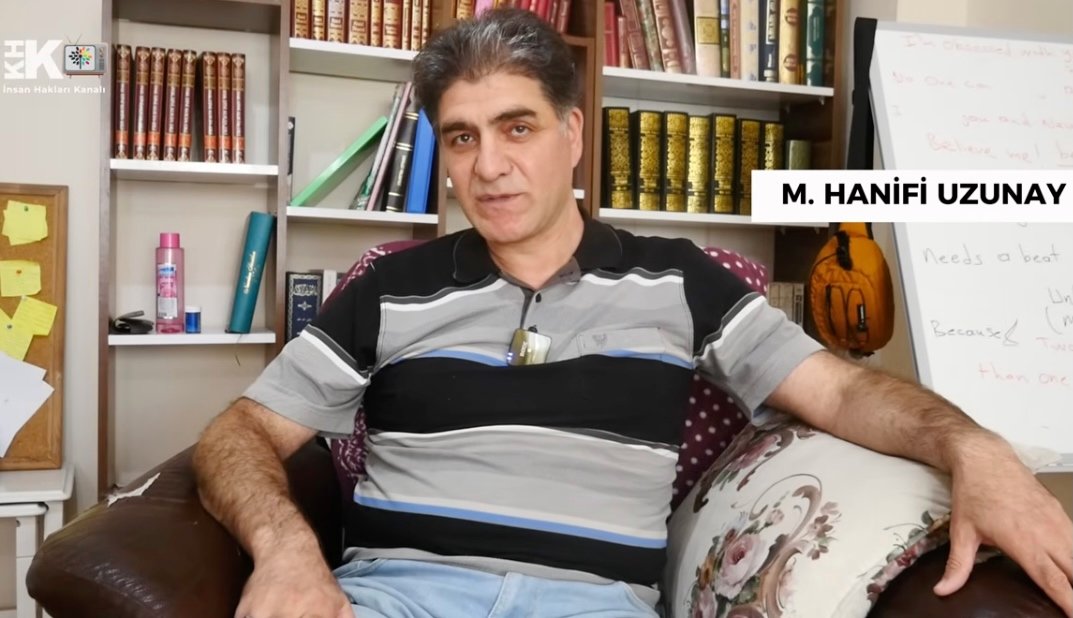
In an interview on KHK TV, a YouTube channel featuring the stories of people dismissed by emergency decrees, Mehmet Hanifi Uzunay described being cut off from his children, suffering untreated health problems in prison and later finding himself with nowhere to go.
Uzunay worked as an English teacher in public schools until he was dismissed by an emergency decree following a coup attempt in July 2016 over alleged links to the faith-based Gülen movement.
After a detention warrant was issued for him, he went into hiding but was captured on February 16, 2017. He spent about a year in Ağrı Prison before being transferred in February 2018 to Oltu Prison in Erzurum province, where he said he was held for three months in a basement cell.
According to Uzunay, sewage water flowed through the area, the cell was damp and a light remained on round the clock. “The light was never turned off. After a while I completely lost my sense of time,” he said.
Uzunay said the constant illumination damaged his corneas and caused vision loss in both eyes. Despite repeatedly petitioning prison authorities, he said he waited about a year-and-a-half to be examined and was never referred to a specialist center for advanced treatment.
“Later I learned they put people there to break them,” Uzunay said. “Before me, a colonel had lost his mind there. Two people had reportedly died in that place as well.”
Turkish President Recep Tayyip Erdoğan has targeted followers of the Gülen movement, inspired by the late Muslim cleric Fethullah Gülen, since corruption investigations in December 2013 implicated him as well as some members of his family and inner circle. He dismissed the probes as a Gülenist conspiracy and later designated the movement as a terrorist organization in May 2016, intensifying a sweeping crackdown after the coup attempt in July of the same year that he accused Gülen of orchestrating. The movement denies involvement in the coup attempt or any terrorist activity.
After being moved to a regular ward, Uzunay tried to meet his daily needs by making prayer beads from olive pits discarded by inmates and bartering them for necessities. He also taught English to fellow prisoners.
The isolation extended beyond prison conditions. He said no one visited him for four years and that he received no news about his daughter or son, who were 13 and 12 years old, respectively, when he was imprisoned.
A fellow inmate asked his own relatives to try to locate Uzunay’s children. With their help, his son and daughter came to visit him unexpectedly. Uzunay said he was so overwhelmed when he saw them that he could not speak.
During his imprisonment, Uzunay’s mother died, a loss he said he learned of only later.
His daughter was also deeply affected by his imprisonment. After leaving her mother’s home, she began living with a female journalist who cared for her. Cut off from news of her father, she fell into depression and attempted suicide three times, he said.
Following the failed coup, the Turkish government declared a state of emergency (OHAL) that remained in effect until July 19, 2018. During this period, the government carried out a purge of state institutions under the pretext of an anti-coup fight by issuing a number of government decrees, known as KHKs. Over 130,000 public servants, including 4,156 judges and prosecutors, as well as more than 24,000 members of the armed forces were summarily removed from their jobs for alleged membership in or relationships with “terrorist organizations” by emergency decree-laws subject to neither judicial nor parliamentary scrutiny.
Former public servants were not only fired from their jobs but also banned from working again in the public sector and getting a passport to seek employment abroad. The government also made it difficult for them to work formally in the private sector. Notes were put on the social security database about dismissed public servants to deter potential employers.
As his release date approached, Uzunay said he reacted differently from most prisoners. “Everyone else was happy to leave, but I sat and cried,” he said. He had nowhere to go; his family had fallen apart and his wife had left him.
Referring to a scene from the movie “The Shawshank Redemption,” he said he had feared he would be unable to adapt to life outside prison and might take his own life after his release.
Uzunay moved to Antalya, where his daughter had started university, hoping to support her and rebuild their lives together. He found work at a construction site through a friend but quit after two days because of worsening vision problems.
He later moved to İzmir with the help of another friend. He said he was able to rent an apartment only after it emerged that the landlord’s daughter had once been his student in high school.
Furnishing the apartment also came through unexpected acts of solidarity. After a wealthy man died and his house was sold, his belongings were given to Uzunay free of charge, while others helped clean the apartment and move the furniture.
Uzunay said the support moved him to tears. “While some people destroy homes, others build homes and help create a new life,” he said.
Apart from one or two exceptions, he said almost none of his relatives visited him or even answered his phone calls after his release.
Uzunay also began addressing health problems that had worsened during his imprisonment. He said 10 of his teeth were eventually extracted because of untreated dental problems. He was unable to obtain a corneal transplant through public hospitals after his dismissal from public service and eventually underwent the surgery at a private hospital, paying for it with money he earned by teaching Russian to a businessman.
As his health improved, he began teaching English online from home. But he said the stigma and restrictions associated with being a purge victim eventually led him to flee Turkey.
After crossing into Greece, he said he hid for three days on Chios Island before being caught. He said he and others were beaten, that his jaw was broken and that they were forced onto a leaking boat before being pushed back to Turkish waters.
After being rescued by the Turkish Coast Guard, he was subjected to further insults and physical abuse when a commander learned about his dismissal. He was later released by a court but placed under an international travel ban.
During this period, Uzunay said, his daughter again attempted suicide, this time by jumping into the sea. He said another trauma after his release, which he described only as “worse than death,” may have contributed to her condition. “I can’t talk about it,” he said.
With his own family having cut ties with him, Uzunay turned to his wife’s relatives for help caring for his daughter. He said he spent a long time persuading them to become involved. Their support helped stabilize her condition and doctors later reduced her medication.
Despite everything he endured, he rejected a friend’s suggestion that his ordeal be turned into a film. He said those who had upended his life had already made it feel like one. “Some people already made a movie out of our lives,” he said. “They made the film and played their roles.”
“From now on, let reality unfold on its own.”