A Turkish court has handed down suspended sentences to three Boğaziçi University students for spray-painting graffiti on public and private property after the detention of Istanbul Mayor Ekrem İmamoğlu in March 2025, despite statements from the affected institutions that they suffered no damage and did not want to pursue complaints.
The Istanbul 69th Criminal Court of First Instance gave each of the Boğaziçi University students a suspended sentence of three months, 10 days for damaging property used for public service, according to the Bianet news website.
The property cited in the case belonged to the Beşiktaş Municipality and Türk Telekom. Both told the court that no damage had occurred and said they did not want to pursue complaints against the students.
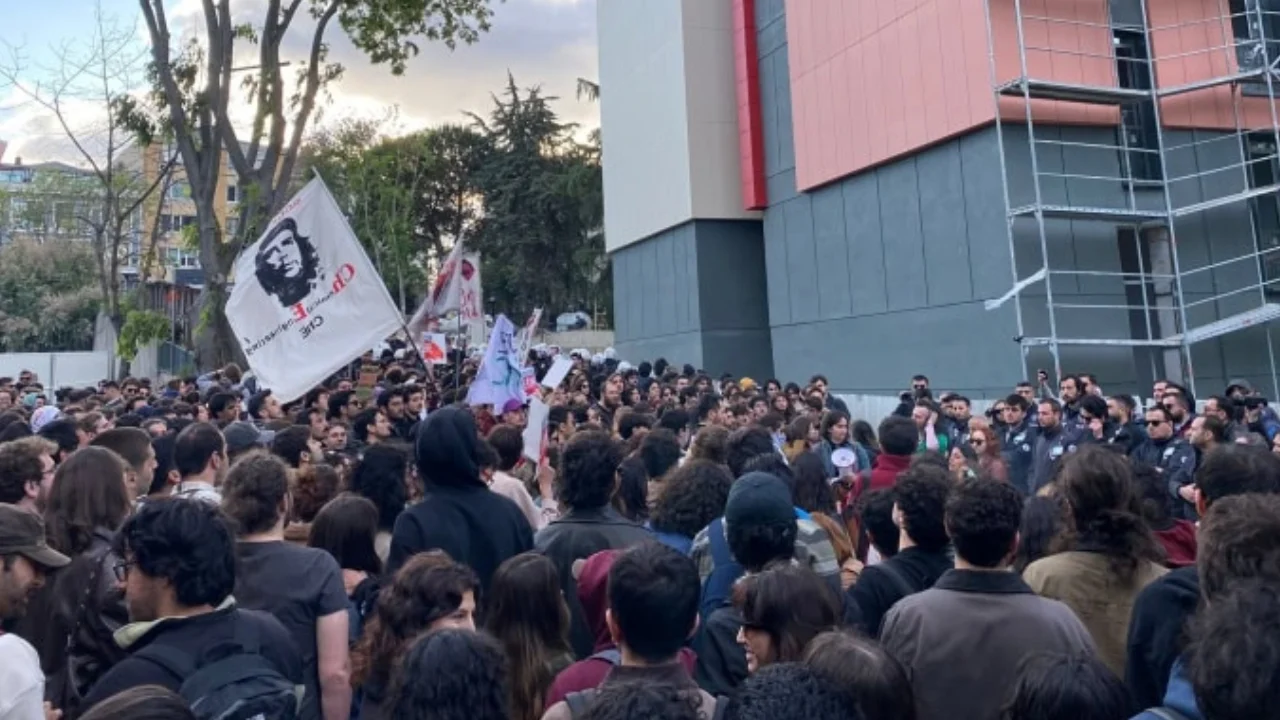
The case stemmed from protests after İmamoğlu was detained on March 19, 2025, a day after Istanbul University annulled his diploma and days before the main opposition Republican People’s Party (CHP) was set to formalize him as its presidential candidate. He was jailed pending trial on corruption charges four days later, allegations he and the CHP deny.
According to the indictment drafted by the Istanbul Chief Public Prosecutor’s Office, the students spray painted slogans on Türk Telekom utility cabinets and on walls in Birlik Park in Istanbul’s Beşiktaş district at around 2 a.m. on March 26, 2025.
The indictment said the slogans included calls for Istanbul to “wake up,” support for students and a boycott.
The students said in their defense that the paint was water-based, that they had no intention of causing permanent damage and that they later cleaned the graffiti themselves. One defendant said the paint could be removed easily and that they did not act with intent to damage public property. Another said the students cleaned the writing about a week after the incident.
Lawyers for the students sought acquittal, arguing that the material elements of the offense had not been met because both the Beşiktaş Municipality and Türk Telekom reported no damage. The defense also cited Supreme Court of Appeals precedents, arguing that acts of “pollution” should not automatically be treated as property damage.
The court ruled that the students had committed the offense of damaging public property. In its reasoned decision, it said that despite the municipality’s statement that there was no public loss, writing on areas allocated for public use amounted to an aggravated form of property damage under Turkish law.
The ruling said an act of “polluting” could include writing, drawing or attaching posters or notices to the wall of a building belonging to another person or institution.