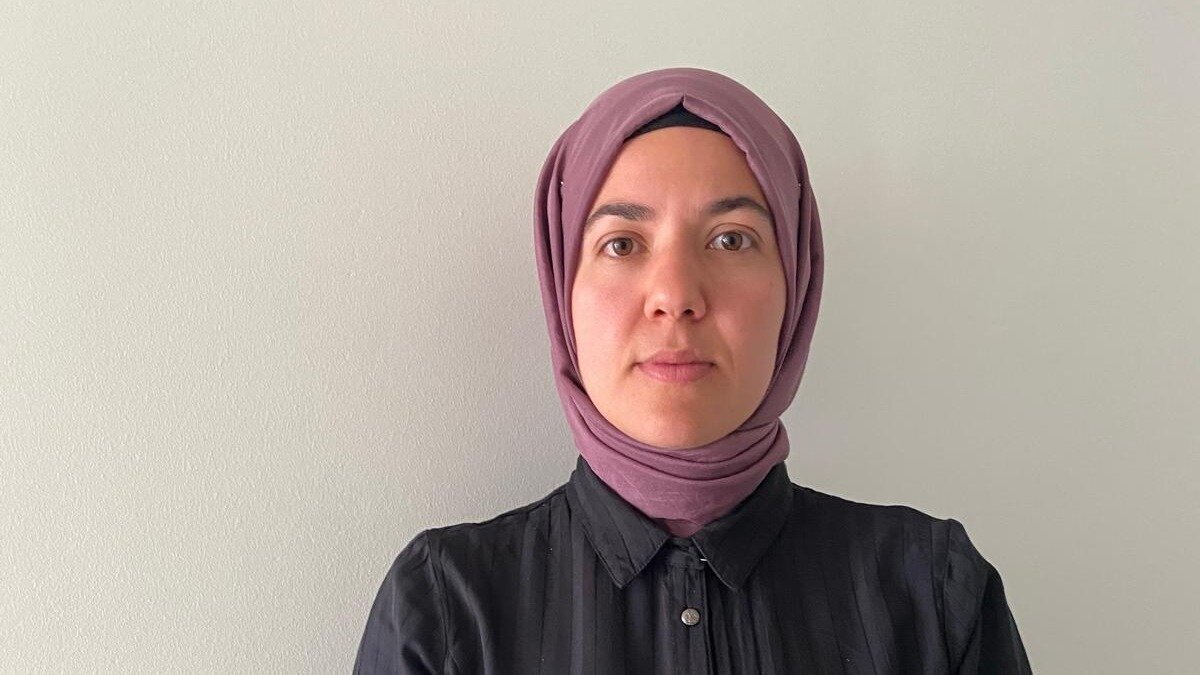
A Danish asylum ruling has put 29-year-old Turkish mathematics teacher Tuğba Koç on the brink of forced return to Turkey after authorities accepted that she was linked to the faith-based Gülen movement but concluded she was not prominent enough to face persecution, a finding at odds with the way Turkey prosecutes people accused of Gülen links, Turkish Minute reported.
According to Bünyamin Tekin’s report, Koç, from Antalya province in southern Turkey, was ordered to leave Denmark within seven days after the Danish Refugee Appeals Board on May 18 upheld a previous asylum refusal. She told Turkish Minute that officials scheduled a return interview for Thursday at 9 a.m. and warned her that if she failed to cooperate she could be found by police and forcibly deported.
The board did not reject the core of Koç’s account. It accepted that she had ties to the Gülen movement, a faith-based civic movement inspired by the late Turkish Islamic scholar Fethullah Gülen and known for its schools, charities and interfaith work.
Turkish President Recep Tayyip Erdoğan has targeted followers of the Gülen movement, inspired by the US-based cleric Fethullah Gülen, who died in 2024, since corruption investigations in December 2013 implicated him as well as some members of his family and inner circle. He dismissed the probes as a Gülenist conspiracy and later designated the movement as a terrorist organization in May 2016, intensifying a sweeping crackdown after a coup attempt in July of the same year that he accused Gülen of orchestrating. The movement denies involvement in the coup attempt or any terrorist activity.
Danish authorities nevertheless ruled that Koç had not shown a real risk on return, citing the fact that she had not been detained, formally charged or convicted in Turkey, had no visible case in Turkey’s judicial information system and left the country legally in April 2024. The decision effectively treated the absence of an open case as proof of safety, despite Turkey’s record of using secret terrorism investigations, informant statements, student housing, social ties and routine movement activities as grounds for prosecution.
In Turkey’s prosecution system, the absence of a visible Turkish case file in the National Judicial Network Server (UYAP), a centralized digital system used by Turkey’s judicial institutions to store and share legal records, does not mean there isn’t one. It may mean only that the case has not yet reached the stage at which the target can see it.
Koç’s name already appears in Turkish terrorism case material. A 2022 Antalya indictment reviewed by Turkish Minute contains a wiretapped phone call from 2020 between Koç and a former housemate whom Turkish prosecutors described as an active member of the Gülen movement. Prosecutors interpreted the conversation as showing that both women had knowledge of fugitives accused of Gülen links and helped provide housing for them.
Koç was not listed as a defendant in that indictment. But the difference between being named and being prosecuted is not a bright line in Turkey’s terrorism cases. An Antalya lawyer who represented defendants in the same case wrote that several people were convicted of membership in a terrorist organization based on allegations that they stayed in movement-linked student houses and tutored children of people accused of Gülen links. He said Koç was in a similar position and argued that she could face prosecution if returned.
The lawyer also warned that the lack of a visible UYAP file does not rule out an investigation because terrorism probes in Turkey are often secret until detention or arrest warrants are enforced.
According to the latest figures from the Justice Ministry, more than 126,000 people have been convicted over alleged links to the movement since 2016, with 11,085 still in prison. Legal proceedings are ongoing for more than 24,000 people, while another 58,000 remain under active investigation nearly a decade later.
The UK Home Office’s country policy note says Turkey’s post-coup crackdown has led to hundreds of thousands of arrests and detentions, more than 130,000 public-sector dismissals, more than 230,000 passport cancellations, asset seizures and pursuit of Turkish nationals abroad. It also lists several risk factors that match parts of Koç’s file, including the use of a certain messaging app, Gülen-linked schools, dormitories, organizations, social media reach and teachers at Gülen-linked education facilities.
Koç’s connection to the movement began in childhood, according to her account before the Danish board. She said she first encountered Gülen-linked education through an exam preparation course in seventh grade, later stayed in dormitories linked to the movement during high school and university, took part in youth activities, helped students with mathematics and joined reading programs and trips. Her family had no connection to the movement, she told the board.
After graduating in 2019, Koç worked as a mathematics teacher. She told Turkish Minute she worked as a paid teacher in 2019 and 2020, then at a private university exam preparation course in 2021 and 2023 before giving private lessons in 2024, the year she left Turkey.
Koç told Danish authorities she organized events, supported families of people jailed over Gülen links and helped students with lessons. She also said they stopped hosting people at home after realizing they were under police surveillance and began meeting in public places such as malls and parks.
Koç told Turkish Minute that her former housemate left Turkey after they learned of police surveillance and later received asylum in the Netherlands. The housemate submitted a sworn witness statement in support of Koç’s asylum case, she said.
Koç said Danish officials treated UYAP as decisive despite the Turkish evidence already surrounding her.
“I asked whether I understand correctly: Are you saying I should return to Turkey and wait until all this appears in UYAP before you would recognize that I have a right to live here?” she told Turkish Minute.
Her point was that the Danish ruling appeared to demand the very harm asylum is meant to prevent. In effect, she said, Denmark was telling her to go back to Turkey, face prosecution and detention and only then seek protection, if she could somehow escape again.
The case has now gained another risk factor that did not exist in the same form before the Danish ruling. A social media appeal and petition campaign were launched to stop Koç’s deportation, publicly identifying her as a Gülen-linked asylum seeker facing return to Turkey.
That publicity may itself increase her exposure. Turkish authorities have long monitored Gülen movement members abroad, and Turkish courts have used association, social media activity, diaspora ties and support networks as evidence in terrorism cases. Even if Danish authorities viewed Koç as a low-profile figure before the ruling, the campaign around her case has now tied her name, face and asylum claim to the Gülen movement in a way Turkish authorities could use against her.
The Danish board said Koç’s participation in one Denmark-based protest did not change the assessment because there was no information that Turkish authorities knew about it. But that finding ignores what country evidence says about Turkey’s reach abroad. The Immigration and Refugee Board of Canada cited sources saying Turkish authorities monitor suspected Gülen movement members abroad through diplomatic missions and pro-government diaspora organizations, including in European countries, and that Turkey has a policy of pursuing people allegedly related to the movement.
Freedom House has documented Turkey’s use of transnational repression against people accused of terrorism, including Gülen movement members, and said Turkish officials have openly taken credit for renditions targeting the movement.
That matters because Turkish authorities have used broad evidence categories to identify people accused of Gülen links. The UK Home Office note cites social media content, social media contacts, student dormitories, Gülen-linked schools, associations and information from neighbors or colleagues among the factors used in Turkish state action against alleged movement affiliates.
Koç said Danish authorities accepted her account but dismissed the danger because she was not a high-ranking figure.
“They are saying: Yes, you are a Gülenist, but you are not in a prominent position among Gülenists,” she told Turkish Minute. “They accept what I told them because I presented it with documents and concrete evidence. But they say they do not think I would face persecution or a risk if I return to Turkey.”
For Turkish courts, however, prominence has not been the decisive factor for people prosecuted over Gülen movement membership. Teachers, students, people who stayed in student houses and people who helped families of detainees have faced detention, trial or conviction.
Koç said she did not leave Turkey because she wanted to abandon it.
“I am a citizen who loves my country,” she said. “I became a teacher so I could be useful to my country.”
Denmark risks sending Koç back to a system that has already named her, monitored her, interpreted her contacts as evidence and convicted people accused of doing no more than she is accused of doing.