
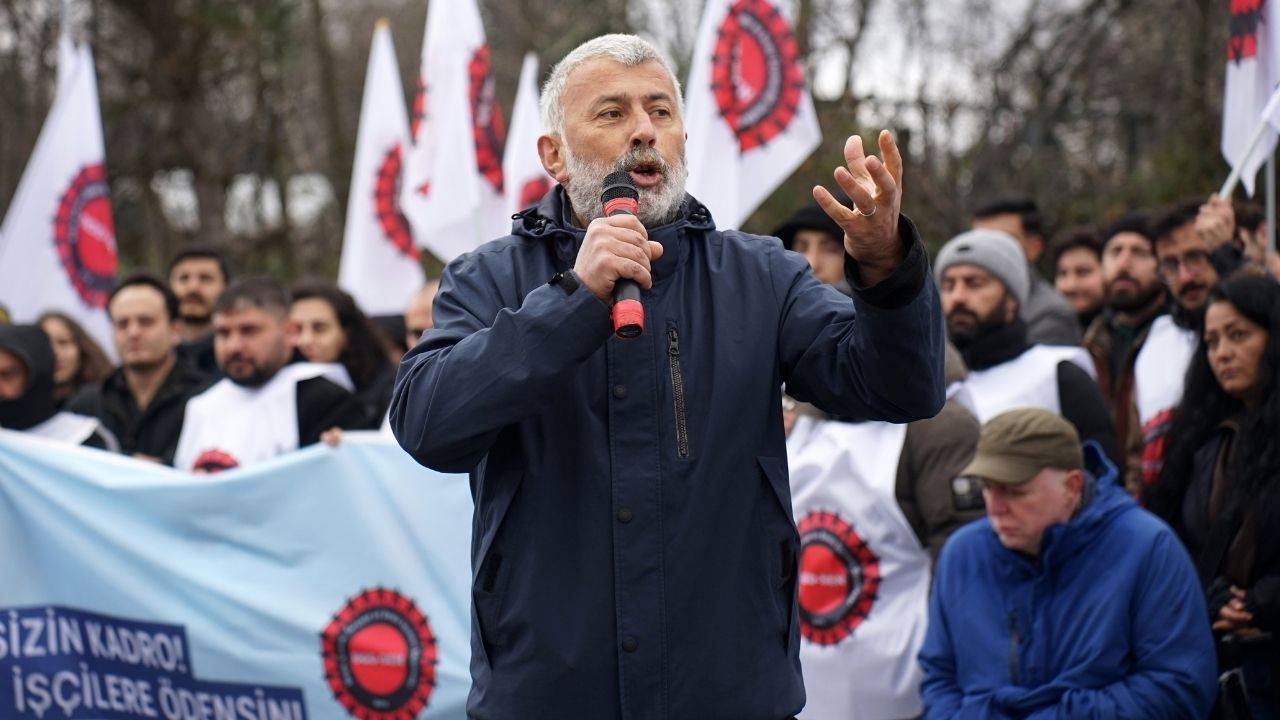
A Turkish court on Thursday ordered the pretrial detention of a labor union official over social media posts criticizing the arrest of an environmental activist, the Bianet news website reported.
Başaran Aksu, a coordinator at the Umut-Sen office workers union, was jailed by the Milas Magistrate Court of Peace on charges of inciting public hostility and spreading misleading information, with the court citing a flight risk.
The charges stem from posts on X in which Aksu criticized the March 31 arrest of local environmental activist Esra Işık and claimed it was carried out at the behest of Limak Holding owner Nihat Özdemir, a businessman known for his close ties to President Recep Tayyip Erdoğan.
Limak Holding is widely considered part of a group of five pro-government companies — along with Cengiz Holding, MNG Holding, Kolin Construction and Kalyon Construction — that have received a significant share of major public tenders during Erdoğan’s time in office. Opposition figures often refer to the group as the “gang of five.”
Işık was arrested on March 31 after objecting to a land survey linked to a coal mine expansion in southwestern Muğla province. The project aimed at supplying a nearby thermal power plant requires the removal of olive groves near Akbelen Forest.
Residents and activists have been protesting the project since 2019 and have filed a lawsuit pending before the Council of State, Turkey’s highest administrative court.
Reacting to his detention, Aksu said the case reflects the state of the judiciary in Turkey, adding that it acts in line with the wishes of powerful business groups.
The Independent Mine Workers Union condemned the arrest as politically motivated and aimed at intimidating labor activists and discouraging organizing among workers, while the Human Rights Association (İHD) called it a violation of the freedoms of expression and association.
In a similar case last month, Mehmet Türkmen, head of the BİRTEK-SEN textile workers union, was arrested on comparable charges, reflecting a broader pattern of increasing pressure on critical and dissenting voices in Turkey that has also extended to labor unions.
Labor unions in Turkey have long faced state repression, with crackdowns intensifying in recent years against those critical of government policies. Since a coup attempt in 2016, authorities have increasingly used charges such as terrorism or incitement of violence to justify raids, detentions and strike bans, often invoking national security concerns. Critics argue that such measures undermine Turkey’s commitments to international labor standards and its EU association agreements.