Turkish police detained 170 people in raids linked to Nevruz celebrations over the past week as part of Ankara’s continued crackdown on Kurdish political expression despite ongoing peace talks with the outlawed Kurdistan Workers’ Party (PKK), Turkish Minute reported.
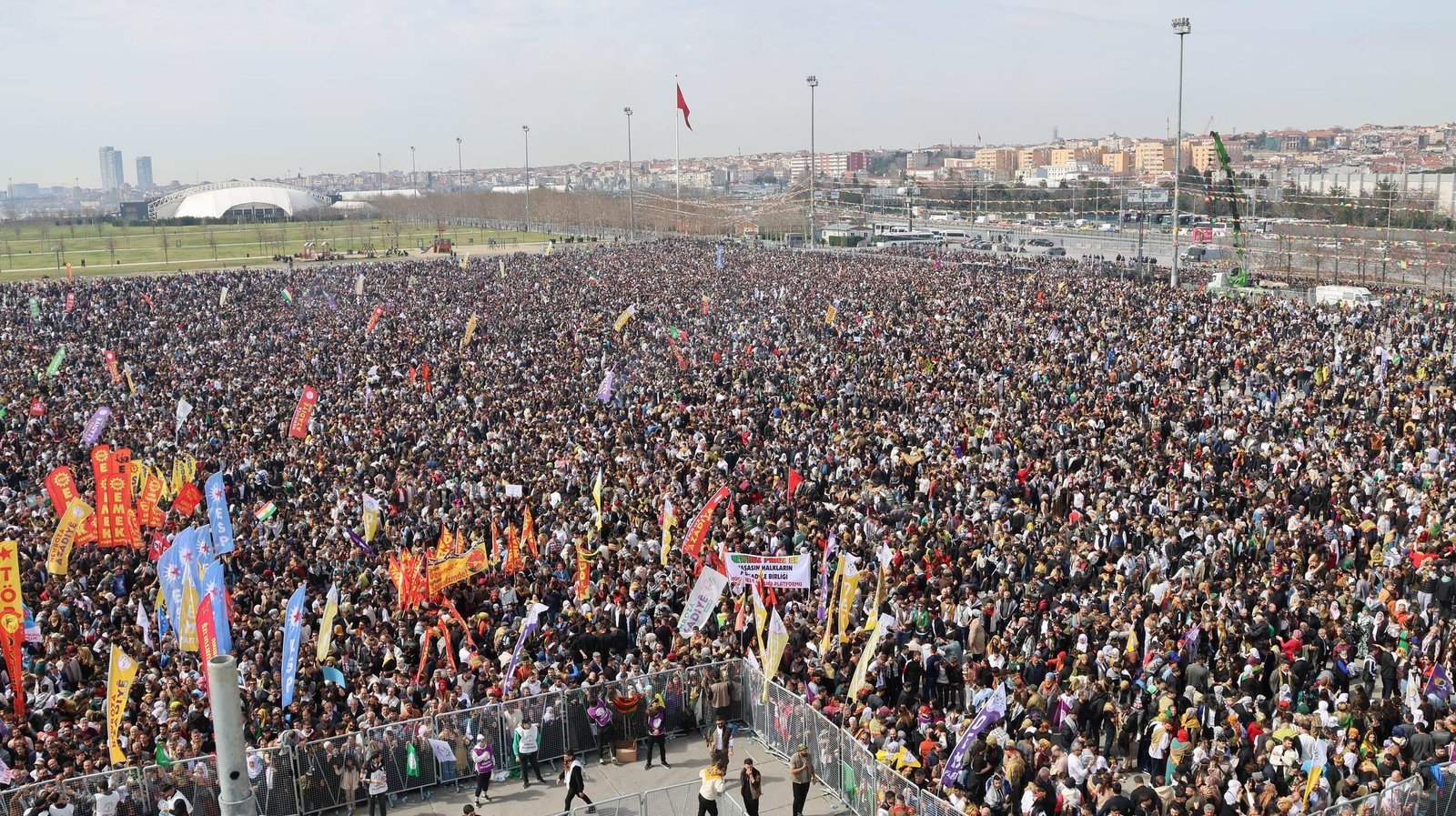
Nevruz, the spring festival widely celebrated across the region, carries added political weight in Turkey’s Kurdish-majority southeast, where gatherings often double as displays of Kurdish identity and demands for rights. In this year’s celebrations in Diyarbakır, crowds gathered near an image of jailed PKK founder Abdullah Öcalan.
The detentions were tied to allegations of spreading propaganda on the PKK’s behalf during or around the Nevruz events. A police statement said 72 people were detained between March 17 and 22 in nine provinces, while another 98 were detained on Tuesday in six provinces.
The detentions come at a sensitive moment in the government’s effort to move a new peace initiative forward. On February 18 a parliamentary commission approved a report laying out a roadmap for legal reforms alongside the PKK’s laying down of arms in a bid to end a conflict that has lasted more than 40 years. The PKK is designated as a terrorist organization by Turkey and its Western allies.
But Kurdish political leaders say the process cannot move ahead on security measures alone. During Nevruz events this weekend, the pro-Kurdish Peoples’ Equality and Democracy Party (DEM Party) called for legal changes, a formal “peace law” and a new status for Öcalan, saying a permanent settlement required legal guarantees.
That tension now sits at the center of Turkey’s peace initiative. Ankara says progress depends on the PKK giving up its arms and disbanding unconditionally, while Kurdish politicians argue that the state is still criminalizing speech, slogans and symbols tied to Kurdish public life while asking the Kurdish side to trust the government.
Rights groups have criticized Turkey’s use of terrorist propaganda charges in cases involving Kurdish songs, dances and language activities, saying authorities have used the law to punish nonviolent expression.