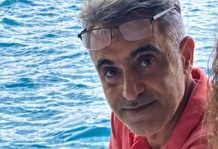
A Turkish civil servant dismissed under post-coup emergency decrees died early Thursday from colon cancer that reached its final stage while he was in custody, after authorities released him only when the disease had become terminal.
According to the TR724 news website, Ömer Alaca, 42, spent 502 days in Van Prison following his 2018 arrest. Alaca had experienced health problems throughout his imprisonment, including developing colon cancer, but was not released until the cancer had reached stage four. He had been receiving treatment at Van Regional Teaching and Research Hospital for some time before his death. Following his release from prison in late 2019 on medical grounds, he spent three months in house arrest under electronic monitoring.
Alaca had worked as a state-employed imam under Turkey’s Directorate of Religious Affairs — a government body that employs the country’s Muslim clergy — before being fired by an emergency decree in September 2016. In Turkey, imams are civil servants on the state payroll.
Turkey experienced a controversial military coup attempt on the night of July 15, 2016, which, according to many, was a false flag operation aimed at entrenching the authoritarian rule of President Recep Tayyip Erdoğan by rooting out dissidents and eliminating powerful actors such as the military in his desire for absolute power.
Following the coup attempt, the Turkish government declared a state of emergency (OHAL) that remained in effect until July 19, 2018. During this period, the government carried out a purge of state institutions under the pretext of an anti-coup fight by issuing a number of government decrees, known as KHKs. Over 130,000 public servants, including 4,156 judges and prosecutors, as well as more than 24,000 members of the armed forces were summarily removed from their jobs for alleged membership in or relationships with “terrorist organizations” by emergency decree-laws subject to neither judicial nor parliamentary scrutiny.
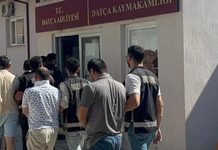
Alaca was detained and arrested by a court in February 2018 as part of investigations into the Gülen movement. He was sentenced to more than six years in prison.
In an August 2024 interview, Alaca said he was beaten by police during his 11-day initial detention and threatened by a prosecutor.
“I was beaten by police,” he said. “I was forced to squat and was beaten.”
He said a prosecutor threatened him using a child his wife was expecting. “The prosecutor told me, ‘Your child is about to be born but you won’t see the birth, and you won’t see them grow up, either,'” Alaca said.
Turkish President Recep Tayyip Erdoğan has targeted followers of the Gülen movement, inspired by the late Muslim cleric Fethullah Gülen, since corruption investigations in December 2013 implicated him as well as some members of his family and inner circle. He dismissed the probes as a Gülenist conspiracy and later designated the movement a terrorist organization in May 2016, intensifying a sweeping crackdown after a failed coup attempt in July of the same year that he accused Gülen of orchestrating. The movement denies involvement in the coup attempt or any terrorist activity.
After his release, Alaca said he struggled to find work for a year and a half. “No one would give me a job. I sold vegetables, apricots and garlic at markets. I kept bees. I tried to hold on to life,” he said. He later found work as an accountant at a company in Van.
Former public servants were not only fired from their jobs but also banned from working again in the public sector and getting a passport to seek employment abroad. The government also made it difficult for them to work formally in the private sector. Notes were put on the social security database about dismissed public servants to deter potential employers.
As a result, many purge victims have had to work in uninsured jobs with very little workplace safety. There have also been several cases where former public servants have died due to occupational accidents in physically demanding jobs.
In recent years, some of the people fired have been reinstated, yet this process has often come too late. Numerous cases have surfaced where dismissed individuals, facing severe emotional and financial strain, have died by suicide or otherwise passed away before their reinstatement.
Alaca was buried at Eski Kale Cemetery in the southeastern province of Van.