
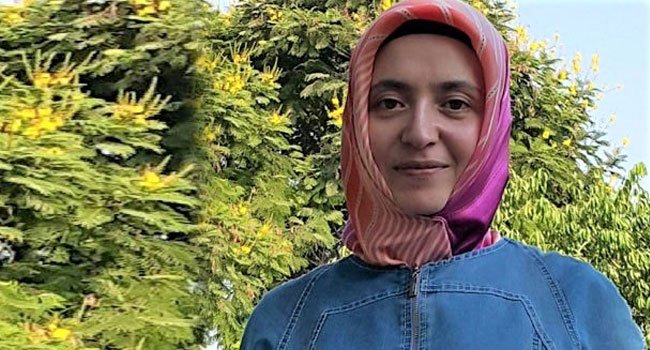
A Geneva-based rights group said a case it submitted to the UN Human Rights Committee concerning the death of a teacher who died in a Turkish prison due to deprivation of medication has been registered and communicated to Turkey, marking the start of an international review process, Turkish Minute reported.
In a post on X, the International Association for Human Rights Advocacy (IAHRA Geneva) said Gülsu was jailed during Turkey’s post-coup crackdown and died behind bars after she was unable to access life-saving medical treatment. It said the committee had recorded and transmitted the complaint to Turkey.
Gülsu, who was arrested on February 20, 2018, along with dozens of other women for allegedly helping the families of people jailed for alleged links to the faith-based Gülen movement, died in a prison in Mersin province in April 2018. She suffered from lupus erythematosus and was reportedly deprived of the medication she was taking for the disease while in jail.
Turkish President Recep Tayyip Erdoğan has been targeting followers of the Gülen movement, inspired by late Turkish Islamic scholar Fethullah Gülen, since the corruption investigations of December 17-25, 2013, which implicated then-prime minister Erdoğan, his family members and his inner circle.
He designated the movement as a terrorist organization in May 2016 and intensified the crackdown on it following an abortive putsch in July of the same year that he accused Gülen of masterminding. The movement strongly denies involvement in the coup attempt or any terrorist activity. The movement strongly denies involvement in the coup attempt or any terrorist activity.
Four days before her death, Gülsu wrote a letter to the Prime Ministry Communications Center (BİMER) describing her health problems and explaining that not taking her medication could have critical consequences for her. However, the relevant prison administration and BİMER paid no attention to Gülsu’s request for her medication, which led to her death. After Gülsu’s death, human rights defender and Peoples’ Democratic Party (HDP) deputy Ömer Faruk Gergerlioğlu revealed Gülsu’s letter to BİMER.
“In her letter, Gülsu said she had not been able to get her medication for two months. I have received her autopsy report. The case is exactly as I suspected in my capacity as a doctor. All her organs were severely congested. What tremendous negligence. I will pursue this death until justice is served,” Gergerlioğlu, who is a medical doctor by profession, said at the time.
A year after Gülsu’s death, prosecutor Zeki Topaloğlu, who led the investigation in Gülsu’s case, announced his decision not to prosecute any official who may have played a role in her death.
Critics have slammed Turkish authorities for refusing to release critically ill prisoners. Gergerlioğlu previously said critically ill political prisoners were not released from prison “until it reaches the point of no return.” He depicted the death of seriously ill prisoners in Turkey who are not released in time to receive proper medical treatment as acts of “murder” committed by the state.