A Turkish court has ordered opposition lawmaker Ömer Faruk Gergerlioğlu to pay Defense Minister Yaşar Güler 150,000 lira ($3,000) in damages over remarks made during parliamentary proceedings questioning the minister’s account of a coup attempt in 2016, the Kısa Dalga news website reported Monday.
Gergerlioğlu, a human rights advocate and lawmaker from the pro-Kurdish Peoples’ Equality and Democracy Party (DEM Party), said Ankara’s 15th Civil Court of First Instance had awarded Güler the full amount sought in a civil lawsuit arising from remarks made during parliamentary debates in December 2025.
The lawmaker announced the ruling in a video posted on social media, arguing that he had been penalized for questioning discrepancies in the minister’s previous statements about his captivity during the July 15, 2016, failed coup.
Gergerlioğlu said his remarks contained no insults and accused the court of disregarding constitutional protections for parliamentary speech. He described the judgment as an attempt to silence an elected representative.
The dispute centers on Güler’s account of his detention by military personnel during the coup attempt, when he was an army general serving as deputy chief of general staff. He was taken to Akıncı Air Base outside Ankara, where several senior military officers were held captive.
During a December 11 parliamentary session, Gergerlioğlu challenged Güler over his account of events at the base, claiming that former air force commander Akın Öztürk, who was subsequently prosecuted as a leading figure in the coup attempt, had rescued him and remained with him until the following evening.
Gergerlioğlu questioned why Öztürk had been prosecuted for involvement in the coup while Güler had subsequently become defense minister. Güler disputed the lawmaker’s account, saying, “There is no such thing,” without specifying which part of the account he was denying.
In a speech the following day, Gergerlioğlu read passages from Güler’s March 22, 2018, testimony before Ankara’s 17th High Criminal Court, accusing the minister of contradicting his earlier statements and saying he should resign for misleading parliament.
According to a contemporaneous report by the state-run Anadolu news agency, Güler testified that Öztürk had entered the room where he was being held, removed his blindfold and cut the plastic restraints binding his hands and feet.
Güler said Öztürk had arranged for refreshments and asked someone to inform his wife that he was safe. However, he also testified that armed guards remained outside the room, preventing him from leaving.
According to the same testimony, a team that included special forces personnel later arrived to collect Güler. He subsequently left the base with other officers, including Öztürk, after additional captives were located and freed.
The testimony therefore confirms that Öztürk removed Güler’s restraints but does not establish that he was solely responsible for his eventual release from captivity.
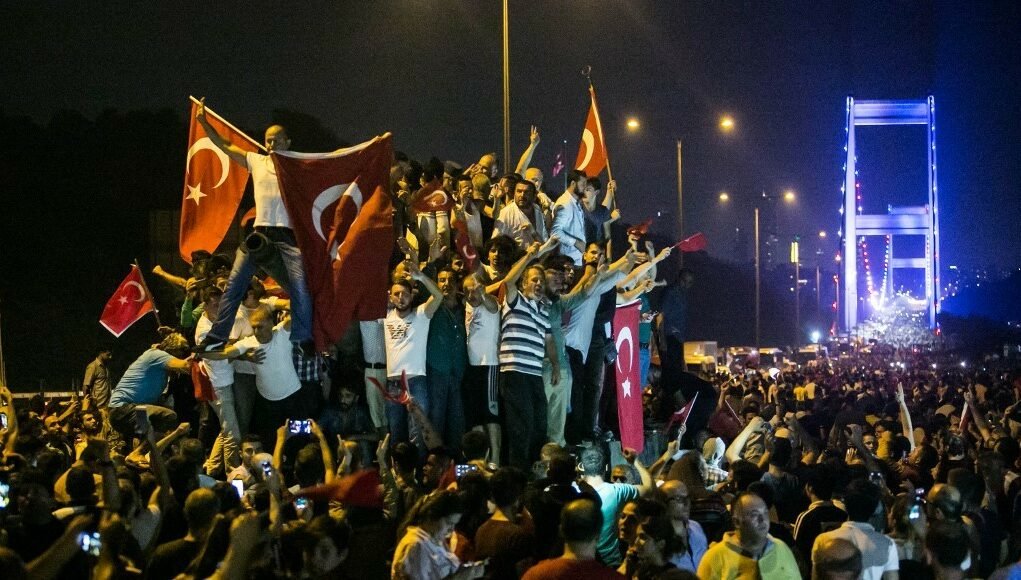
The failed coup, which killed 251 people, was followed by a two-year state of emergency and a sweeping crackdown that led to the dismissal of more than 120,000 civil servants, widespread arrests and the closure of media outlets and civil society organizations. President Recep Tayyip Erdoğan accused the faith-based Gülen movement of orchestrating the coup attempt, an allegation the movement denies. The crackdown later expanded to include other government critics, journalists and opposition politicians, as detailed in a Stockholm Center for Freedom report.
Gergerlioğlu maintained Monday that he had merely brought the minister’s own account before parliament and challenged the inconsistencies he believed it contained.
“Why am I being punished when I read your exact statements from court without adding a single insulting word?” he said.
He also criticized the amount awarded, saying the court had granted Güler everything he requested despite the parliamentary context of the statements.
Article 83 of Turkey’s Constitution protects lawmakers from being held responsible for their votes, statements and opinions expressed during parliamentary proceedings, a safeguard intended to allow elected representatives to carry out their duties freely.
However, the Constitutional Court has previously recognized that such protections do not automatically prevent civil damages lawsuits involving allegations of harm to another person’s reputation. In a 2017 ruling involving an opposition politician, it examined the need to balance parliamentary expression against the protection of personal reputation.
The written judgment in Gergerlioğlu’s case was not available in the sources reviewed, leaving unclear which specific remarks the court considered grounds for damages and whether it addressed the constitutional protections governing parliamentary speech.
Gergerlioğlu, who has frequently criticized the Turkish government’s human rights record, has previously faced prosecution over his political activities.
In July 2021 Turkey’s Constitutional Court ruled that his rights had been violated after he was stripped of his parliamentary seat and imprisoned over a social media post. The ruling led to his release and the restoration of his parliamentary status.