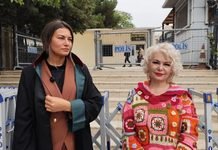
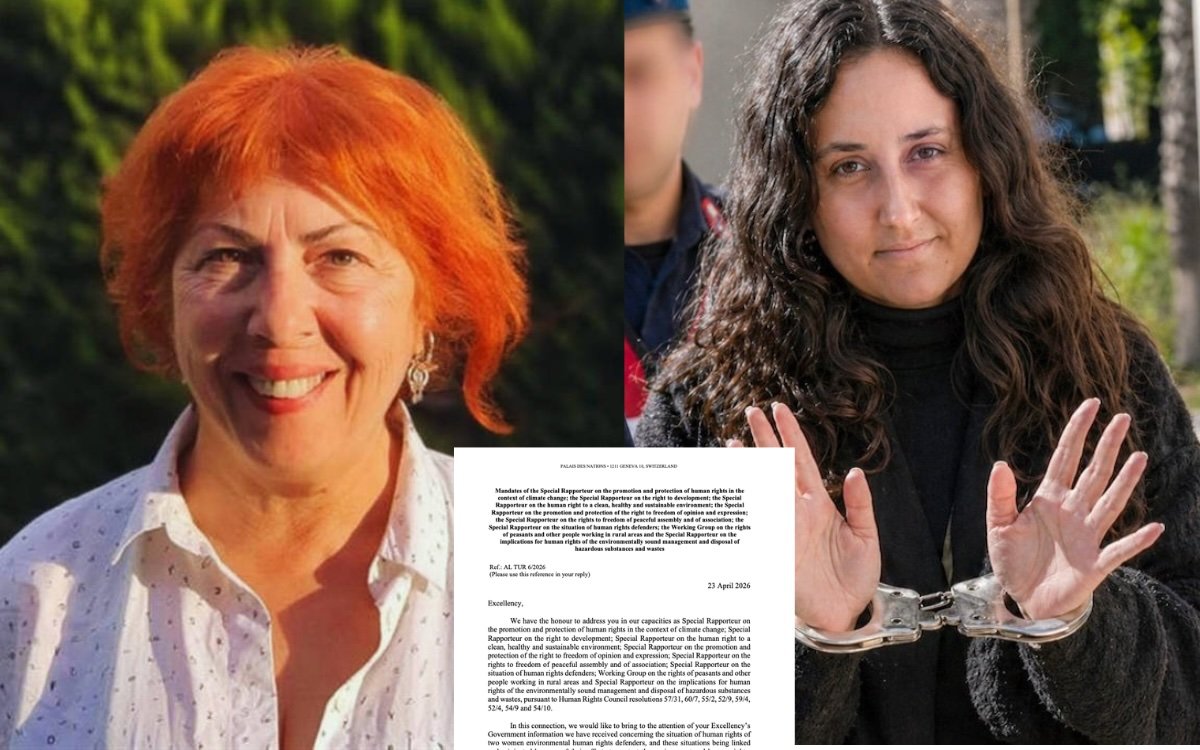
UN special rapporteurs have expressed concern that two female environmental defenders in Turkey have faced prosecution, arrest and other legal pressure for their peaceful environmental advocacy and exercise of their right to freedom of expression.
In a letter sent to the Turkish government on April 23, 2026, and recently made public, the rapporteurs cited the arrest, pretrial detention and prosecution of Esra Işık and what they described as the “judicial harassment” of Halime Şaman.
Işık was arrested after protesting a court-ordered land survey on property belonging to her family that was subject to urgent expropriation for the expansion of a coal mine in Muğla province, while Şaman, a biologist and local civic platform spokesperson, faced a lawsuit and the termination of her disability pension after opposing development projects in Marmaris National Park.
The rapporteurs said both women’s activities were linked to efforts to protect the environment and human rights and to exercise their rights to access information, participate in public decision-making, seek justice and enjoy freedom of expression and access to healthcare.
Işık is part of a local campaign opposing the expansion of a coal mine intended to supply a nearby thermal power plant in Muğla province. The project includes plans to clear olive groves near Akbelen Forest.
She was arrested on March 31 after protesting a court-ordered land survey on property subject to urgent expropriation, saying residents did not want their property rights affected while their case was pending before the Council of State.
Prosecutors accused Işık of insulting and resisting a public official in the performance of duty, charges carrying a potential prison sentence of up to six years. She was released pending trial on May 11.
Şaman, a biologist and spokesperson of a local civic platform, has faced what the rapporteurs described as administrative, judicial and economic harassment since 2021 because of her opposition to development projects in Marmaris National Park. The projects continued despite court rulings requiring environmental impact assessments before construction.
According to the letter, companies involved in the project filed a lawsuit accusing Şaman of spreading disinformation and damaging their reputation. The rapporteurs described the case as a strategic lawsuit against public participation, or SLAPP, a type of legal action commonly used to deter public criticism.
Şaman’s disability pension, which had been granted in 2007, was terminated in March 2025, following a review by the authorities. According to information cited in the letter, an unknown individual submitted a complaint to the Presidential Communications Center alleging that Şaman continued to take part in environmental and human rights activism while receiving disability benefits.
The rapporteurs reminded Turkish authorities of their obligation to protect individuals from attacks and reprisal aimed at silencing those exercising their right to freedom of expression.
They further warned that the cases could have a chilling effect on environmental human rights defenders in Turkey.
The rapporteurs asked Turkish authorities to explain the legal basis for Işık’s arrest and pretrial detention and for the termination of Şaman’s pension. They also sought information on whether environmental impact assessments had been conducted for projects in Akbelen Forest and Marmaris National Park and what measures were being taken to ensure that environmental defenders can operate safely and without fear of reprisal.
The letter was signed by Elisa Morgera, the UN special rapporteur on human rights in context of climate change; Surya Deva, special rapporteur on right to development; Astrid Puentes Riaño, special rapporteur on environment; Irene Khan, the special rapporteur on freedom of opinion and expression; Gina Romero, the special rapporteur on freedom of peaceful assembly and of association; Mary Lawlor, special rapporteur on human rights defenders; Marcos A. Orellana, special rapporteur on toxics and human rights; and Carlos Arturo Duarte Torres, the chair-rapporteur on rights people working in rural areas.